



Law Views / How the built environment shapes the realities of human rights
19 August 2026
•
Law & Our Rights

For Your Information / When confessional statements may not lead to conviction
19 August 2026
•
Law & Our Rights

Daily Life Blues / Remedies for excessive electricity bills
19 August 2026
•
Law & Our Rights

Law Vision / The danger of using AI in legal submissions
12 August 2026
•
Law & Our Rights

Law Views / Constitutional environmental rights in South Asia
12 August 2026
•
Law & Our Rights

Law Opinion / Cyber-attacks and a state’s right to self-defence
12 August 2026
•
Law & Our Rights

How negligence and lack of law enforcement led to Sitakunda tragedy
18 August 2026
•
Law & Our Rights

Law Opinion / The sleeping giant
8 July 2026
•
Law & Our Rights

Law views / Refusal of entry visa in a global sporting event and international law
2 July 2026
•
Law & Our Rights

Law Vision / The need to protect our data
2 July 2026
•
Law & Our Rights

A multidimensional analysis of rape
Rape and other sexual crimes are largely misunderstood because people refuse to understand or fail to understand why they are crimes in the first place.
5 December 2024

Legal steps for a rape victim
A very brief discussion of the possible legal steps to be taken by a rape victim are discussed in this piece.
5 December 2024
Custody, Guardianship, and Adoption: Comparing Bangladesh and Malaysia
The book named Impact of Gender on Custody, Guardianship, and Adoption authored by Professor Dr. Taslima Monsoor and Dr. Sridevi Thambapillay is an important cross-country study. In this book, the authors undertake a careful comparative study on how gender influences the practice of family law within Bangladesh and Malaysia, under Islamic law, in particular.
5 December 2024

Bangladesh Bar Council: A call for urgent reform
Reform is no longer optional but a crucial necessity for institutions, and the Bangladesh Bar Council is no exception.
29 November 2024

Rethinking violence against women
When it comes to violence against women, we make a conscious choice and turn all our focus on sexual violence.
29 November 2024

Amended ICT law to allow trial of security personnel
The newly amended International Crimes (Tribunals) Act will allow for the prosecution of members of the army, navy, air force, police, Rapid Action Battalion, Border Guard Bangladesh and all intelligence agencies.
24 November 2024
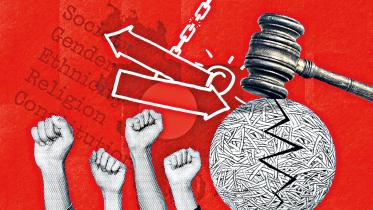
Five reform proposals to ensure a more democratic constitution
During the 2024 anti-discrimination movement, the people of Bangladesh shed their blood on the streets to achieve a fair and just society.
21 November 2024

Food adulteration and its deadly consequences
Food adulteration slowly damages people’s health in ways that are not immediately visible, but have serious long-term effects.
21 November 2024

Rethinking capital punishment in Bangladesh
While the international community has made tremendous progress in moving away from the death penalty, Bangladesh continues to use it for a wide range of offenses, including many that do not result in the loss of life.
21 November 2024

Preventing illegal human organ trafficking
The Human Organ Transplantation Act 1999 has been enacted in Bangladesh to prevent commercial organ trade.
14 November 2024

Compensation as a remedy under constitutional tort law in Bangladesh
Article 102(1) of the Constitution enables the High Court Division (HCD) to give directions or orders as may be ‘appropriate’ for the enforcement of any fundamental rights. Thus, the Article permits the petitioner and the HCD to choose any suitable remedy, including compensation, for the enforcement of fundamental rights, as it does not specify the sort of redress.
14 November 2024

Bangladesh needs to introduce a good samaritan law
The common scenario concerning road accidents is that there are usually three types of people other than victims and wrongdoers, namely, reluctant spectators, stealers, and voluntary rescuers.
14 November 2024

Ensuring judicial oversight in lawful interception
During the July-August mass uprising in Bangladesh, there were widespread concerns among citizens that phone calls and internet activities were under government surveillance, sparking fears of potential detention by the law enforcement based on information so acquired. While spyware refers to malicious software designed to gather information about a person or organisation and send it to another party, often violating the user’s privacy, lawful interception involves the authorised, legally approved monitoring of telecommunication services by the government agencies. It is crucial to review the current legal framework for lawful interception in Bangladesh and emphasise the urgent need for judicial oversight to ensure compliance with these standards.
7 November 2024

The reality of the right to education in Bangladesh
Recognising education as a human right is crucial for both individual and societal development. The right to education is a universally recognised right, enshrined in various international human rights documents, including Universal Declaration of Human Rights (UDHR), International Covenant on Economics, Social and Cultural Rights (ICESCR) and Convention on the Rights of the Child (CRC).
7 November 2024

Legality of ‘assisted suicide’ in Bangladesh
The concept of ‘euthanasia’ or intentionally ending a person’s life to relieve suffering, is not new. The term was first coined by Francis Bacon, referring to a situation where a doctor helps a patient to end their life.
7 November 2024

Banning smoking in public places
While walking along the footpaths of Dhaka, one of the most persistent problems we face is exposure to cigarette smoke. The pervasive smell and clouds of cigarette smoke create an unpleasant experience for non-smokers. Indeed, due to exposure to cigarette smoke, passive smokers tend to be at significant risk of developing respiratory problems, heart disease, and even cancer.
31 October 2024

A call to reform the foreign donations regulation law
The clarion call for change is blowing in the wind of Bangladesh, carrying with it the potential and promise of a brighter future. To usher in this change wholeheartedly, we must acknowledge our past mistakes and work towards rectifying them. In particular, time is ripe for us to revisit the laws that potentially have a negative impact on human rights.
31 October 2024

A historiographical approach to addressing the refugee crisis
The global refugee crisis, with millions fleeing their homes due to violence, war, and persecution, is one of the most pressing issues of our times. While international law, particularly the 1951 Refugee Convention and its 1967 Protocol, provide the legal frameworks for refugee protection, many nations especially former colonial powers remain reluctant to accept their fair share of responsibility. A fresh approach to solving the crisis proposes that former colonial powers should accept refugees from their former colonies as a way of addressing historical injustices.
31 October 2024

On the livestreaming of court proceedings
People are likely to gain confidence in the justice system when they see justice getting served. This is why courtrooms are deemed open or accessible, theoretically at least, to all. By the same logic, in an age of technologies, in order to foster public confidence, should livestreaming of court proceedings be encouraged? Comparative discussions may prove to be useful in finding the answer.
24 October 2024
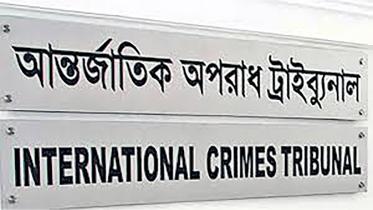
Reforming the International Crimes (Tribunals) Act 1973
Since the July revolution, there has been a strong push for reforms across the country. As expected, the clamours for reforms have not left the International Crimes (Tribunals) Act 1973 (ICT Act) untouched. As the government prepares to prosecute high-ranking members of the former government, it is crucial to implement extensive reforms to the Act to ensure the proceedings are beyond reproach.
24 October 2024
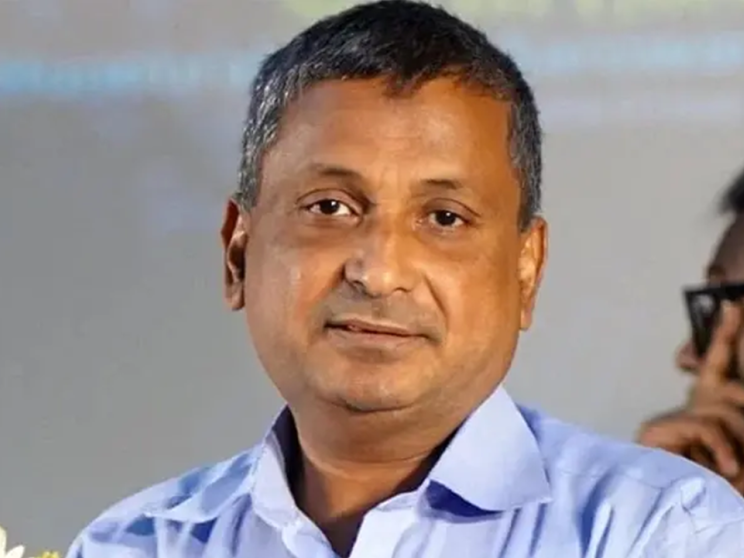
Seven parties including NCP, BJP, AB party failed to submit poll expenses to EC
26 June 2026
•
National Election 2026
2026 Bangladesh elections 'a democratic milestone': Commonwealth Observer Group
15 June 2026
•
National Election 2026
EC gives 21 candidates until June 14 to file election expenditure reports
24 May 2026
•
National Election 2026
Local govt polls ‘challenging’, but no lack of effort: CEC
21 May 2026
•
National Election 2026