


‘Bonolota Sen’ and the search for a Bangladeshi film language

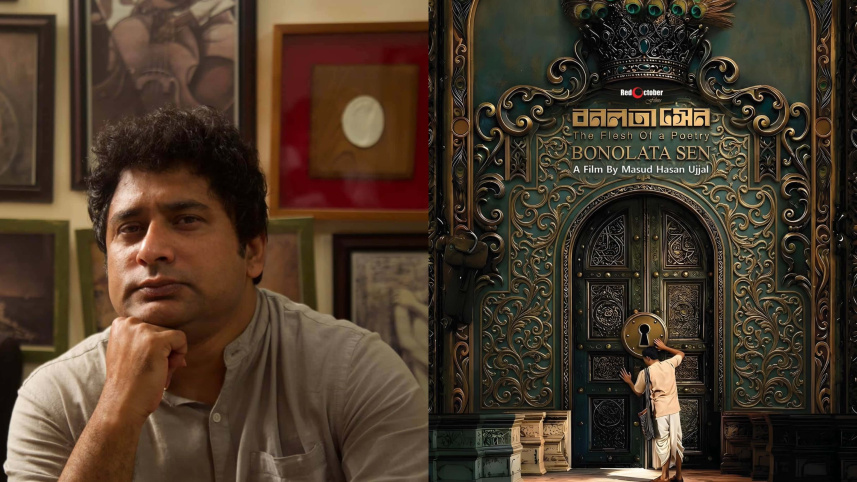
With six films currently eyeing release this Eid-ul-Azha, director Masud Hasan Ujjal is stepping into the festive release race with quiet confidence and a deeply personal cinematic philosophy. His upcoming film, “Bonolota Sen”, arrives years after his acclaimed feature “Unoponchash Batash”.
“I always enjoy the last-minute work,” Ujjal said with a smile. “There’s pressure, of course — but these are creative pressures, so I’m enjoying it.”

Unlike many Eid releases backed by major studios or star-driven campaigns, Ujjal believes his greatest strength lies solely in the work itself. “I’m the sort of person who has neither shield nor sword,” he remarked candidly. “I don’t have a powerful institution behind me, nor any so-called superstar. For people like us, the only real strength is our work.”
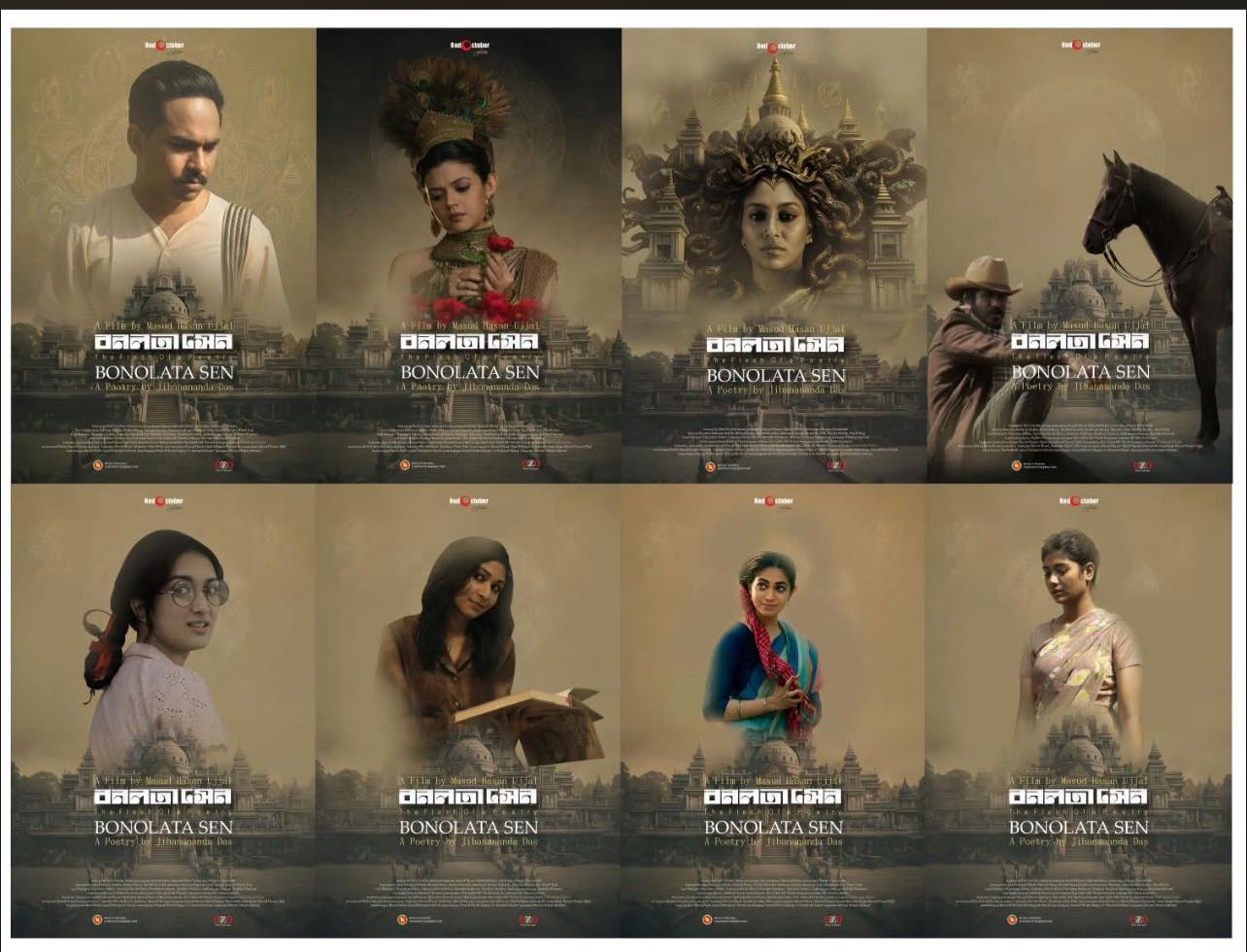
Still, the response to the film’s trailer and promotional material has given him hope. He believes audiences have already connected with the film’s mystery. “People are sensing something unusual in it,” he said. “They’re curious. They want to know what actually happens in the story. Once the audience becomes that curious, surely they’ll want to watch it.”
When asked why audiences should choose “Bonolota Sen” this Eid, Ujjal offered a straightforward answer: “Because they’ve never seen a film like this before. And I am not saying it because I have to!”
According to the director, the film experiments with both narrative structure and storytelling language. “It’s an entirely new structure and a new way of telling a story,” he explained. “If you follow the audience comments online, you’ll notice they’re the ones saying these things. They’re discovering a kind of mystery in the film.”
Beyond its intrigue, Ujjal stressed the importance of craftsmanship. “It’s evident this is a carefully made film,” he said. “Nothing has been compromised. Perfection may not exist, but people can tell when something has been created with sincerity and care.”
He also praised the performances in the film, noting that strong acting and a compelling story remain essential to winning audiences over. “You cannot fool viewers anymore,” he said. “You can’t present weak acting and a weak story and expect audiences to be convinced. Viewers are much smarter now.”
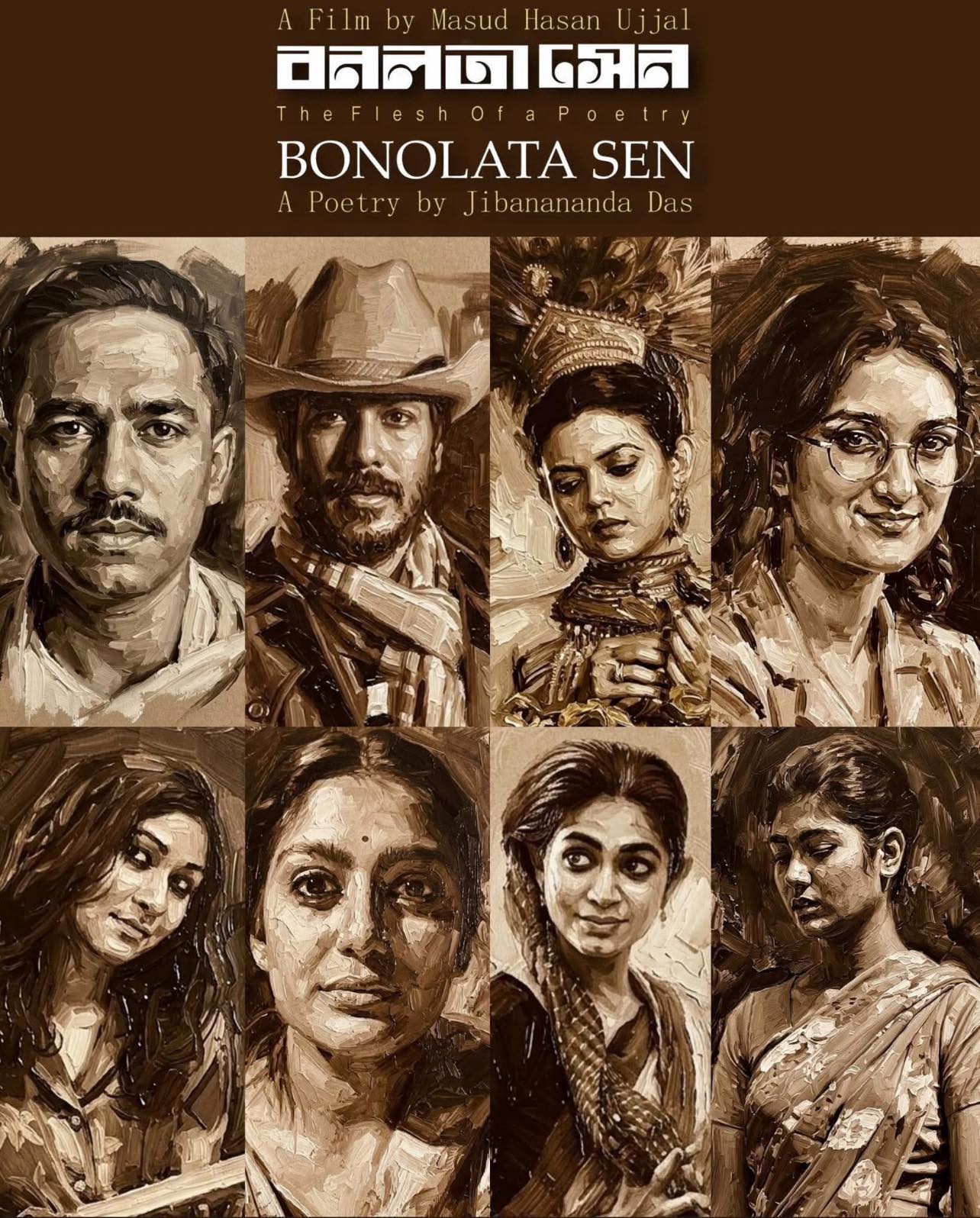
Another aspect Ujjal believes will attract audiences is the film’s visual presentation. “It’s visually stunning,” he said. “Audiences don’t usually get to see imagery like this in our cinema.”
However, he expressed discomfort with the common tendency to compare polished Bangladeshi productions to foreign cinema. “Whenever something good happens here, people immediately say it looks ‘international’ or ‘like a foreign film’,” he observed. “That actually saddens me. Why can’t we simply recognise quality as our own?”
The conversation eventually turned towards a larger issue close to Ujjal’s heart: the absence of a distinct Bangladeshi cinematic language. While Russia is recognised for Soviet Montage, France for the French New Wave (Nouvelle Vague), Iran for its own cinematic signature, and Italy for Italian Neorealism, Bangladesh is still searching for its own voice.
“Being international does not mean imitating foreigners,” he asserted. “It means creating well-made work rooted in our own identity.”
For Ujjal, authenticity matters more than imitation. He argued that Bangladeshi filmmakers often seek validation by resembling Tamil, Bollywood, or Hollywood productions rather than embracing their own realities. “We need to stop asking what Hollywood or Bollywood is making,” he said. “Our soil already contains immense richness.”
Drawing on figures such as Lalon Shah, Rabindranath Tagore, Jibanananda Das, and Atish Dipankar, among many others, he argued that Bengali culture itself offers sufficient depth to inspire world-class storytelling.
“Our stories, our philosophy, our people — these are already powerful,” he said. “If we present them honestly and artistically, they naturally become universal.”
That honesty, he believes, also applies to urban storytelling. “Just because you’re telling a Bangladeshi story doesn’t mean you must go to a village,” he explained. “My life is urban. My struggles, my emotions, my experiences — all come from the city. So, when I portray urban life, that becomes more honest. That reflection was addressed in ‘Unoponchash Batash’.”
As “Bonolota Sen” prepares for its Eid-ul-Azha release, Ujjal appears less interested in competing with spectacle and more invested in carving out a cinematic identity that feels unmistakably Bangladeshi.
 For all latest news, follow The Daily Star's Google News channel.
Comments