


Why we keep coming back to ‘Friends’

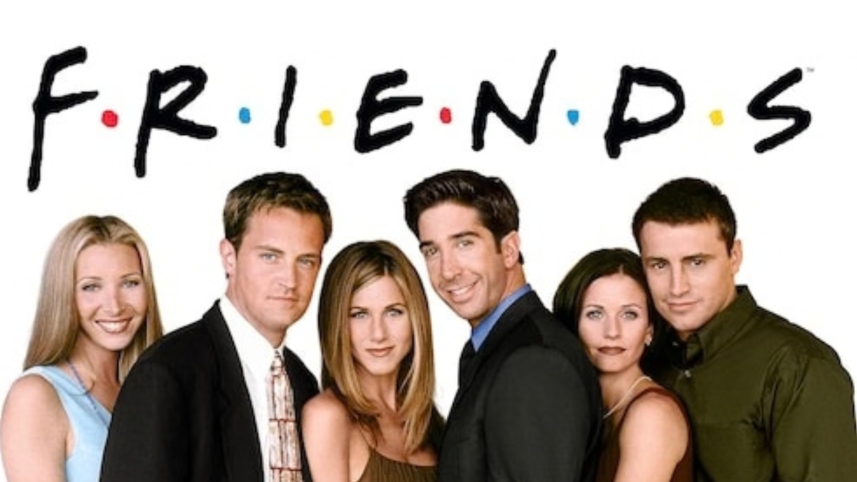
There is a particular kind of evening that belongs to “Friends”. You have had a long day. Your phone has too many notifications, dinner needs figuring out, and your brain has reached the point where even choosing something to watch feels like work. So you open “Friends”. Maybe you land on an episode you have watched six times. Maybe Chandler is making a terrible joke. Maybe Monica is cleaning something that is already perfectly clean. Maybe Joey is eating. Within minutes, the day feels a little lighter. You already know what happens. And that is precisely the point.
“Friends” has spent three decades becoming one of television’s great comfort shows, the kind of series that asks almost nothing from you and gives you a familiar little world in return. Its 10 seasons and 236 episodes follow Rachel, Ross, Monica, Chandler, Joey and Phoebe through careers, relationships, weddings, break-ups, babies, bad dates and the general confusion of becoming adults. The show premiered on September 22, 1994, and its characters have remained part of popular culture ever since. Yet the enduring appeal of “Friends” has very little to do with the fact that it was once one of television’s biggest sitcoms. Instead, it has a lot to do with the feeling of having somewhere to go.

For millions of fans, Central Perk became a kind of imaginary neighbourhood café. Monica’s apartment became the place where everyone somehow ended up. Chandler and Joey’s apartment became the scene of countless arguments, games, meals and increasingly questionable decisions. These places feel almost real because the show gave them something television rarely manages to create: routine. We know where everyone sits. We know who will walk through the door. We know which person will make the joke. We know who will panic. And we know that, by the end, everyone will probably still be together. That rhythm is strangely reassuring.
“Friends” premiered in 1994, at a time when its central idea felt both ordinary and aspirational: six young people in New York building their lives while building a family out of friendship. Over 10 seasons, the series followed them from their twenties into their thirties, allowing careers, relationships and personalities to evolve around a constant core.
Rachel starts the story running away from a wedding and arrives in New York with a lot of uncertainty. She gradually builds a career, develops independence and becomes a mother. Her journey feels like the messy version of growing up that most people actually experience: a collection of decisions, mistakes, reinventions and occasional moments when everything suddenly makes sense.

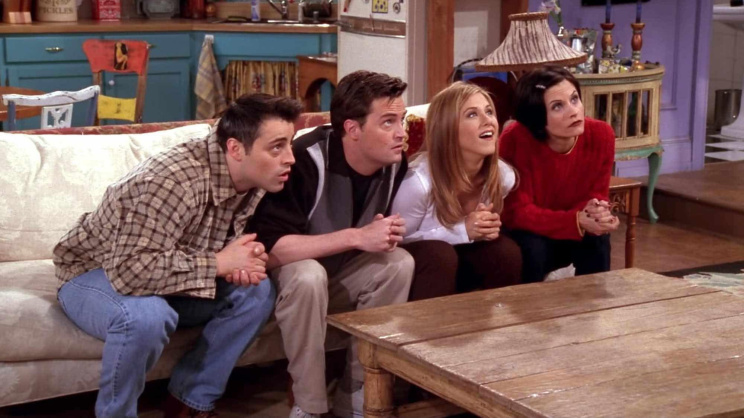
Monica is almost the opposite. She wants everything to make sense from the beginning. She cooks, cleans, plans, competes and worries with extraordinary commitment. Her apartment becomes the group’s unofficial headquarters because Monica has created a space where everyone can arrive. Her need for control becomes comedy, while her instinct to care for everyone becomes the emotional foundation of the group.
Phoebe occupies an entirely different universe. She can turn an ordinary conversation into something surreal within seconds. She sings about “Smelly Cat”, believes in things the others cannot quite process and approaches life with a confidence that seems to operate independently of logic. Yet her eccentricity carries enormous warmth. Phoebe has experienced enough hardship to make cynicism understandable, and she chooses joy instead. That choice makes her one of the show’s most memorable characters.
Joey’s world operates according to a wonderfully uncomplicated set of principles: friends matter, food matters, acting matters, and sharing food requires serious consideration. His apparent simplicity often hides an enormous capacity for loyalty. Joey is the friend who will celebrate you without needing an explanation, defend you without asking for evidence and probably eat whatever is left on the table afterwards. His friendship with Chandler is one of the great sitcom relationships because it feels so effortless. Chandler brings the sarcasm; Joey brings the confidence; together, they create an apartment that feels like its own little sitcom inside the sitcom.
Chandler himself might be the character many viewers recognise most immediately. Humour is his defence mechanism, his social currency and, occasionally, his escape route. When emotions become uncomfortable, Chandler reaches for a joke. When life becomes complicated, he makes it funnier. Matthew Perry gave the character extraordinary comic timing that made even a raised eyebrow feel like a punchline. Yet Chandler’s story ultimately becomes about allowing himself to be vulnerable.
That transformation becomes especially meaningful through Monica. Their relationship begins as a surprise and grows into one of the show’s most emotionally satisfying partnerships. They know each other’s habits, irritations and insecurities. They become a family together. Their relationship also captures one of the show’s recurring ideas: sometimes the person who makes you feel most at home arrives from a friendship you already have.
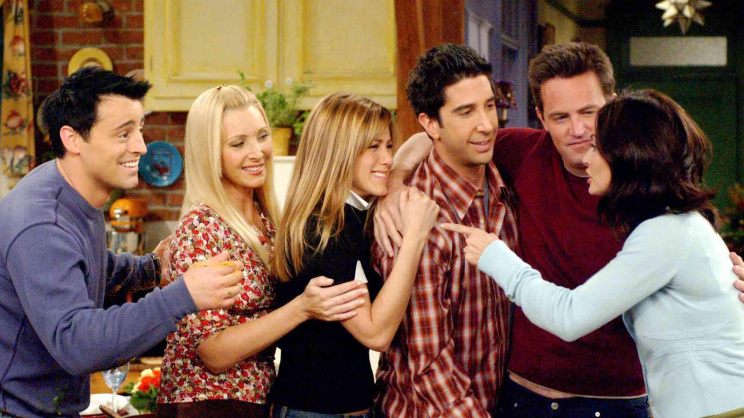
And then there is Ross. Ross is intelligent, passionate, anxious, romantic and capable of turning the simplest situation into a complicated academic dissertation. He loves dinosaurs, his friends, his family and Rachel with varying degrees of success. His life provides some of the show’s biggest comic disasters, from the infamous leather trousers episode to the sandwich with a very specific Thanksgiving-related ingredient. Yet Ross also captures something deeply human: the tendency to overthink the things we care about most.
Put all six together and the chemistry becomes almost impossible to manufacture. They are not six versions of the same person. They are six different kinds of people who somehow fit. That is what makes the show feel personal. Most friendships have a Monica. Someone organises the dinner. Most groups have a Chandler. Someone turns an uncomfortable silence into a joke. There is usually a Joey who brings uncomplicated loyalty, a Phoebe who sees the world differently, a Ross who thinks about everything far too much and a Rachel who is figuring herself out as she goes.
The characters become mirrors. Maybe that is why “Friends” works so well as a comfort watch. We are not simply watching six fictional people. We are watching versions of the people we know, versions of ourselves and versions of friendships we have had at different points in life.
The show also carries the particular nostalgia of a world that feels slower. People call each other. They leave messages. They knock on doors. They spend entire evenings sitting together. Their phones rarely compete for attention. A disagreement requires an actual conversation. Plans happen face-to-face. Some of that world belongs firmly to the 1990s and early 2000s. Some of its humour carries the cultural attitudes of its era, and contemporary viewers can approach certain storylines with a different perspective. That is part of revisiting any long-running cultural phenomenon. We can appreciate what a show gave audiences while also seeing the parts that belong to the time in which it was made.
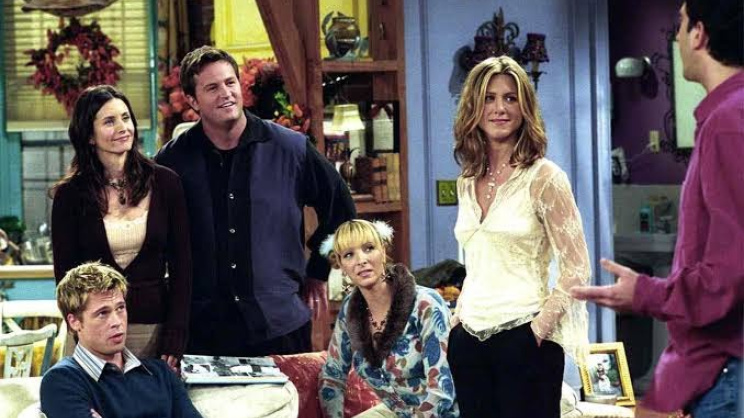
What remains remarkably current are the emotional questions. What happens when your friends start getting married? What happens when someone gets the job you wanted? What happens when the person you love moves on? What happens when you realise adulthood has arrived and nobody handed you an instruction manual? “Friends” keeps returning to those questions because growing up never really stops producing new versions of them. That may also explain why younger viewers continue to find something in the show. The clothes change. The technology changes. The references change. The emotional confusion remains.
And then there is the simplest reason of all: “Friends” is funny. There is an almost musical quality to its comedy. Chandler’s sarcasm, Joey’s misunderstandings, Monica’s intensity, Phoebe’s absurdity, Ross’s panic and Rachel’s reactions bounce off one another. The show understands timing, repetition and the pleasure of letting a joke breathe. You can watch an episode while eating. You can watch one before bed. You can watch one while pretending you are going to watch something else. You can put it on after a terrible day and let the familiar voices fill the room. That is a very particular kind of television magic.
Three decades after the show premiered, “Friends” has become more than a sitcom about six people in New York. It has become a place viewers can return to. A little artificial, a little chaotic, occasionally dated, frequently hilarious and strangely warm. There is something comforting about knowing that Monica’s kitchen still has people in it. Central Perk still has a couch. Joey still has food. Chandler still has a joke. Phoebe still has a song. Ross still has a dinosaur fact nobody asked for. Rachel still has somewhere to go. And the six of them are still waiting for us to walk through the door.

Maybe that is the real reason we keep watching. We spend our lives moving forward, leaving apartments, changing jobs, losing touch with people and finding new ones. “Friends” gives us a rare chance to return to a moment when everyone was still there, everyone still had time and an ordinary evening could become the most important part of the day. Thirty-two years later, that feeling still works. For a little while, you can sit on the orange couch, order a coffee you probably cannot afford and spend 20 minutes with six people who have become strangely familiar. And for those 20 minutes, you get to be part of the group again.
 For all latest news, follow The Daily Star's Google News channel.
Comments