


‘Notun Shobdo’: Opening the doors to electronic music

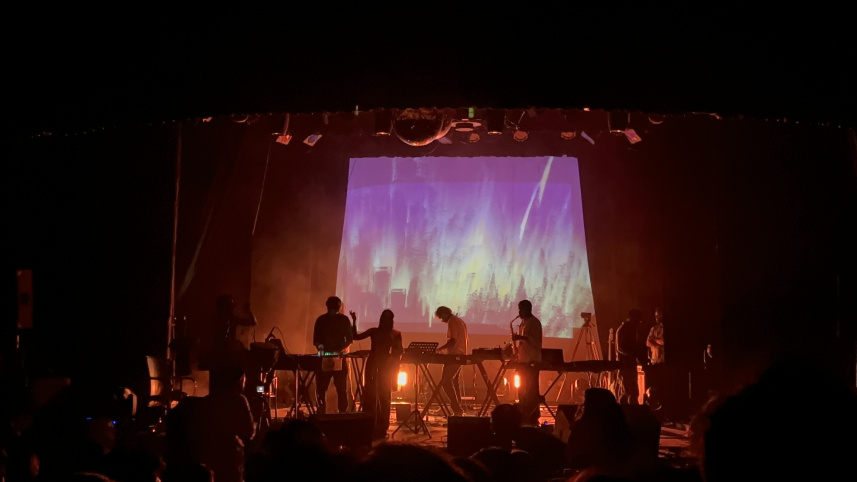
Through workshops, vinyl sets, live performances, and audio-reactive visuals, the event pushed electronic music beyond its niche into a broader cultural conversation.
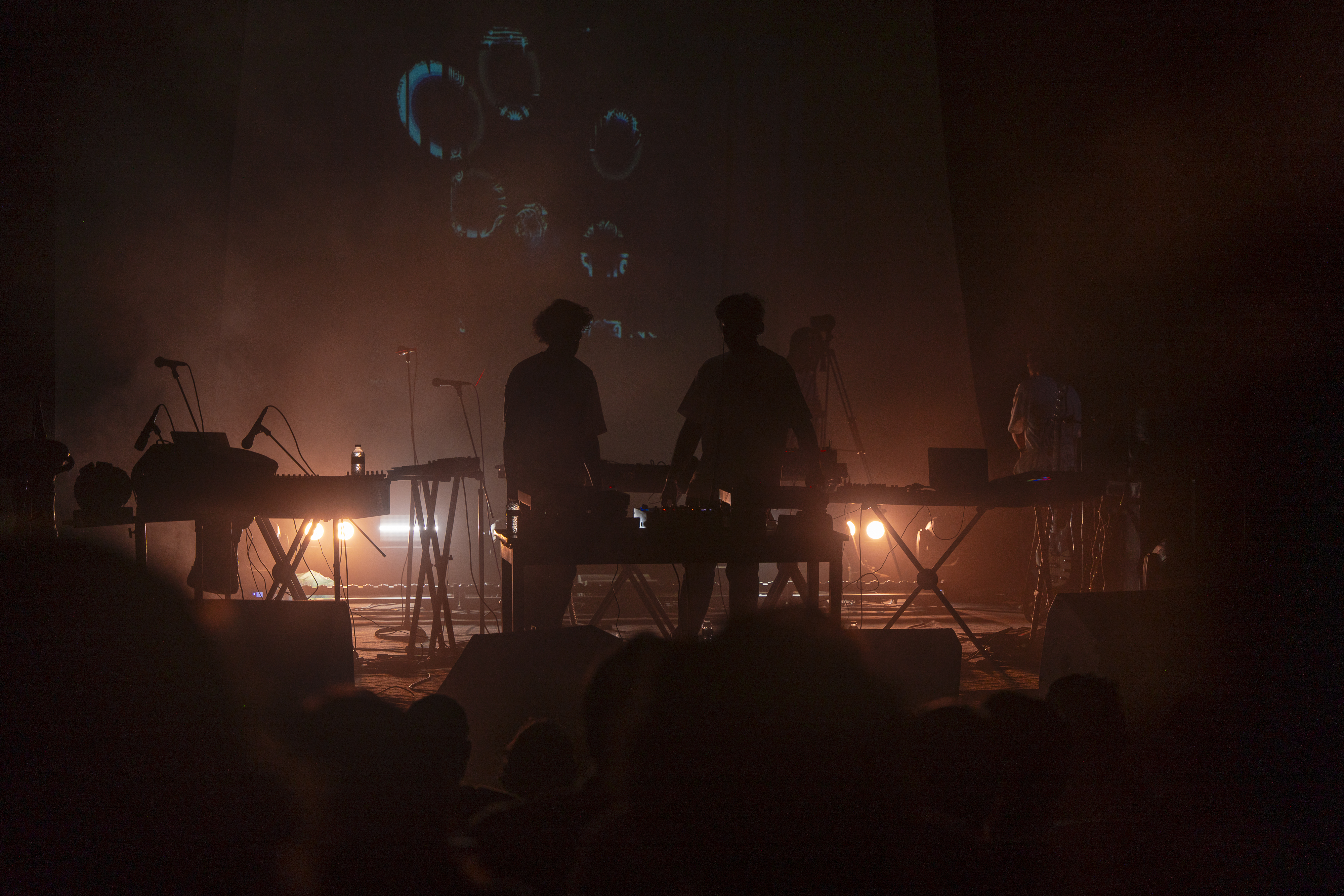
At Bangladesh Shilpakala Academy’s National Music and Dance Centre, the evening did not begin with the usual grammar of a concert. There was no grand arrival, no scramble towards a front row. The room slowly adjusted to a different kind of listening: vinyl crackle, low-end pulses, fragments of melody, and visuals that moved with the sound rather than merely decorating it.

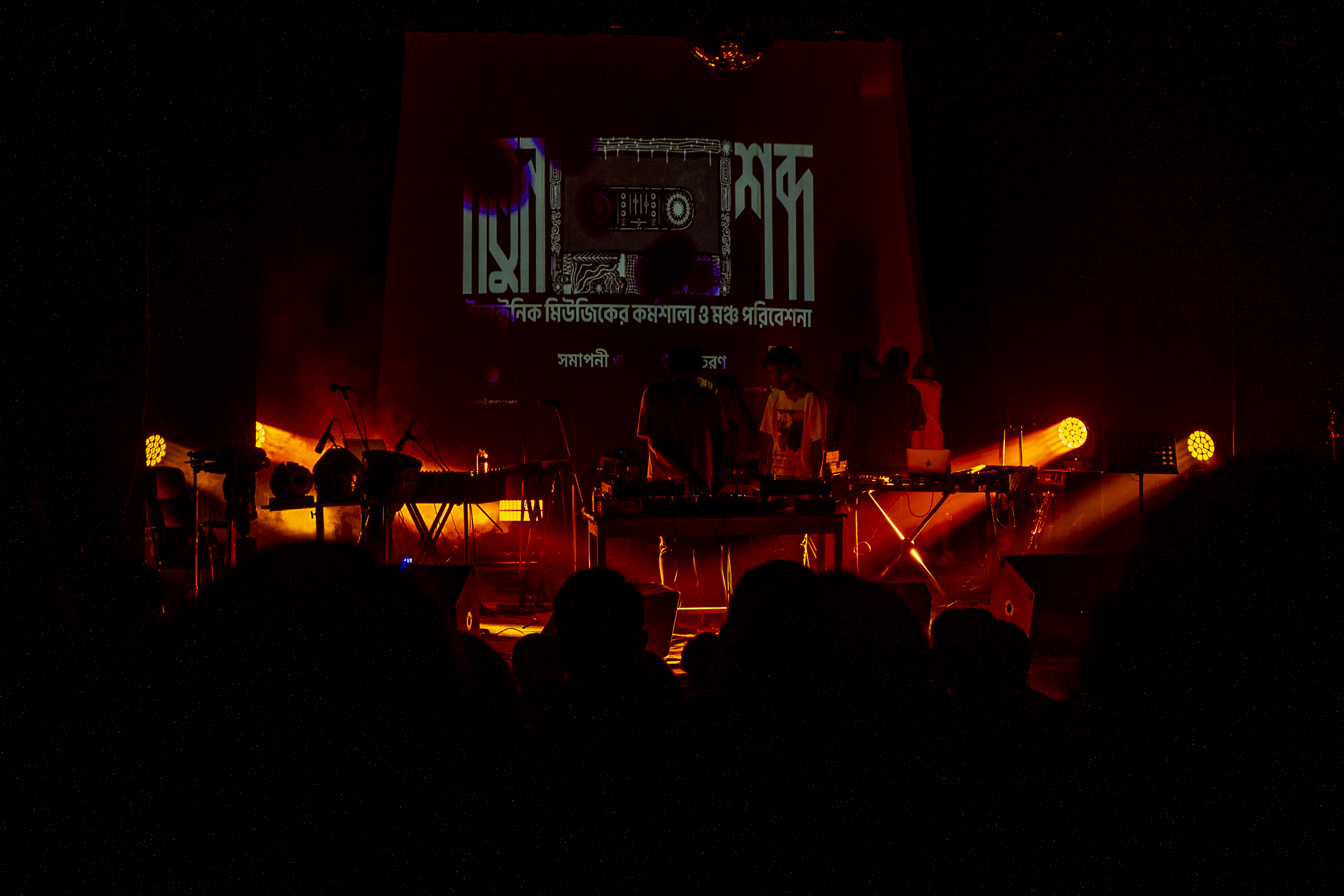
On June 27, “Notun Shobdo” brought electronic music into one of the country’s most recognisable cultural spaces and posed a timely question: What happens when a sound often treated as niche, urban, or club-bound is given the structure of learning, performance, and public access?
The answer unfolded across a day-long workshop and an evening showcase organised by Bangladesh Shilpakala Academy in collaboration with Breakfast Club Dhaka. From 11am to 6pm, the auditorium became less a venue than an entry point. Participants were introduced to DJing, sound design, beat-making, synthesisers, live setups, and the unseen labour behind performance.
The workshop avoided treating electronic music as a closed code. Through its various segments, it unpacked the many facets of electronic music. “Behind the Deck” explored the first steps of DJing, from reading a track to attempting transitions. “The Sound Machine” opened up the tools behind electronic music production. “Building the Scene” moved beyond the individual artist to community-building and event-making. “Lights, Sound, Stage” drew attention to technical production—the craft often noticed only when it falters.
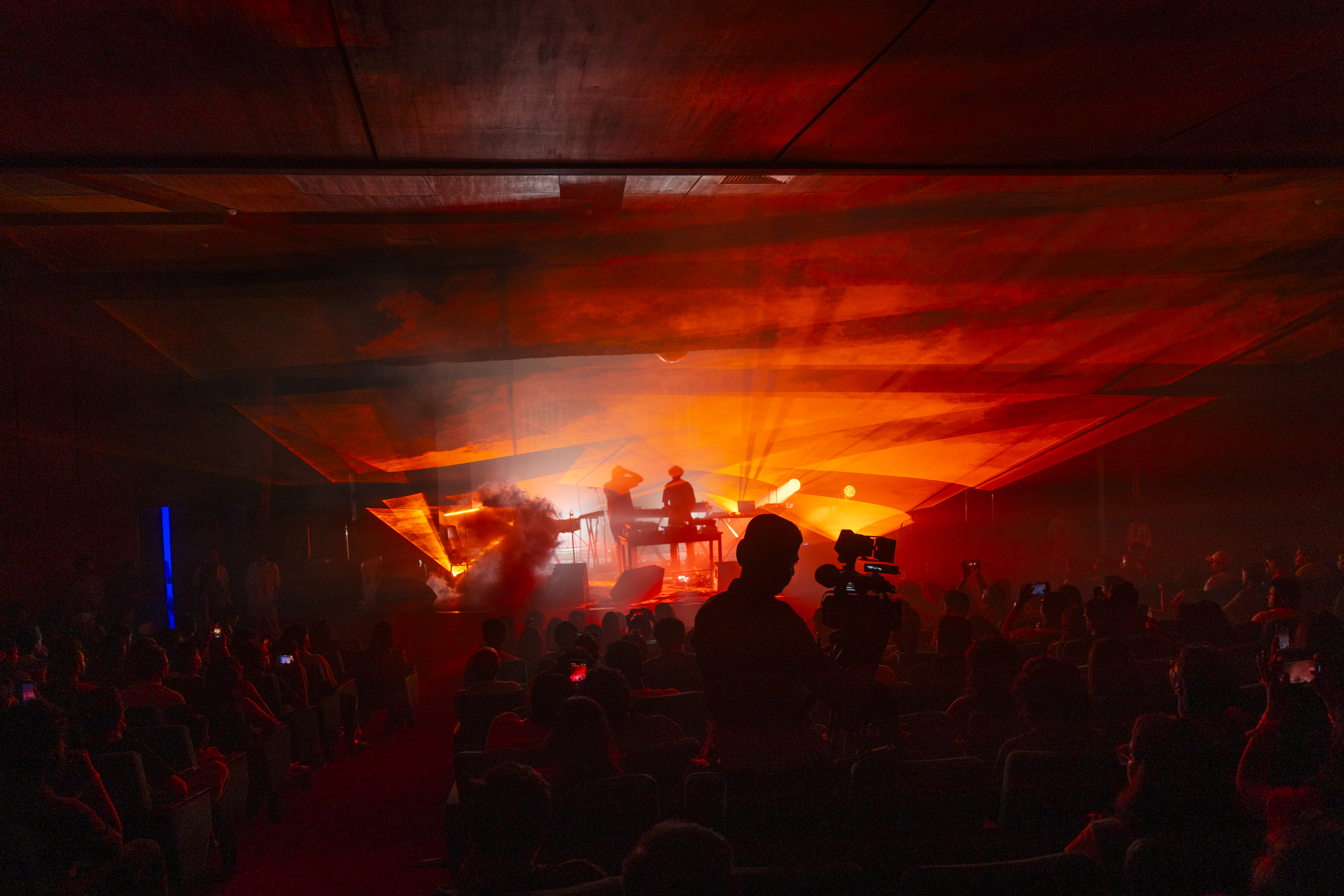
That educational layer mattered. For many listeners, electronic music in Bangladesh still carries narrow associations, often linked to private parties, elite crowds, late-night spaces, or a scene considered too small to enter without knowing someone. By making the workshop free of charge and placing it under a public cultural institution, “Notun Shobdo” tried to loosen that frame. It suggested that the genre is not merely a soundtrack for a subculture but a discipline with its own tools, labour, and room for new practitioners.
Breakfast Club Dhaka was a fitting collaborator. Known for its early-morning coffee raves, the collective has been attempting to change not only how people hear electronic music but also when and where they encounter it. Its founders, Tonmoy D Gupta, better known as OMDG, and Tawsif Alam Khan, known as TAK, have often spoken about building a community rather than simply gathering a crowd. “At Breakfast Club, our philosophy is simple: it’s about community over crowd. We want people to connect naturally over good coffee and music that builds energy through the morning,” TAK said in an earlier interview with The Daily Star.
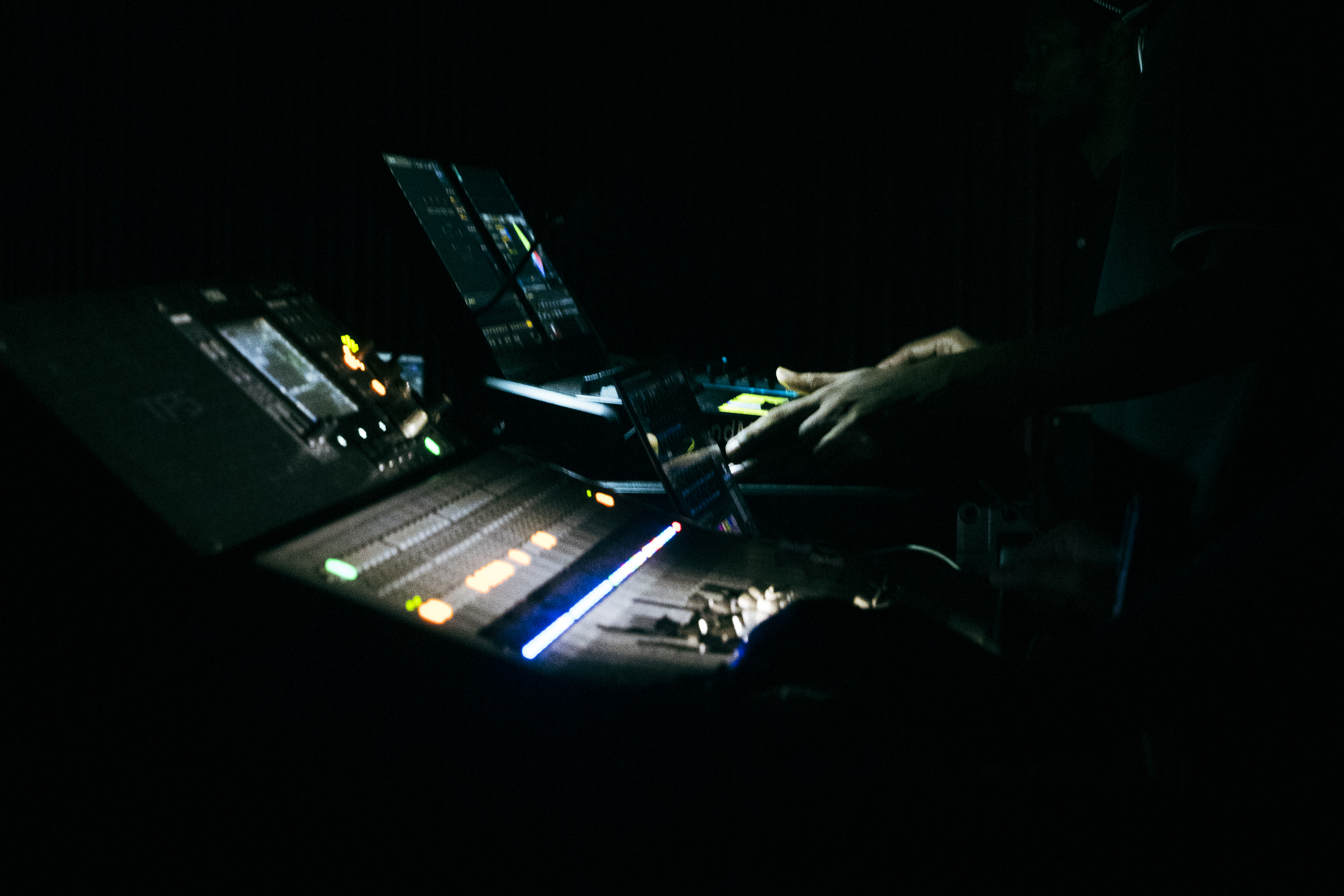
That philosophy carried into the evening. From 7pm, SocketJumpa and OMDG opened with a vinyl set, turning the first hour into a recalibration of the room. Later, Mithun Chakra, SocketJumpa (Hasib Mahmud), Sakib Tonmoy, Namrata Barman, Bay of Electronic (Shadwaan Chowdhury), Syeda Aashnai, and Shehzad Chowdhury took the stage for live sets that did not treat the local and the electronic as opposites. Classical inflections entered the electronic framework, where rhythm and melody negotiated rather than competed.
One of the evening’s most striking moments came when Shehzad brought spoken word into the electronic soundscape, reciting Abu Zafar Obaidullah’s “Ami Kingbadantir Kotha Bolchii” over a background of electronic music. The pairing worked because it did not treat poetry as an ornament or the music as mere accompaniment. Obaidullah’s grave, declarative cadence entered a different sonic architecture, where beats, textures, and ambient layers gave familiar Bengali literary voices a new spatial quality. In that fusion, the event found one of its clearest statements—electronic music need not stand outside local literary and cultural traditions. Rather, it can converse with them, stretch them, and carry them into another register without diminishing their original force.
Ehfaz Rezwan’s audio-reactive visuals extended that same spirit of fusion into another sensory register. They did not translate heritage into literal symbols. Instead, they offered shifting textures that hinted at memory and rootedness without overwhelming the music. At their best, the visuals allowed the audience to feel a cultural reference before trying to name it.
The audience offered the clearest argument. Young listeners stood alongside older attendees, many watching rather than simply moving. Some came for the artists, some out of curiosity, and others perhaps to understand why this sound has been gathering quiet momentum across Dhaka. In that mixed room, electronic music appeared less like a closed circuit and more like a conversation waiting to widen.
TAK’s note after the event made that ambition explicit. He wrote that Tonmoy had spent almost nine months explaining “why electronic music deserves a place in our cultural conversation.” He believed, TAK added, “that this is the new sound of our generation, and that artists working in this space deserve an opportunity to be seen, heard, and taken seriously.”
The distinction is important. Electronic music has been heard at Shilpakala before; international artists and art summit performances have brought electronic sets into the academy’s spaces. But “Notun Shobdo” was different in its design: an entire day of workshops, discussion, learning, and performance built around introducing the culture to a wider audience.
That wider context cannot be ignored. Not long ago, Shilpakala faced scrutiny and pressure over stage performances, including the halted staging of Desh Natak’s “Nityapurana” in November 2024. Against that backdrop, an institution-backed electronic music programme felt less like a departure from culture than an affirmation of its evolving nature.
By the time the lights settled and the last set gave way to ordinary conversation, “Notun Shobdo” had not solved the structural challenges facing Bangladesh’s electronic music scene. The community remains small, resources remain limited, and artists still need more stages, better technical support, and a less suspicious public imagination.
But the day offered something more durable than spectacle. It offered a way in. It gave newcomers a language, artists a public platform, and audiences a chance to hear electronic music outside the stigma that often surrounds it. In that sense, the new sound was not only coming from the speakers. It was coming from the room, learning how to listen.
 For all latest news, follow The Daily Star's Google News channel.
Comments