


‘Laili Majnu’ draws packed houses at Natmandal
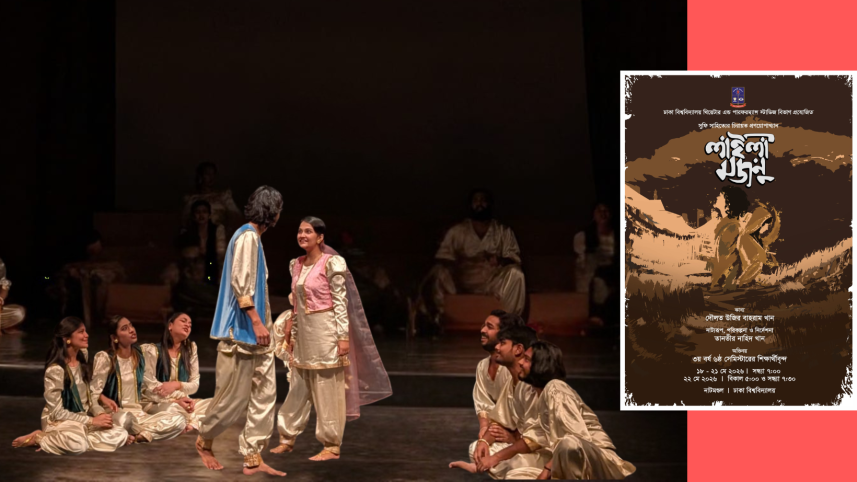
A centuries-old tale of love, grief and spiritual longing is returning to the stage at the University of Dhaka, where students of the Theatre and Performance Studies Department are set to present “Laili Majnu” in a new adaptation steeped in poetry, music and Sufi philosophy.
Based on the medieval Bengali retelling of the classic romance by poet Dawlat Wazir Bahram Khan, the production will be staged at Natmandal Auditorium from May 18 to 21 at 7 pm, with two additional shows scheduled for May 22 at 5 pm and 7:30 pm.

The production has been adapted, designed and directed by assistant professor Tanvir Nahid Khan, while performances will be led by sixth-semester undergraduate students of the department.
Though rooted in the legendary Persian romance popularised by Persian poet Nizami Ganjavi, Bahram Khan’s version reshaped the story through the lens of medieval Bengali literary tradition, blending Persian mysticism with local language, emotion and folk sensibility.


At the heart of the story are Qays and Laili, two young lovers from rival Arab tribes whose childhood affection grows into an all-consuming bond. When their relationship becomes public, social honour and family prestige intervene. Laili is confined to her home, while Qays descends into despair and wandering isolation. His madness eventually earns him the name “Majnu”, meaning “the mad one”.
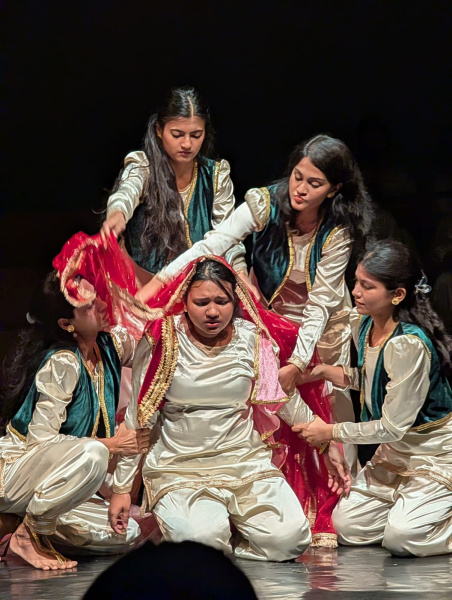
As separation deepens, the story moves beyond earthly romance into the realm of spiritual devotion. Forced into marriage with another man, Laili refuses conjugal life, remaining emotionally bound to Majnu until her death. Majnu later dies beside her grave, transforming their tragic separation into an eternal metaphysical union.
For director Tanvir Nahid Khan, the production is not merely a tragic love story, but a meditation on longing, resistance and transcendence.
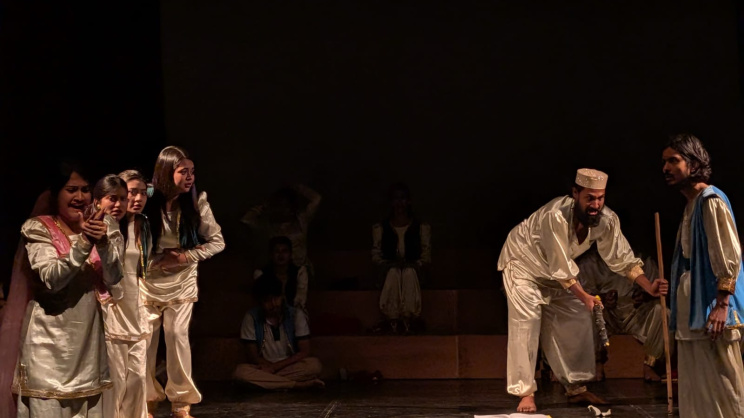
“Laili Majnu is not simply about worldly attraction,” he wrote in the director’s note. “To interpret their relationship only through physical love would diminish its eternal spiritual pursuit.”
He added that the production attempts to preserve the musicality and poetic cadence of Bahram Khan’s medieval Bengali language while making it accessible to contemporary audiences through movement, rhythm and restrained dialogue.

The director also noted that the department has recently been mourning the death of MA student Munira Mahjabin Mimo. The production, he said, carries that grief within it.
“With the memory of Mimo and the weight of collective sorrow, we continue our presentation of ‘Laili Majnu’,” he wrote.
 For all latest news, follow The Daily Star's Google News channel.
Comments