


'Badhonhara Brishtidhara' ushers in monsoon melodies at Chhayanaut

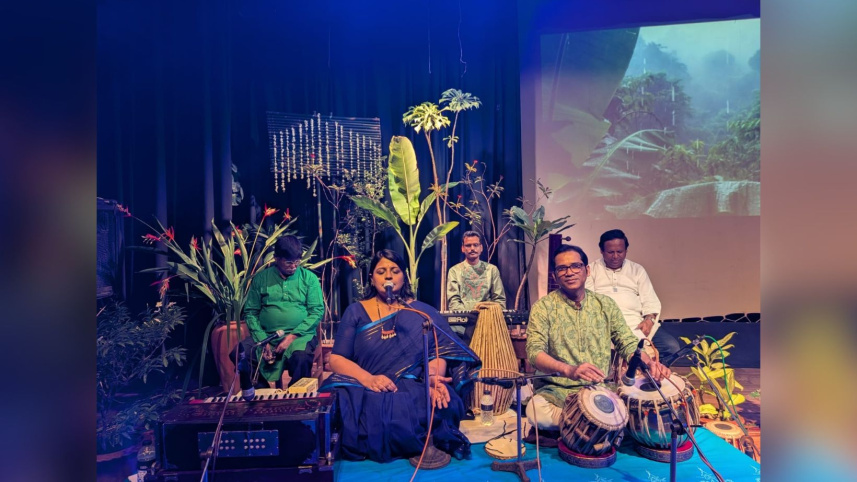
There is something about the rains that finds itself naturally entwined with Rabindranath Tagore—sometimes restless, sometimes tender, and at others carrying the weight of gathering clouds. Drawing from these shifting moods of the season, Jatiya Rabindra Sangeet Sammilan Parishad's Dhaka Metropolitan branch presented its monsoon programme, “Badhonhara Brishtidhara”, at Chhayanaut Auditorium yesterday evening.
Held at 7:30pm yesterday (August 13), corresponding to 29 Shraban, 1433, the programme brought together Rabindra Sangeet, recitation and dance, tracing the varied temperament of Bengal's monsoon through Tagore's works.
Opening the evening, the organisation's Dhaka Metropolitan branch President Krishti Hefaz thanked the audience for remaining connected with its cultural initiatives.
“We strive to present audiences with quality programmes so that the standards of our culture are upheld,” said Hefaz. “Bengali culture speaks of love for culture, mutual respect, fraternity and peace. Just as our six seasons are diverse, our culture too carries that diversity.”
She then read an excerpt from Rabindranath's “Shrabansandhya”, setting the tone for an evening built around rain in its many forms—from quiet longing to thunderous abandon.
The musical portion began with the ensemble rendition of “Shraban Megher Adhek Duar Oi Khola”. Abhaya Dutta followed with “Bandhu Raho Raho Sathe”, while Sanjoy Banik performed “Barshanmandrita Andhakare Esechhi”. Dipra Nishant took the stage with “Amar Ki Bedana Se Ki Jano”.
Shimu Dey’s rendition of “Chitto Amar Haralo Aaj Megher Majhkhane” evoked another face of the monsoon, one of a mind swept away into the clouds. Written by Tagore in 1910 and composed in raga Mallar, the song captures the gathering darkness, lightning and wild wind of the rainy season.
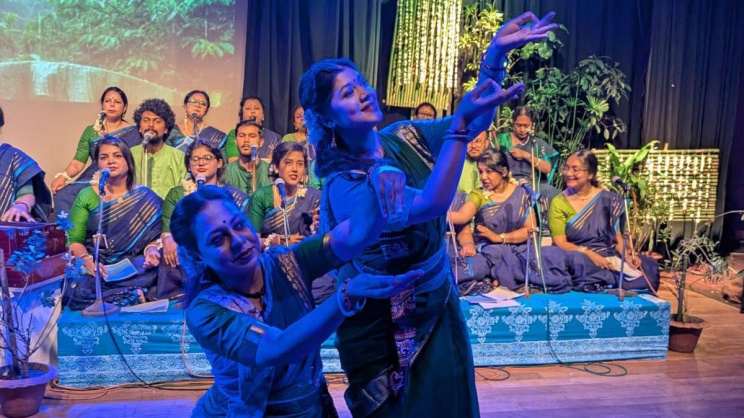
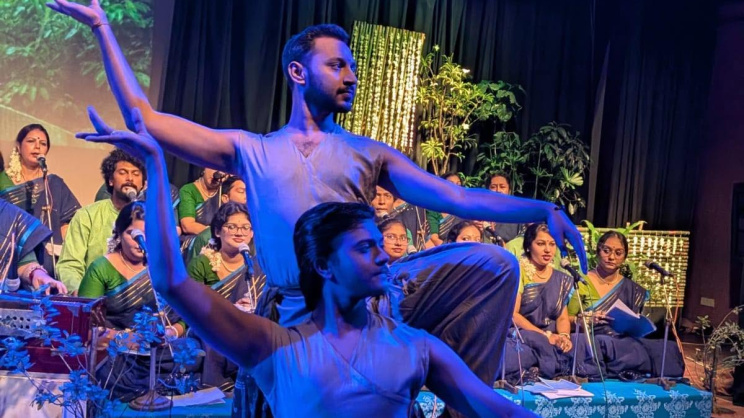
The programme also explored the more forceful character of the rains through “Ogo Andhar Ambare Prachanda Dambaru”, performed by the ensemble in alternating female and male voices. Music and movement came together for “Aji Jharo Jharo Mukhoro Badoro Dine”, followed by a recitation by Mahmuda Akhtar.
Another combined song-and-dance presentation accompanied “Amar Nishith Rater Badaldhara”, while Suma Rani Roy performed “Badal Diner Pratham Kadam Phul”. Fahim Hossain Chowdhury followed with “Amar Je Din Bhese Gechhe”. The evening eventually drew to a close with the collective rendition of “Jay Din Shraban Din”.

The programme was planned and musically directed by Mahua Manjari Sunanda. Providing instrumental accompaniment were Subir Ghosh on tabla, Robin Chowdhury on keyboard, Siraj Khan on sitar, and Pradip Roy on mandira.
Nilanjona Chowdhury, general secretary of the Dhaka Metropolitan branch, concluded the programme with a vote of thanks.
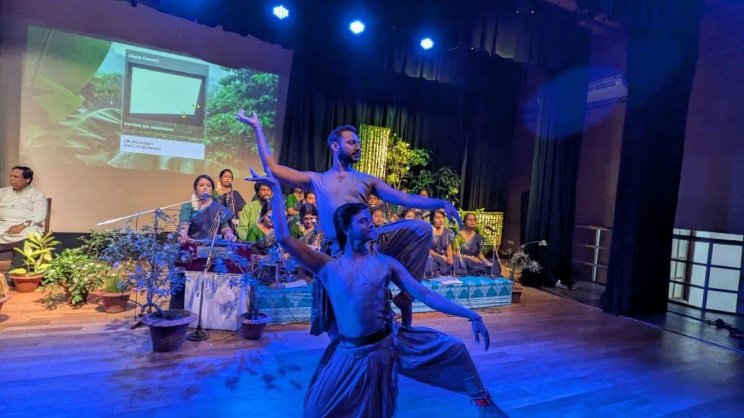
Through song, verse and dance, “Badhonhara Brishtidhara” presented the monsoon in its many shades—from the intimacy of rain against a window and the darkness of gathering clouds to the restless force of a storm—returning throughout to Tagore’s enduring expressions of Bengal’s seasons.

 For all latest news, follow The Daily Star's Google News channel.
Comments