


Artificial convenience vs real-life consequences
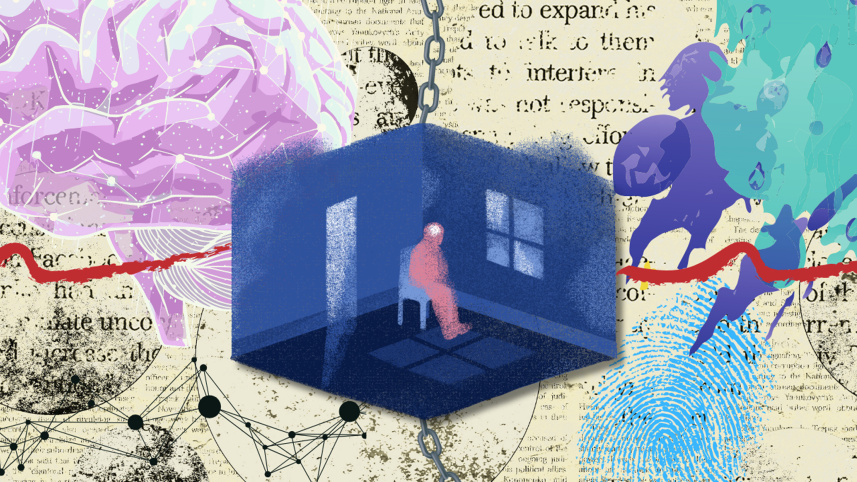
There is growing outrage about the recent trend of Artificial Intelligence companies destroying huge quantities of books in order to train their AI language models. This involves these organisations buying books in bulk—including, in many cases, very old books, as well as specialised or out-of-print texts—and using them in a process known as destructive scanning, which literally tears the books apart in order for scanning.
This action by AI companies is utterly infuriating to many of us. And if it is not illegal, it certainly should be. It is difficult to understand the logic behind a recent judgement in America, where a federal judge ruled that this process is acceptable under copyright law as it supposedly qualifies as “transformative” fair use.

What is equally infuriating is the ignorance and apathy of the general public, who do not seem to realise how much we are putting at risk by allowing these corporations to continue unchecked. It is the modern-day equivalent of plunder and pillage—letting them simply extract what they need and destroy everything else in the process.
Writers are already well aware of the implications here: our work has repeatedly been taken and used without our consent to train AI. And for what? The attempted duplication of human originality and empathy by a machine, in order to make its owners rich.
Not that I believe AI will be able to successfully emulate human creativity and originality anytime in the near future. Perhaps not ever. As Jo Atkins-Potts says in her poem “Please Ask AI”,
Please use AI
when your mother dies.
Ask it what grief feels like.
Let it explain bereavement
in twelve clear bullet points.
An encouraging development has been the landmark ruling by another federal judge in the US, who has instructed the company Anthropic to pay out USD 1.5 billion to more than 500,000 authors and publishers in a class action copyright settlement. The company is accused of using unauthorised and pirated copies of books obtained from so-called shadow libraries to train its Claude AI.
It is important not to give in to the constant brainwashing about the “inevitability” of AI taking over our lives and how convenient it will make everything. As readers, writers, and consumers, we have the power to decide for ourselves the extent to which we want to use AI in our lives—and whether we want to use it at all for our creative work as writers and artists.
Part of the beauty in human achievement lies in striving. The best art does not emerge out of convenience. It comes from empathy, love, loss, loneliness, grief, and experience. These are not things that machines can authentically mimic—nor, frankly, should we want them to. That is what Jo Atkins-Potts’ poem “Please Ask AI” makes all too clear to anyone who chooses.
I am strongly against the substantive use of AI in artistic endeavours. Obviously, writers can and do frequently turn to Google and other search engines for all kinds of random information—from bizarre weather phenomena to obscure poisons.
But in truth, what makes a piece of writing outstanding is the unique perspective (and considerable skill) of the individual concerned. As the saying goes, “Easy reading is hard writing.”
Part of the beauty in human achievement lies in striving. The best art does not emerge out of convenience. It comes from empathy, love, loss, loneliness, grief, and experience. These are not things that machines can authentically mimic—nor, frankly, should we want them to. That is what Jo Atkins-Potts’ poem “Please Ask AI” makes all too clear to anyone who chooses to give the matter a moment of thoughtful reflection.
There is undoubtedly an important role for technology in our lives, but all that our increasingly damaging reliance on AI is likely to do is undermine human creative efforts, coarsen our appreciation of real art, destroy the environment with the sheer quantity of resources needed to run these machines, and make tech billionaires wealthier. So, think twice before deciding that AI is an intervention fit to substitute for the real thing in all situations and seasons of human life.
Farah Ghuznavi is a writer, translator, and development worker. She published a short story collection titled Fragments of Riversong (Daily Star Books, 2013), and edited the Lifelines anthology (Zubaan Books, 2012). Reach her on Instagram \
@farahghuznavi.
 For all latest news, follow The Daily Star's Google News channel.
Comments