


Homes turning into ‘Pushti Bari’ in Chilmari chars
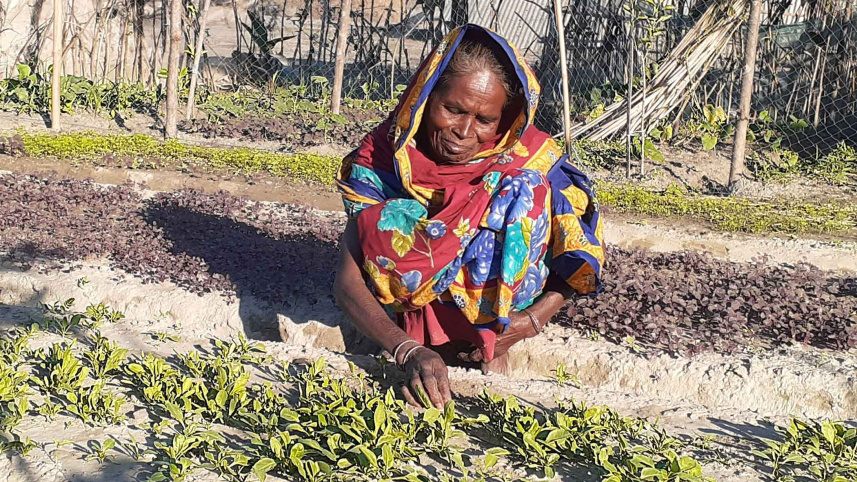
Women from around 11 thousand families with limited resources -- in chars or river islands of Kurigram's Chilmari upazila -- are learning to ensure balanced nutrition for their families by growing fruits and vegetables around their houses for their own consumption.
Under a project titled 'Sustained Opportunities for Nutrition Governance (SONGO)', funded by the European Union, non-governmental organisations RDRS Bangladesh and ICCO Cooperation are training the char residents on how to make best use of their available land for growing vegetables or fruits.

The houses, mostly built on four to six decimals of land, are now being turned into miniature agricultural farms, dubbed "Pushti Bari".
Sabina Begum, from Char Karai Barishal on the Brahmaputra river in the upazila, said their house on four decimals land is now a "Pushti Bari", where they have grown different vegetables and fruits including bottle gourd, green bean, papaya, chilli and ginger.
After meeting nutritional needs of the family, they can even sell excess produce, she added.
Yasmin Begum, from the same area, said after training, they are now able to utilise every inch of their unused land around the house and all vegetables and fruits consumed by the family are produced at home.
They could not ensure nutrition for the family due to high prices of different produce at markets, but the scenario has changed after training, said Nur Selima, from Char Bisarpara.
Ahasanul Kabir Bulu, project coordinator of SONGO in Chilmari, said women are provided free training on how to turn their houses into "Pushti Bari" by growing vegetables and fruits there.
They also provide seeds and technical support for free, he added.
Chilmari Upazila Agriculture Officer Kumar Pronoy Bisan Das said they also provide the same training and technical support free of cost to the char residents.
Pushti Bari can play a vital role in meeting nutritional needs of the ultra poor in the chars, he added.
 For all latest news, follow The Daily Star's Google News channel.
Comments