


Death of Boro seedlings worries farmers in Sylhet haors
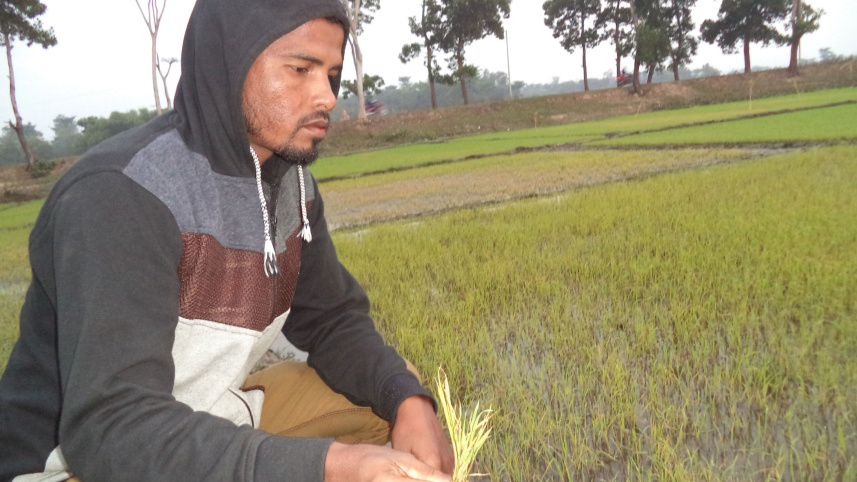
Some are blaming it on 'hostile weather', some on 'dense fog' and others on 'small brown insects'. But whatever the reason is, Boro seedlings are turning yellowish and dying alarmingly in haor areas of Moulvibazar and Sunamganj districts.
A major share of Boro rice produced in the country comes from crop lands in Hakaluki, Hail and Kawadighi haors -- three of the larger wetlands in the two districts under Sylhet division.

In a frantic effort to save the seedlings ahead of the planting period of cultivation of the crop, many farmers in the area followed advice of Department of Agricultural Extension (DAE) officials and applied different pesticides on the affected seedlings.
But the step could not save the seedlings from dying, said the farmers are now worried about a bleak prospect during this Boro season.
A number of farmers this correspondent interviewed in Bagerbari, Chalband, Medenimahal, Sonatiki, Dhulijora and Betahunja villages on the banks of Kawadighi Haor in Moulvibazar echoed the same sentiment.
However, DAE officials in Moulvibazar said seedlings have been affected only on several hectares of land in the area.
Farmer Saddam Mia, from Betahunja, said the seedlings are dying due to infestation of small brown insects and a persistent formation of dense fog over the area.
Mohammad Ali, another farmer from the same area, said after 10 to 15-day-old seedlings in his seedbed started to turn yellowish, his application of pesticides at the advice of local DAE officials did not bear any results.
Seedlings in Boro seedbed, made of hybrid HIRA variety, on 16 decimals of land initially looked good, but all of those died soon afterwards, said Musa Mia, from Kurchi village of Moulvibazar's Rajnagar upazila.
A DAE official requesting anonymity said 'brown tree grasshoppers', which settled in Boro seedbeds after Aman rice was harvested from the same field, are causing the deaths of Boro seedlings by damaging their roots.
Meanwhile, DAE Deputy Director in Moulvibazar Kazi Lutful Bari said there had been "some problems due to hostile weather", but planting of Boro seedlings in rice fields have started already.
Different varieties of Boro seeds are being distributed among farmers for free by the government and there will be adequate supply of seedlings for planting in the fields, he reassured.
"Prolonged fog" might have caused some damage to some seedbeds and the DAE is yet to assess the damage in the district, he added.
Contacted, DAE's Additional Director in Sylhet division Dilip Kumar Adhikari said their targeted Boro cultivation this season has been set at 4,84,000 hectares of land in Sylhet division.
There had been some incidents of pest attacks in Boro seedbeds in haor regions, but their prompt action stopped its spread, he also claimed.
 For all latest news, follow The Daily Star's Google News channel.
Comments