


Opinion: Bangladeshi expats caught in coronavirus lockdown connected like never before
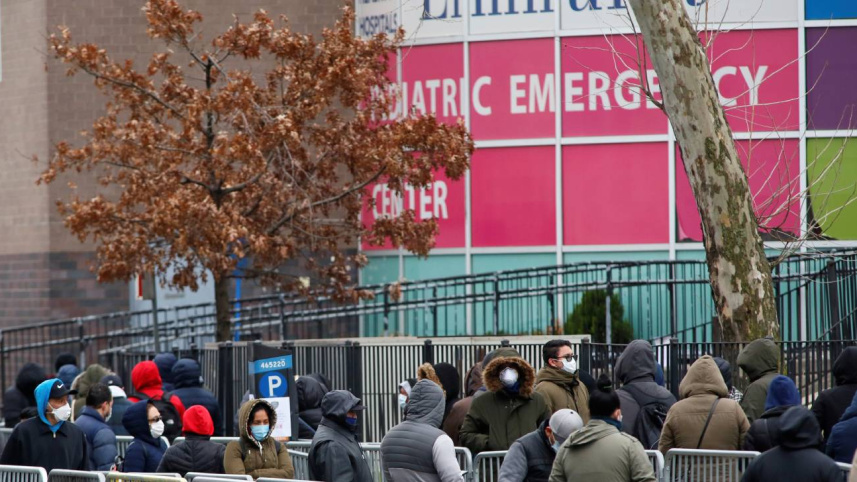
The suburb of Jackson Heights is known to have one the largest Bangladeshi populations in the United States. The local mosque, called the Jackson Heights Islamic Center, is a focal point for many in the community, especially for a large number of taxi drivers. It has now become a support centre helping allay fears around the novel coronavirus.
New York has become the flashpoint of the crisis in America. The area of Queens incorporating Jackson Heights is its epicenter, with the largest hospital -- Elmhurst -- already at breaking point. With its large immigrant community, including many Bangladeshis, and many with limited health insurance cover, the population is especially at risk. Many fear the situation may reach levels of Italy or Spain.

The traditional family structures that exist in Italy or Spain mirror Bangladeshis, with extended families often living together with regular and close contact between children and their grandparents. This was one of the characteristics identified as a contributor for the catastrophic impact of the pandemic in Spain and Italy.
The World Health Organization identified Bangladesh as potentially one of the most vulnerable to the virus' effects. The country's large population in Italy, the impossibility of social distancing in one of the most densely populated countries and the limited health infrastructure leaves Bangladesh exposed.
Much like the rest of the developing world, it is also very difficult to impose lockdown when so many workers live hand to mouth and there is no prospect of a welfare safety net. We have already seen that the biggest spreaders of the contagion may be returnees from Europe who migrated to rural villages having escaped ineffective quarantine measures.
The first recorded death of a Bangladeshi expatriate was a man who returned to Britain from Italy. He died early March. BBC Bangla reported: "The deceased, 60, returned to the UK from Italy on February 29 when he was physically fit. But everything went downhill after three days." The unidentified man was admitted to North Manchester General Hospital on March 3 and that was his last meeting with family members.
"It was really beyond my imagination that I would never get back my father." his son told BBC Bangla.
"After my father was admitted to the hospital, we were also quarantined at home. We regularly received information from the hospital over the phone, though we were not allowed to talk directly with my father," he said, adding they received a call from the hospital Sunday morning conveying the tragic news.
"We had never heard of anything like the coronavirus even two months back, but now it has taken away my father," he added.
In my hometown of Sydney, my parents are in lockdown. My children and I call them regularly through Skype but avoid visiting them. It is heartbreaking, but a ritual playing out all over the world as generational distancing takes effect to protect the most vulnerable. This is much more difficult in a country like Bangladesh, where extended families often live together.
My cousin in Sydney is due with her first child in a few weeks and was waiting for her mother to come from Jashore. But the border shutdowns have taken effect in Australia as they have throughout the world, leaving mother, daughter and soon to be grandchild apart. Ours is a family that has lived in Australia for several decades, yet I cannot remember a time when we have had more contact with our relatives in Bangladesh.
As yet, luckily, other Bangladeshis are yet to experience the horror of the Manchester family, unable to have a traditional Islamic funeral due to infection risk, but saying goodbye through a computer screen.
The economic effects are already profound in the Bangladeshi expatriate population. While the virus itself does not discriminate between the rich and poor, the economic meltdown disproportionately affects the poor. Garment orders from Bangladeshi factories have dried up to the tune of several billion dollars as orders from Europe and North America cease. Migrant workers in the Middle East, such a crucial part of the Bangladeshi economy through remittance payments, are stuck without work or a welfare safety net. Travel bans have stopped many other workers from migrating to their destinations, after paying tonnes of fees to manpower organisations.
Al Jazeera reports that in Qatar many Bangladeshis are in limbo. One worker, Jahirul Islam, was told by his boss that he would not be paid for two months. He was advised to go back home but the Bangladeshi government told workers to remain where they are. Amid fears over whether his work visa would be renewed, Jahirul is staying put.
"I am surviving on borrowed money at the moment...It's a really sad situation," he told the Thomson Reuters Foundation by phone.
In Western countries such as Australia or Britain, the worst affected Bangladeshis are international students. Many of their courses have either been postponed or moved entirely online. Common employers of students such as retail outlets have shut down due to trading restrictions. Like the migrant workers in the Middle East, most are forced to rely on help from local Bangladeshi families or draw from their savings, which are usually minimal.
Just as the world has never been so united in combatting a shared threat to the human species, Bangladeshi expatriates are also drawn together like never before in attempting to survive, both physically and financially.
The writer is an Australia based psychiatrist, author of The Exotic Rissole, and founder of website www.bddiaspora.com.
 For all latest news, follow The Daily Star's Google News channel.
Comments