


Why every visionary business founder needs a great COO
Every company founder reaches a point where success invites complexity. The product is gaining traction. The team is expanding. Investors are excited. Vision feels limitless. But somewhere along the way, momentum begins to stall. Meetings multiply. Decisions get bottlenecked. Execution starts to fray.
This isn't a failure of leadership. It's the cost of scaling without structure.
 For all latest news, follow The Daily Star's Google News channel.
 At this stage, most companies don't need more ideas or energy. They need alignment. They need rhythm. They need operational clarity. In other words, they need a chief operating officer (COO).
The COOs are not sidekicks—they're the integrators. The role of the COO is often misunderstood. It's seen as secondary, reactive, or purely tactical. But a great COO is none of those things.
They are not the fixer behind the scenes or the executor of leftover strategy. They are the integrator—the person who turns vision into sustainable progress, transforming scattered motion into synchronised momentum.
The COOs are not sidekicks—they're the integrators. The role of the COO is often misunderstood. It's seen as secondary, reactive, or purely tactical. But a great COO is none of those things
They create space for leaders to lead. They build systems that scale ambition without sacrificing focus.
What do the best COOs actually do? The most impactful COOs are not always visible but they are always essential. Their work includes translating vision into execution-ready systems, safeguarding executive time and decision-making bandwidth, pre-empting roadblocks and bringing structure to chaos and clarity to complexity.
Culture is operational, not aspirational. Culture is too often treated as a separate conversation, something abstract or Human Resources-driven. In reality, culture is embedded in operations. It's how time is managed, how decisions are made and how people communicate under pressure.
A great COO sees culture as a strategy to be executed. They enforce it through process, consistency, and example, quietly reinforcing values not with slogans, but with systems.
Hustle doesn't scale. Structure does. Companies are often powered by relentless energy. But that energy, over time, becomes unsustainable. Hustle may get a company off the ground, but what sustains growth is structure.
That's the work of a COO—to create the scaffolding for scale. To ensure that what made the company great at the beginning doesn't fall apart as it grows. To help founders not just to go further but to also not lose their way.
A final word to visionaries. The best time to bring in a COO is not when things are already breaking. It's before.
Smart founders recognise this. They understand that scaling a company is not just about building fast. It's about building right. And they know that behind every well-run, high-growth organisation, there's often a COO quietly driving alignment, execution, and integrity.
Ambition is powerful. But without architecture, it collapses under its own weight.
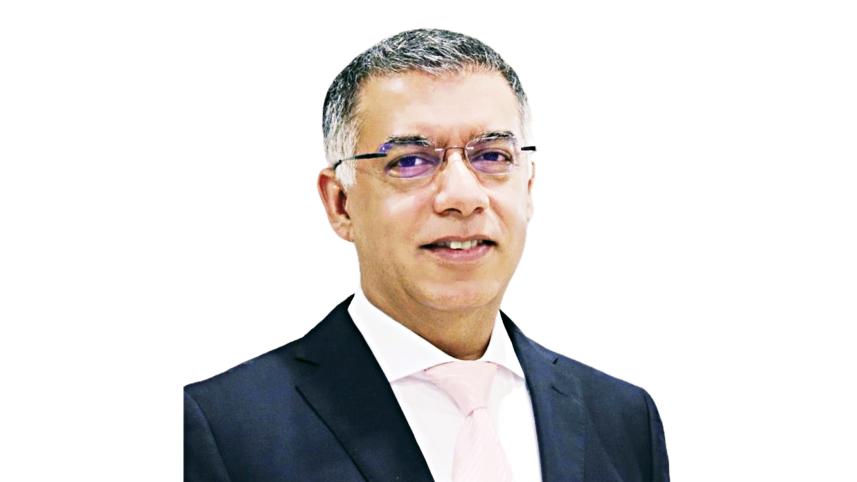
The writer is the additional managing director and chief operating officer of Eastern Bank PLC


Comments