


Western powers were unable to secure shipping in the Red Sea. Hormuz will be harder
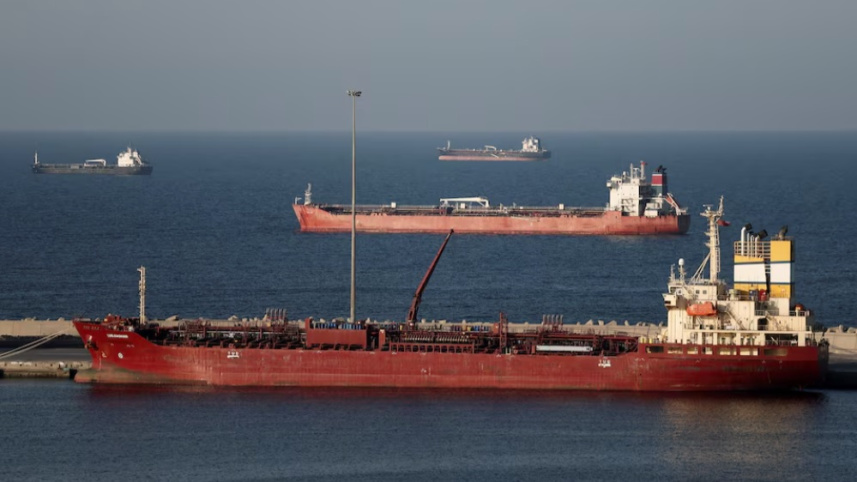
The Western allies trying to negotiate a way to protect the Strait of Hormuz for energy shipping face a stark reality: a similar effort in the Red Sea that started years earlier cost billions of dollars and ultimately failed against Yemen's Houthis.
The costly Red Sea experience - four ships sunk, more than $1 billion in weapons expended, and a route that the shipping industry still largely avoids - looms over the more complex Strait of Hormuz, the shipping artery used by roughly a fifth of global oil and liquefied natural gas supply and now blocked by Iran, a more formidable adversary than the Houthis.

Iran's threats to the strait and its attacks on energy infrastructure in nearby Gulf nations have sent oil prices soaring in the worst disruption to oil and gas supplies in history. Absent the strait's reopening, shortages will become more acute, threatening higher costs for energy, food and numerous other products worldwide.
"There is no substitute for the Strait of Hormuz," Kuwait Petroleum CEO Sheikh Nawaf Saud Al-Sabah said in a fiery video call streamed to the CERAWeek energy conference in Houston on Tuesday. "It is the world’s strait, under international law and practical reality."
U.N. Security Council members on Tuesday were negotiating resolutions for protecting the strait, with some nations, such as Bahrain, taking a forceful stance that would authorize the use of "all necessary means" to protect the strait - which could mean the use of force.
Reuters interviewed 19 security and maritime experts who described the myriad challenges facing the US and its allies in protecting the strait. Iran has far more advanced military forces than the Houthis, an arsenal of cheap drones, floating mines, and missiles, and easy access from its steep mountainous coast to the narrow waterway.
"Defending convoy operations in the Strait of Hormuz is significantly more challenging than in the Red Sea," said retired Rear Admiral Mark Montgomery, who in 1988 was involved in US tanker escorts through the Strait of Hormuz during the Iran-Iraq war.
That’s a big concern for US President Donald Trump as he seeks to justify the Iran war ahead of the November midterm elections to inflation-weary American voters now facing gasoline at nearly $4 a gallon. The spike in energy prices is not expected to fully reverse until the waterway opens, analysts said.
Soaring diesel prices are hurting the livelihood of thousands of Filipinos who run commuter jeepneys along Manila streets.
Trump has been noncommittal about US involvement, first saying the US Navy will escort ships when needed, then more recently saying other nations should lead the effort. Iran has blocked most ships from the maritime chokepoint since joint US-Israeli attacks on Iran began February 28.
Iran is considering a proposal to levy fees on vessels that want to use the strait, a Iranian lawmaker told state media last week.
The Hormuz Quagmire
The US mission to protect Red Sea shipping from the Houthis launched in December 2023, with European nations joining in with their own operation a few months later.
The allies shot down hundreds of drones and missiles, but the Houthis still sank four ships between 2024 and 2025. Shippers now largely avoid the passageway, once home to 12% of world trade, opting for a much longer voyage around the Horn of Africa.
 For all latest news, follow The Daily Star's Google News channel.
Comments