


Vulnerable economies get little relief from Hormuz reopening: UNCTAD
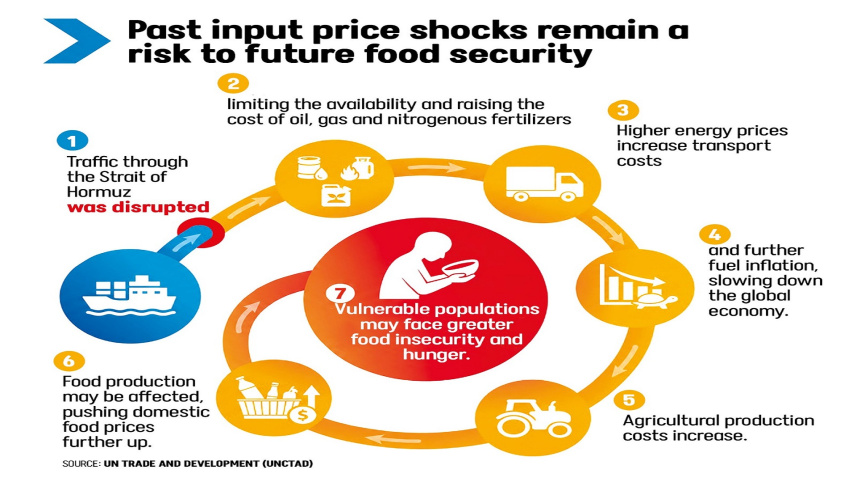
The reopening of the Strait of Hormuz after more than 100 days offers little immediate comfort to the Least Developed Countries (LDCs) and the most vulnerable economies as they are exposed to oil and food price shocks, according to a report by the UN Conference on Trade and Development (UNCTAD).
The report, released today, said the reopening of the key maritime chokepoint in the Gulf paves the way for recovery for 61 countries, including 35 LDCs.

“But for vulnerable economies, the path can be longer, uneven and costly,” UNCTAD said in its Trade and Development Insights.
Bangladesh meets 95 percent of its oil demand through imports and 30 percent of its gas requirements through imports. Middle Eastern countries such as Saudi Arabia and Qatar are two key sources.
The report said average daily ship transits through the Strait of Hormuz stood at over 100 between January 1 and February 27 this year. The number slumped to well below 50 after the closure of the Strait of Hormuz following the beginning of the US-Israel war on Iran.
Ship transit picked up after the United States and Iran signed an agreement in the middle of last month.
“The prospect of the Strait opening is calming energy markets down,” the UNCTAD report said, but added that in some sectors, such as transport, prices take longer to adjust.
During the more than 100 days of shipping disruption, negative effects had already rippled through the global economy, the UN agency’s report said.
“Vulnerable economies have been particularly exposed to oil and fertiliser price shocks. These shocks can result in persistent inflation,” it said.
“People suffer from inflation, especially the poor. It squeezes household budgets and makes necessities such as food and healthcare less affordable.”
The UNCTAD report said that rising oil, gas and nitrogenous fertiliser prices have increased agricultural production costs.
Food production may be affected, pushing domestic food prices further up, it said, warning that vulnerable populations may face greater food insecurity and hunger.
A real food price increase of just 5 percent increases the risk of child wasting, a measure of acute malnutrition with a strong link to early childhood mortality.
The report noted that food prices rose in the LDCs after the war began and added that food price inflation may keep climbing even after the triggering shock fades.
The UN agency said international energy prices can adjust fast, but shipping and value chains need time to adapt.
“The impact of the energy shock will continue to be felt unevenly. Many vulnerable economies have a limited ability to cope with soaring import bills. Countries dependent on oil imports face particularly strong domestic inflationary pressures,” it added.
According to the report, agricultural input price hikes could have persistent impacts on production and trade, coupled with the expected strong El Niño, raising concerns about food insecurity.
The UNCTAD stressed the importance of international support for vulnerable economies and said: “Decreasing official development assistance and mounting debt servicing burdens risk slowing down recovery.”
 For all latest news, follow The Daily Star's Google News channel.
Comments