


US business activity steady in January; consumer sentiment improves
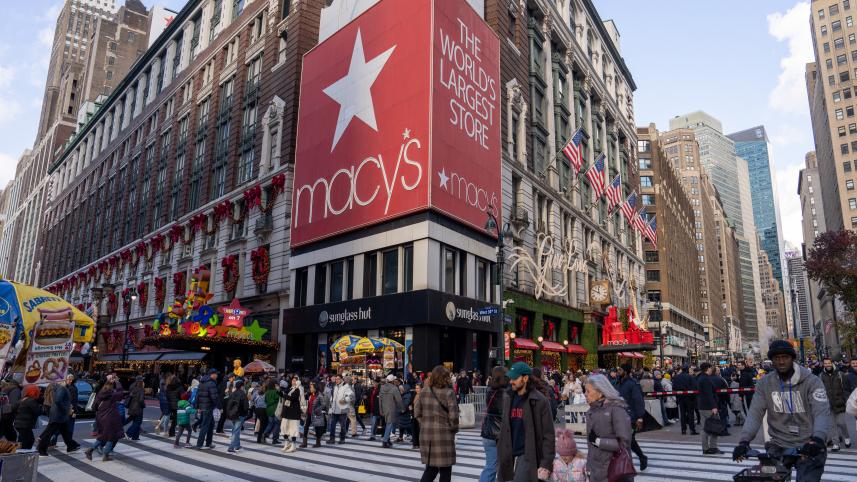
US business activity was steady in January as an improvement in new orders was offset by a lackluster labor market and lingering concerns among firms over higher costs because of import tariffs, a survey showed on Friday.
S&P Global said its flash US Composite PMI Output Index, which tracks the manufacturing and services sectors, inched down to 52.8 this month from 52.7 in December. A reading above 50 indicates expansion in the private sector. Both services and manufacturing flash PMIs were little changed this month.

S&P Global said the composite PMI was consistent with a moderation in economic growth at the turn of the year.
The government reported on Thursday that the economy grew at a 4.4 percent annualized pace in the third quarter, driven by strong consumer and business spending on intellectual property products, likely related to artificial intelligence, as well as a smaller trade deficit.
The Atlanta Federal Reserve is forecasting gross domestic product increased at a 5.4 percent rate in the October-December quarter. The fourth-quarter GDP report, delayed by the 43-day federal government shutdown, will be published on February 20.
The S&P Global survey's measure of new orders received by businesses rose to 52.2 from 50.8 in December. But exports fell to a nine-month low, pulled down by declines in both goods and services.
Business confidence weakened, dropping slightly below the average seen last year. S&P Global said "the demand-dampening impact of higher prices, geopolitical worries and federal government policies remained a concern among many firms."
The survey continued to paint a picture of labor market stagnation, which S&P Global said reflected concerns over rising costs and softer sales growth in recent months. Its measure of private sector employment edged up to 50.5 from 50.3 last month.
Some businesses reported difficulties finding staff, which could be linked to an immigration crackdown that economists say has reduced labor supply.
The survey's gauge of prices asked by firms for goods and services ticked down to 57.2, still among the highest recorded over the last three years, from 57.3 in December.
A measure of prices paid for inputs fell to a still-high 59.7 from 61.9 last month.
The elevated price measures suggest that inflation could remain high for some time. Businesses have absorbed some of the duties from President Donald Trump's wide-ranging tariffs, helping to avert a much-feared big inflation surge. The US central bank is expected to leave interest rates unchanged next week while policymakers watch inflation and the labor market.
"Increased costs, widely blamed on tariffs, are again cited as a key driver of higher prices for both goods and services in January, meaning inflation and affordability remains a widespread concern among businesses," said Chris Williamson, chief business economist at S&P Global Market Intelligence.
While a separate survey from the University of Michigan showed consumer sentiment picked up this month, inflation and labor market worries lingered. The University of Michigan's Consumer Sentiment Index increased to a final reading of 56.4, from an earlier estimate of 54.0.
The index was at 52.9 in December. The improvement this month occurred across the board, rising among Republicans and Democrats alike.
"However, national sentiment remains more than 20 percent below a year ago, as consumers continue to report pressures on their purchasing power stemming from high prices and the prospect of weakening labor markets," said Joanne Hsu, the director of the Surveys of Consumers.
The survey's measure of consumer expectations for inflation over the next year slipped to 4.0 percent, the lowest reading since January 2025, from an earlier estimate of 4.2 percent. Consumers' expectations for inflation over the next five years dipped to 3.3 percent from a preliminary estimate of 3.4 percent. Long-term inflation expectations edged up from 3.2 percent last month.
"With affordability pressures proving stubborn, a near‑term sentiment rebound looks unlikely," said Oren Klachkin, financial markets economist at Nationwide.
 For all latest news, follow The Daily Star's Google News channel.
Comments