


Stakeholders flag hurdles to vegetable export growth
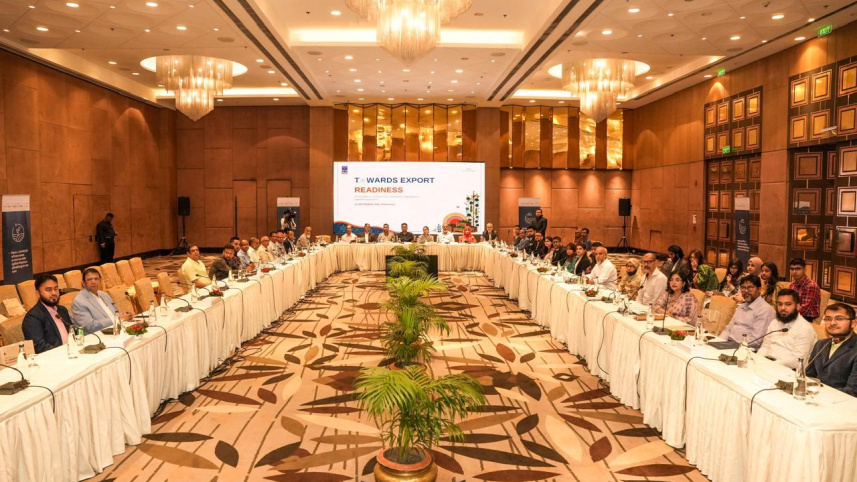
High export costs, compliance gaps and logistics bottlenecks are holding back Bangladesh’s vegetable exports, sector stakeholders said at a roundtable in Dhaka today.
They made the comments at the roundtable, titled “Towards Export Readiness: Constraints and Commitments in Bangladesh’s Vegetable Export Sector”, organised by Swisscontact Bangladesh in collaboration with the Standards and Trade Development Facility, IFIC Bank PLC and the Australian Government at InterContinental Dhaka.

The Economics Study Center at the University of Dhaka served as the knowledge partner, according to a press release.
Bangladesh produces more than 15 million tonnes of vegetables annually, yet exports less than 0.3 percent of that volume.
Participants said the challenges range from pest and pesticide management and buyer-accepted testing to traceability, logistics and coordination across the export chain.
Gourds continue to face rejection in European markets, affecting not only exporters but also buyer confidence in Bangladesh as a sourcing market.
Selim Raihan, professor of the Department of Economics at the University of Dhaka, moderated the roundtable.
Drawing on findings from a market study conducted by SGS Bangladesh, participants identified high production costs, air-freight charges, customs and airport handling delays, inadequate packaging and branding, pesticide-residue risks, costly certification and fragmented production systems as major constraints.
Amirul Baharain, additional director of the Plant Quarantine Wing at the Department of Agricultural Extension, highlighted the challenge of ensuring proper pesticide use at the farm level despite the existing toxicity-based colour-coding system.
He said product quality alone is not enough to secure international markets, stressing the importance of competitive packaging and presentation.
Md Abdul Majid Pramanik, director general of the Rural Development Academy, called for greater market diversification, improved logistics, stronger farm-level traceability, better coordination and export-related tax facilities.
Rising air-freight costs are making it increasingly difficult for Bangladeshi exporters to compete internationally and sustain export volumes, said Mobasserur Rahman Jewel, acting president of the Bangladesh Fruits, Vegetables and Allied Products Exporters Association (BFVAPEA).
Helal Ahmed, chief of branch business and head of operations at IFIC Bank PLC, said the bank is ready to provide financial support to exporters, farmers, advisers and other stakeholders in the agricultural export sector.
“Bangladesh has the land, the climate and the growers. What it does not yet have is a compliance system the buyer trusts on arrival,” said Ishrat Fatema, deputy country director of Swisscontact Bangladesh.
The discussion highlighted the need to treat export readiness as an integrated system. Farm-level practices, residue compliance, traceability, certification, packaging, logistics, market information and finance all influence a consignment’s ability to reach buyers competitively and reliably.
The roundtable brought together representatives from the Ministries of Commerce and Agriculture, Department of Agricultural Extension, Plant Quarantine Wing, Export Promotion Bureau, Bangladesh Standards and Testing Institution, commercial banks and BFVAPEA member exporters.
 For all latest news, follow The Daily Star's Google News channel.
Comments