


Red Sea tensions raise insurance costs


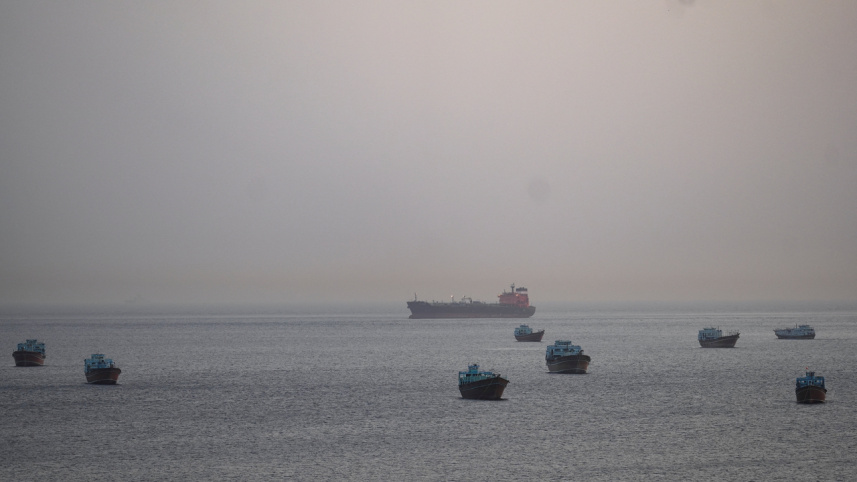
Importing food grains, fertiliser and other goods from the Middle East and Europe will become more expensive as war-risk insurance costs rise for vessels using the Red Sea amid escalating fighting along Yemen’s coast.
The higher insurance premiums and other additional costs will ultimately be passed on to consumers as shipowners and charterers adjust their expenses, said Md Mehrul Karim, chief executive officer of SR Shipping, a maritime concern of KSRM Group with 27 ocean-going vessels.

The US-Israel’s war on Iran, which began on February 28 this year, severely disrupted shipping through the Strait of Hormuz. The disruption has increased the importance of alternative routes, including the Red Sea, for some Middle Eastern oil and fertiliser shipments.
Oil tankers can sail from Saudi ports through the Bab el-Mandeb Strait, then into the Gulf of Aden and across the Arabian Sea to reach Asian markets.
But Houthi forces have recently seized strategic territory around the strait, including Perim Island, raising the risk to shipping through the route. The conflict has already disrupted maritime traffic, while recent Houthi attacks and advances along Yemen’s coast have increased the risk of further disruption to the passage.
Ship operators and owners say the situation is increasing the risk of renewed attacks and higher war-risk insurance premiums for vessels using the Red Sea corridor.
The charterer of one of the seven ships owned by state-owned ship operator Bangladesh Shipping Corporation (BSC) was planning to send the vessel to carry cargo to Yanbu, a major Saudi port on the Red Sea coast.
When BSC sought a quotation on Monday for war-risk insurance coverage from a foreign insurance company, it asked for a much higher premium.
BSC Managing Director (Insurance Cell) Md Ahasan Ul Karim said the company received a quotation seeking more than 1 percent of the value of a ship as a war-risk premium, while the rate earlier ranged between 0.125 percent and 0.75 percent.
War-risk premiums are calculated as a percentage of the total hull and machinery (H&M) value of the vessel for each transit.
Ahasan said a small rise in the premium means hundreds of thousands of dollars in extra costs for a seven-day voyage.
War-risk premiums are determined on a case-by-case basis and issued for a short period of one week or 10 days.
Md Jakir Hossain, general manager for the reinsurance department at Sadharan Bima Corporation, said an additional premium surcharge of 0.66 percent is currently being charged for risks involving the Red Sea, while the surcharge for routes involving the Gulf is lower at 0.385 percent.
He said the surcharge is added to the base insurance premium and varies depending on the level of tension in the region. When the situation becomes more intense, the rate increases, and when conditions improve, it falls.
The surcharge increases the overall cost of insurance. For example, if the base premium is $100,000, a 0.6 percent surcharge would add $600 to the total cost.
Abul Kalam Azad, chief executive officer at Takaful Islami Insurance PLC, said the insurance cost for goods imported from the Middle East region has increased since the Iran war.
He said Sadharan Bima Corporation and the Insurance Development and Regulatory Authority have increased tariff rates for risks in the region by around 15 percent to 20 percent.
Kalam said the premium rates charged to clients have also increased accordingly, allowing insurers to balance the higher overall risk, increased tariffs and elevated insurance costs.
Ahmed Saifuddin Chowdhury, chief executive officer at Bangladesh General Insurance Company PLC, said the company has been informed by its overseas reinsurance broker that current reinsurance rates are expected to increase.
However, the broker has not yet specified the extent of the increase or when exactly it will take effect.
 For all latest news, follow The Daily Star's Google News channel.
 Saifuddin said an increase in the risk premium rate would make it difficult for the company to offer competitive rates in the overseas market. As a result, domestic industries would have to pay higher premiums, putting pressure on their profits.
Satyajit Barman, head of business at TK Group, said the Red Sea has been widely used to import food grains, fertiliser and other goods from Europe and the Middle East.
“Amid war risk, the insurance premiums would surely rise, and it would add to the already soaring transport cost,” he said.
The alternative route to Bab el-Mandeb is to sail around Africa’s Cape of Good Hope, a detour of approximately 7,500 kilometres that would take an additional 20 to 25 days and require higher bunker costs, Barman said.
He added that one of the group’s wheat shipments is expected to arrive from the Baltic region in the coming weeks.
Comments