


Bangladesh yet to benefit from GI products: BUILD study

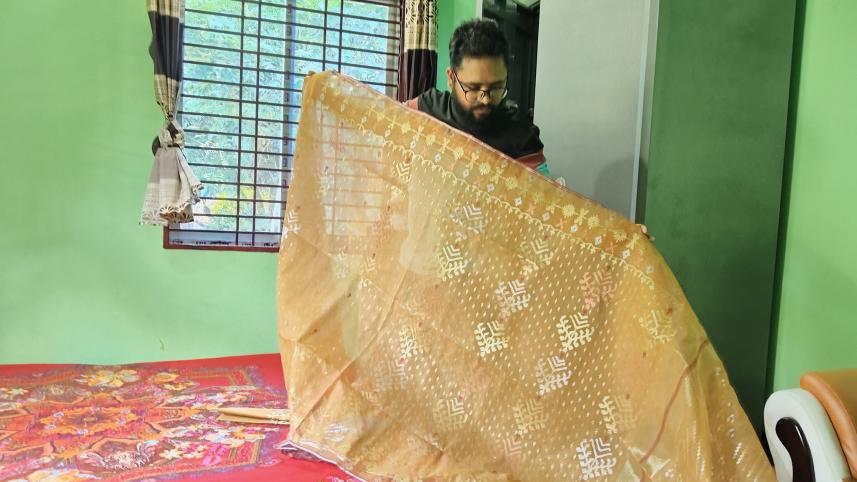
Despite securing the first geographical indication (GI) status in Bangladesh, the Jamdani industry is struggling amid poor commercialisation and weak enforcement.
While the Bangladesh Small and Cottage Industries Corporation (BSCIC) Jamdani Industrial Estate located in Narayanganj generates Tk 30-32 crore annually, many weavers earn just Tk 5,000-7,000 per month — barely enough to survive.

GI certificate holders have received no training, limiting its impact. Export volumes remain untracked, and past gains from a 25 percent cash incentive in 1997 — which boosted exports to $19.69 million — have faded, according to a recent study by the Business Initiative Leading Development (BUILD), a public-private dialogue platform.
Without proper support, the industry risks decline, even during peak seasons such as Eid, when projected sales reach Tk 150-160 crore, the study added.
The report said that despite registering 60 GI products, Bangladesh has yet to unlock their commercial value due to limited international recognition, weak market strategy, and a lack of producer involvement.
The study draws a sharp contrast between flagship GIs like Hilsa, Jamdani, and Nakshi Kantha, and the reality that many remain "paper GIs" with minimal economic return.
GI, a form of intellectual property, links products to their place of origin and ensures authenticity.
Globally, it is known to boost rural incomes, preserve heritage, and enhance export competitiveness. But in Bangladesh, most GIs remain stuck at the registration phase.
The Department of Patents, Designs, and Trademarks (DPDT) started issuing GI certifications in 2016. Nearly 90 percent of applications came from government agencies, and efforts to reap benefits from GI-tagged products have so far been very limited.
Ferdaus Ara Begum, chief executive officer of BUILD, said, "We have only completed the first step of the GI process. We need to implement a full GI lifecycle, which includes infrastructure, financing, marketing, and community mobilisation".
The report said legal recognition alone is not enough. "Without coordinated branding, market access, and international protection, GI-tagged goods cannot command the premium prices they deserve."
The paper noted that GI-tagged products often fetch 20-30 percent higher prices in global markets. For small producers, this could mean increased revenues and improved livelihoods. Yet, Bangladesh's GI ecosystem lacks strategic marketing, value chain financing, and export incentives.
The study said the country's GI-tagged items reportedly generated $840 million in exports in the fiscal year 2024-25. But most of this value comes from non-GI-certified products falling under similar trade codes.
In fact, none of the registered GIs are currently exported under official GI labels — limiting their market leverage and global recognition.
The report compares Bangladesh's GI performance with countries like India and Italy. Italy's GI sector contributes over $19 billion to its economy annually, supported by strong legal frameworks, producer associations, and global market strategies.
India, meanwhile, has moved swiftly to register and protect shared cultural products, sometimes beating Bangladesh to key filings.
In a recent example, India secured GI registration for the "Tangail Saree of Bengal" before Bangladesh, complicating future branding and export efforts. Other shared heritage items, including Jamdani and Sundarbans Honey, face similar risks.
Md Saiful Islam, chairman of BSCIC, said that although the Jamdani saree has received a GI certificate, the manufacturers have not approached the local office to take the initiative further.
"Achieving the certificate is not the end — it requires active efforts to use it as a brand," he said, adding, "The manufacturers should be proactive in engaging with us for the next steps."
Unfortunately, BSCIC officials do not receive cooperation from the Jamdani craftsmen due to a lack of awareness, he added.
 For all latest news, follow The Daily Star's Google News channel.
 Chandra Shekhar Saha, president of the Bangladesh Jatiya Karushilpa Parishad and a Jamdani expert, said that while GI registration is a step forward, key steps like creating an official logo or trademark remain unaddressed.
"I'm not aware of any framework for how a logo would be used or maintained," he said.
He added that beyond the GI announcement, there has been little follow-up.
On counterfeits, Saha said machine-made imitations are widespread and hard to regulate under current laws. "Imitations aren't new — China and others have replicated fabrics for years. We're surrounded by them," he said.
Begum said there is a need for dedicated display centres, stronger producer networks, and coordinated public-private efforts. "A clear roadmap must be included in the national GI policy, with time-bound implementation targets," she added.
The BUILD study recommends formulating a comprehensive National GI Policy under the Ministry of Industries. This policy should include time-bound targets for export promotion, capacity building, community mobilisation, and diplomatic coordination on shared heritage.
It also urges the government to fast-track the long-pending GI Tag system, implement product traceability, and move from direct cash incentives to branding subsidies and production-linked incentives for GI producers.
Comments