


Bangladesh lags behind regional peers in buffalo milk production

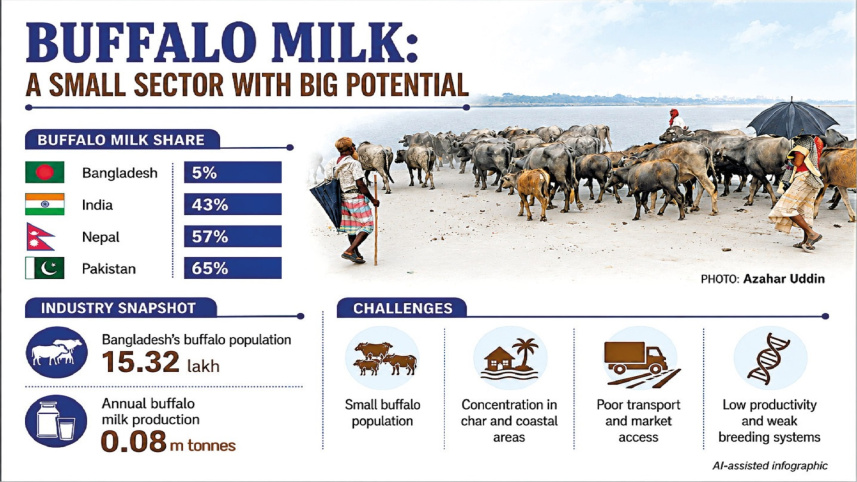
Bangladesh is lagging behind neighbouring countries in buffalo milk production due to low productivity, poor breeding practices, and limited investment in the dairy sector.
Buffalo milk accounts for 65 percent of total milk production in Pakistan, 43 percent in India, 57 percent in Nepal, and only 5 percent in Bangladesh, according to data from the Department of Livestock Services (DLS).

Pakistan produces 60.01 million tonnes of milk, of which 39.80 million tonnes come from buffalo. In India, total milk production stands at 239.03 million tonnes, with 104 million tonnes from buffalo. Nepal produces 2.90 million tonnes, including 1.65 million tonnes from buffalo.
In Bangladesh, total milk production is 16.20 million tonnes, against an annual demand of 16.23 million tonnes, but only 0.08 million tonnes comes from buffalo.
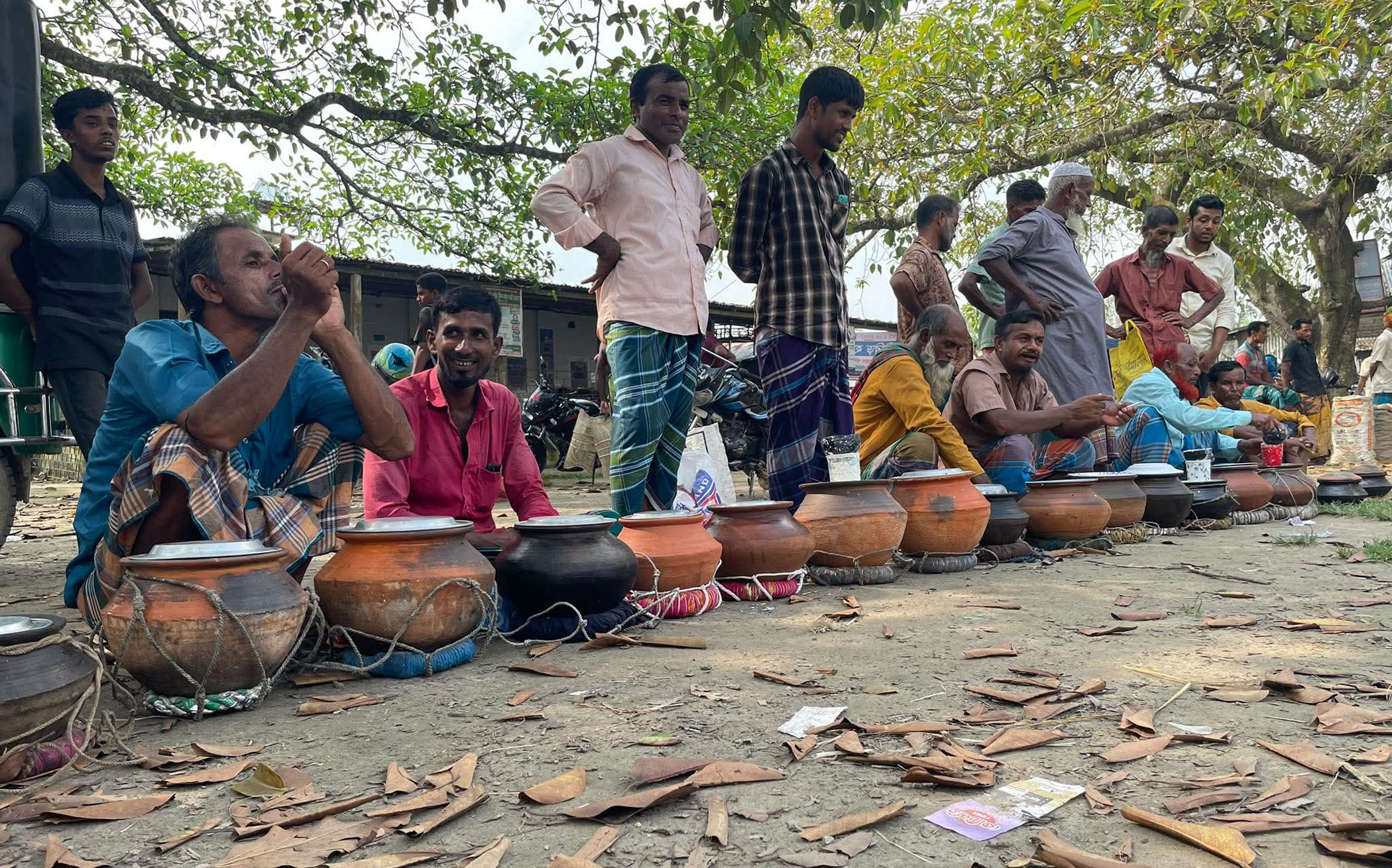
Md Bayezur Rahman, director for administration at the DLS, told The Daily Star that Bangladesh lags behind mainly due to a smaller buffalo population and the lack of targeted development in the sector.
He said that in those countries, buffalo populations have historically been higher due to natural conditions, while in Bangladesh research is underway and a buffalo development project has already been initiated.
DLS data shows buffalo numbers in the country have been rising steadily. In fiscal year 2024-25, the figure stood at 15.32 lakh, up from 15.24 lakh the previous year and 14.16 lakh in FY23.
Gautam Kumar Deb, principal scientific officer and head of a division at the Bangladesh Livestock Research Institute (BLRI), said the low contribution of buffalo milk is rooted in the historical use of buffaloes as draft animals rather than dairy producers.
Unlike in India, Pakistan, and Nepal -- where buffaloes have long been bred for milk -- buffaloes in Bangladesh were primarily used for ploughing fields and pulling carts in low-lying areas, resulting in native breeds with low milk-yielding capacity.
He said the buffalo population declined by around 50 percent after independence as their role in agriculture diminished, though numbers have since stabilised and are gradually rising.
Buffaloes are mainly raised in char and coastal areas, where most farmers rely on natural grazing. In remote char areas, transporting milk to markets is difficult, making calf rearing and meat production a more profitable option for many farmers.
Deb said buffalo farming in Bangladesh remains at a stage comparable to where cattle farming was in the 1980s. The BLRI, DLS, and Bangladesh Milk Producers' Co-operative Union Limited have been working to introduce high-yielding Indian buffalo breeds, with research populations already established. Improved animals are expected to reach farmers within one to two years.
A buffalo development project launched in July 2020 is nearing completion, with both infrastructure and research components more than 95 percent complete.
Jahangir Alam Khan, former director general of the BLRI and an agricultural economist, said buffaloes have historically received little attention in Bangladesh, where livestock development efforts largely focused on Zebu cattle. He said continued government support could lead to significant progress over the next 15 to 20 years, and that expanding buffalo farming could help meet domestic demand and reduce reliance on imported buffalo meat.
At an event in Dhaka yesterday marking World Milk Day 2026, State Minister for Fisheries and Livestock Sultan Salauddin Tuku said Bangladesh must increase milk production to reduce import dependence.
He said the government would take measures to expand production capacity with a view to building future export potential in the dairy sector.
 For all latest news, follow The Daily Star's Google News channel.
Comments