


Kuakata tourists wary of ‘petrol-coloured’ water

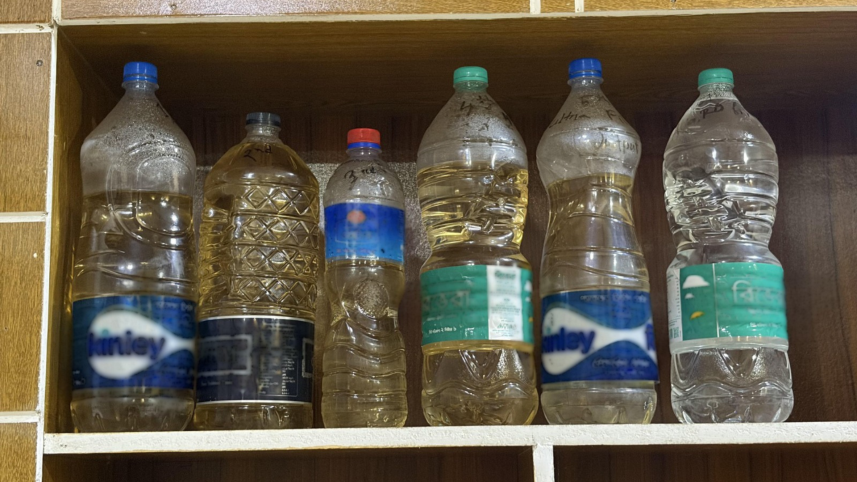
Tourists visiting Kuakata are raising concerns over reddish, yellowish and even “petrol-coloured” water from tubewells and taps, with many avoiding it for drinking and bathing.
“Upon seeing such water, it was hard to believe the water was drinkable,” said Sabbir Ahmed, who recently visited the coastal town.

Sabbir said he noticed the same problem during a later three-day stay and stopped using the water for drinking and bathing, opting for bottled water instead.
He said he experienced itching after using the water following his first visit.
The Daily Star spoke to 20 local residents and 15 tourists on the issue.
Around half of the residents reported no particular health problems. Six, however, complained of itching, hair loss, gastric discomfort or changes in urine colour and suspected the water, but none had medical evidence establishing a link.
The issue raises serious concerns for Kuakata, one of Bangladesh’s popular tourist destinations, which attracts a large number of visitors.
Motaleb Sharif, president of the Kuakata Hotel-Motel Owners’ Association, said around 15–20 lakh people visit the area annually, many of whom complain about the water colour.
However, water colour alone does not establish whether it is safe or not, according to the Department of Public Health Engineering (DPHE), as laboratory testing is required to determine the presence of contaminants such as arsenic and iron.
A DPHE test of a shallow-tubewell water sample collected from Kuakata on March 9 found 0.25772 mg/L of arsenic, against the permissible limit of 0.05 mg/L, and 10.861 mg/L of iron, compared with the acceptable range of 0.3–1.0 mg/L.
But the result applies only to that particular source and does not establish that all shallow-tubewell water in Kuakata has similar levels of contaminants.
Kuakata Pourashava has 25,127 residents, three pump houses, 577 household connections and around 250 hand-pump tubewells. Deep-tubewell water is mainly used for drinking, while shallow-tubewell water is generally used for bathing, washing and other household purposes.
DPHE officials said deep-tubewell water is currently within permissible limits for drinking and use, although rising salinity and chloride levels are a concern.
Md Ashrafuzzaman, executive engineer of DPHE Patuakhali, said the unusual colour may be caused by naturally occurring organic matter such as lignin and tannin.
DPHE does not routinely test for these substances, he added.
Dr Md Ahsanul Haque, medical officer at Kalapara Upazila Health Complex, said patients generally do not come with illnesses identified specifically as water-related.
Diarrhoea and typhoid are common among children, while skin problems are also seen, but these cannot be directly linked to local water without medical and laboratory evidence, he said.
The municipality and DPHE are working on a piped-water project whose proposed second phase includes a treatment plant, an overhead tank, around eight kilometres of pipeline and connections for about 1,600 households.
DPHE is also considering coagulation, flocculation, filtration and activated carbon treatment after finding reverse osmosis too costly.
“Laboratory tests suggest that these alternatives too could make the water clear,” Ashrafuzzaman said.
 For all latest news, follow The Daily Star's Google News channel.
Comments