


Shut since 2020, yet Shyampur Sugar Mills’ shares soar
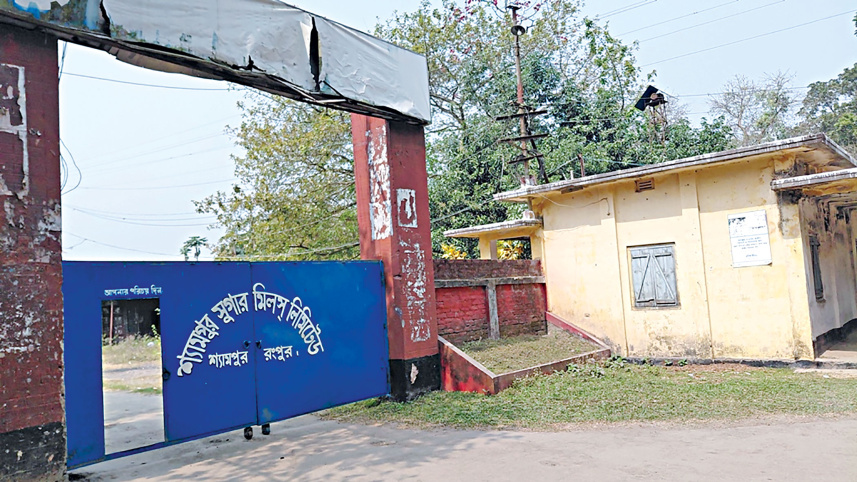
Shyampur Sugar Mills produced sugar for the last time six years ago. Although the facility shut down a month later, its stock suddenly started rising recently, becoming the 39th highest-value share on the Dhaka Stock Exchange (DSE).
The sugar mill’s stock surged around 40 percent in the last three months, DSE data showed.

The last sugar production at the mill took place on February 15, 2020, amounting to 44,527 tonnes. Financial losses shut it down a month later. In the fiscal year (FY) 2024-25, the mill’s net loss was Tk 25 crore while its accumulated loss stood at Tk 666 crore.
At the time of closure, around 700 officers and employees were working at the mill. Currently, only 63 officers and employees remain, among whom 36 are local residents who were appointed on a contractual basis as security personnel.
In the fiscal year 2024-25, the mill’s net loss was Tk 25 crore while its accumulated loss stood at Tk 666 crore
Despite the dire situation of the sugar mill, its stock rose mainly due to a rumour that manipulators are going to play with the stock, according to a market analyst.
Following such rumours, the stock sometimes surges and later falls again. As the number of shares for this mill is low, manipulators usually target this stock, he added.
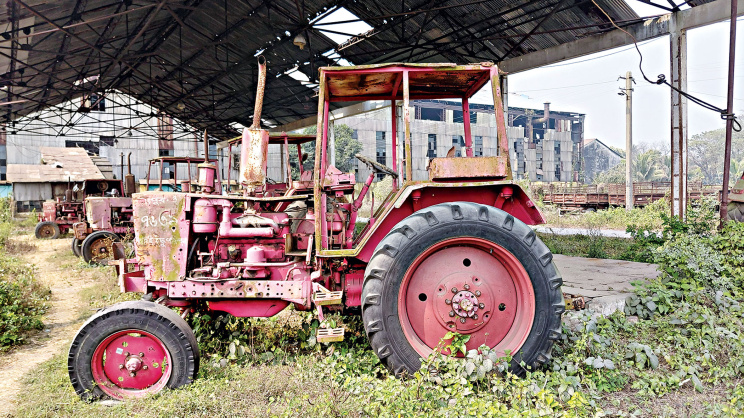
Established in 1965, Shyampur Sugar Mills spans 111 acres. Since its closure, more than a hundred tractors, various vehicles and equipment have been lying unused and neglected inside the premises. Many of these have become damaged. Some functional equipment has been transferred to other operating sugar mills in the country.
The Shyampur Sugar Mills is practically the only government industrial establishment in the Rangpur region. Its closure has had a negative impact on the economy of Shyampur and the surrounding areas under Rangpur Sadar upazila, locals say.
When the mill was operational, many of the mill staff and their families lived there, generating income for the locals. Businesses, transportation services and various service activities developed around the mill.
According to mill sources, Shyampur Sugar Mills produced an average of about 80,000 tonnes of sugar annually. To produce this quantity of sugar, around 13.4 lakh tonnes of sugarcane were required.
With an average production of 30 to 35 tonnes of sugarcane per acre of land, sugarcane was cultivated on about 40,000 to 42,000 acres of land. Nearly 40,000 farmers were directly involved in sugarcane cultivation.
The mill authorities spent around Tk 900 crore annually for sugarcane procurement and incentives for farmers.
In addition, more than Tk 35 crore flowed into the local economy annually in the form of salaries, allowances and other benefits for officers and employees.
After the closure, much of that economic activity disappeared. Business activities centring on the sugar mill have declined, and many small traders have been forced to change professions.
“Shyampur Sugar Mills was closely linked with the economy of this region,” said Mosharraf Hossain, managing director of the mill. “Local people have long been demanding the reopening of the mill. However, the government has not yet made a decision.”
Regarding the mill’s closure six years ago, Hossain said, “Most sugar mills in the country are running at a loss. To make them profitable, diversified activities such as organic fertiliser production and cold storage facilities must be introduced alongside sugar production.”
Local farmer Harkanta Barman used to cultivate sugarcane on two acres of land and supplied it to the mill. After the mill closed down, he switched to cultivating maize and seasonal vegetables.
“I earned good money by selling sugarcane to the mill. I also received incentives for sugarcane cultivation,” he said, adding that he does not make as much profit anymore.
“The government shut down the mill, citing losses, but our economy is linked to this mill. We have suffered financially because of its closure.”
 For all latest news, follow The Daily Star's Google News channel.
Comments