


Public-private partnership key to circular economy shift
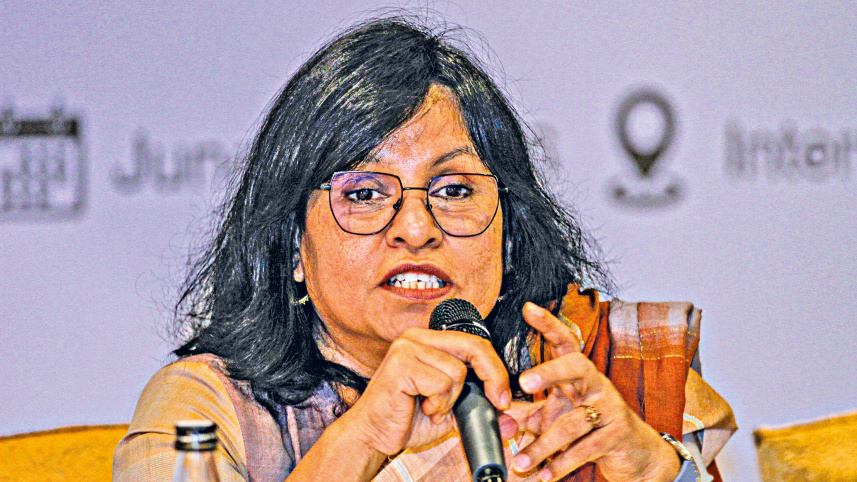
Bangladesh needs stronger collaboration between the government and the private sector to accelerate the transition to a circular economy and meet the European Union’s growing sustainability requirements, said Fahmida Khanam, secretary in charge of the Ministry of Environment, Forest and Climate Change.
She made the remarks at the “5th Sustainability & Green Growth Working Committee Meeting”, organised by Business Initiative Leading Development (BUILD) in collaboration with the Ministry of Environment, Forest and Climate Change at the ministry’s office in Dhaka recently.

Fahmida said the ministry has been assigned to implement circular economy initiatives as part of Bangladesh’s commitments under the United Nations Framework Convention on Climate Change and the United Nations Environment Programme to reduce environmental pollution.
Bangladesh generates more than 821,000 tonnes of plastic waste annually, but only 36 percent of it is recycled
“Meeting the European Union’s circularity requirements is essential, while promoting green businesses remains a key government priority,” she added.
She thanked BUILD for highlighting the issue, saying the circular economy has become a priority for both the government and the private sector.
Fahmida said the government is gradually phasing out single-use plastics, beginning with plastic stick-based cotton buds, stirrers and straws. However, she stressed that industries need sufficient time to shift towards environmentally sustainable production before the policy is fully enforced.
She also called for further discussions with industry associations, saying the environment ministry and the commerce ministry have information on businesses operating in the sector.
At the meeting, Ferdaus Ara Begum, chief executive officer of BUILD, presented a policy paper on the opportunities and challenges of plastic-to-textile recycling. She said Bangladesh could increase garment exports by $4 billion to $5 billion by formalising and expanding the plastic recycling sector.
The study found that Bangladesh generates more than 821,000 tonnes of plastic waste annually, but only 36 percent of it is recycled. A large part of the value chain remains informal and lacks adequate investment.
The paper said expanding plastic-to-textile recycling would reduce dependence on imported man-made fibres and help Bangladesh comply with the European Union’s Green Deal and extended producer responsibility requirements. It recommended adopting a National Circular Economy Policy and forming a Circular Economy Council with representatives from relevant stakeholders to ensure coordinated governance.
The study also suggested government policies on waste collection, standards and traceability, along with quality checks and certification of polyethene terephthalate (PET) scrap before shipment and allowing its import.
SHM Mustafiz, director of the Bangladesh Garment Manufacturers and Exporters Association, stressed the need for proper waste collection points and fixed rates for waste collection.
He said trade licences should be mandatory to formalise the textile waste sector, build an organised collection system and ensure a steady supply of raw materials for recycling industries.
“The waste management system needs to be regularised to develop a blended financing model and attract foreign investment,” he added.
Officials from various government ministries, public agencies, the United Nations Industrial Development Organization and private sector trade bodies attended the meeting.
 For all latest news, follow The Daily Star's Google News channel.
Comments