


Power shortages threaten Khulna’s shrimp sector

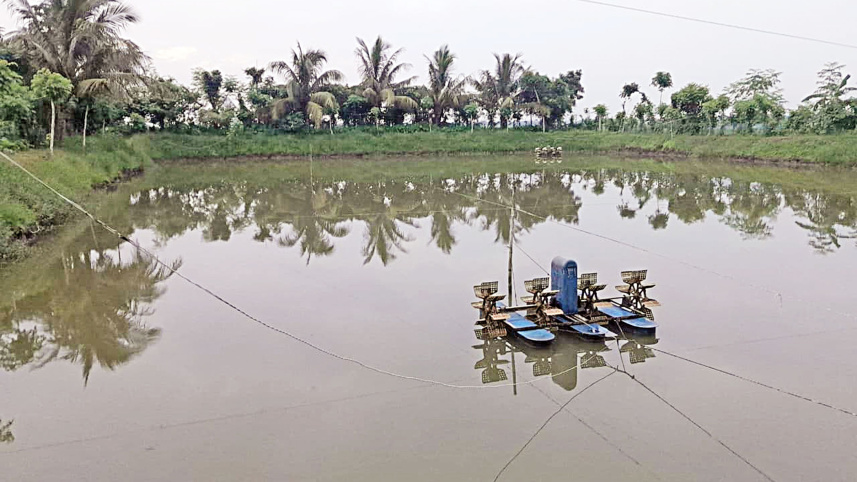
Frequent power outages across southwestern Bangladesh are pushing the country’s export-oriented shrimp industry deeper into uncertainty, disrupting production at farms and processing factories as growers and exporters grapple with prolonged electricity shortages.
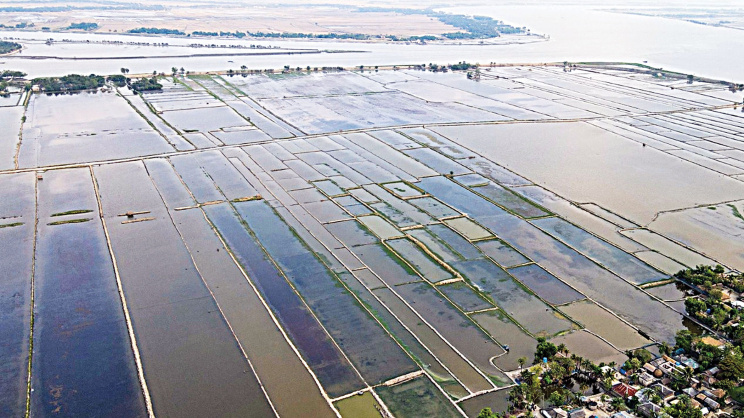
According to the Fisheries Department, 33,437.13 hectares are under shrimp and prawn farming in Khulna, 38,982.14 hectares in Bagerhat and 74,249 hectares in Satkhira.

From semi-intensive shrimp farms in Khulna, Bagerhat and Satkhira to processing factories in Rupsha and other industrial areas, unreliable electricity has become a serious threat to one of Bangladesh’s leading agricultural export sectors.
Farmers are struggling to keep shrimp alive in oxygen-starved ponds, while processors are relying on costly diesel to keep cold storage running and meet export commitments.
The crisis comes as the industry is already grappling with weak global demand, rising production costs, disease outbreaks, a shortage of quality post-larvae and factory closures.
Farmers are struggling to keep shrimp alive in oxygen-starved ponds, while processors are relying on costly diesel to keep cold storage running and meet export commitments
FARMERS STRUGGLE TO KEEP SHRIMP ALIVE
“Whenever power goes out for several hours, we become anxious. The aerators stop, oxygen levels fall, and the shrimp begin to suffer. If electricity is not restored quickly, we risk losing an entire crop,” said Sutanu Gain, who operates 10 semi-intensive shrimp ponds in Batiaghata upazila.
Even a few hours without aeration can sharply increase shrimp mortality in semi-intensive farms.
“There are around 250 semi-intensive shrimp farms in our locality, all of which are facing severe electricity shortages,” said Nittananda Mondal of Bandha village in Dumuria.
At least 20 farm owners have lost nearly all their shrimp fry because they could not operate their paddle-wheel aerators, he claimed.
“We are spending far more on diesel than we planned. Many small and medium farmers simply cannot afford to run generators for long hours every day,” said Bipprodash Boiragi, another shrimp farmer from Chak Soilmari.
Industry insiders say lower survival rates are worsening the raw material shortage facing processors and exporters, with disruptions rippling through the supply chain in southwestern Bangladesh, the country’s main producer of export-bound black tiger shrimp.
PROCESSORS STRUGGLE TO CONTINUE OPERATIONS
The power crisis is also hitting shrimp processing factories, where uninterrupted electricity is essential to maintain food safety standards. Repeated outages are forcing factories to halt production, rely on diesel generators and absorb soaring operating costs.
Mizanur Rahman, assistant manager of Southern Foods Limited, said power outages lasted seven to 10 hours a day, forcing the company to consume around 75 litres of diesel an hour to keep its cold storage running.
“We can continue production using generators, but the cost is extremely high. Frequent outages also reduce productivity and disrupt delivery schedules,” he said.
Nazmul Huda Chowdhury, manager of Rozemco Foods Limited in Rupsha, said continuous load-shedding over the past several days has increased the risk of spoilage. Maintaining the cold chain is essential for export-quality shrimp, he stressed.
According to the Bangladesh Frozen Foods Exporters Association, only 30 of the 109 registered shrimp processing factories in Khulna and 18 in Chattogram are operating.
The factories can process about 400,000 tonnes annually but are receiving only around seven percent of the shrimp they need.
 For all latest news, follow The Daily Star's Google News channel.
 “This shortage of electricity has already forced many factories to suspend operations temporarily,” said Shyamal Das, director of the association and managing director of MU Sea Foods Limited, warning that the disruption could undermine an industry supporting nearly six million people.
POWER SHORTAGES INTENSIFY PRESSURE
According to the West Zone Power Distribution Company, electricity demand in the Khulna zone reached 601MW at 1:00pm on Monday (August 3), while supply stood at 486MW, leaving a deficit of 115MW -- almost double the 59MW shortfall recorded a day earlier.
Khulna district and city recorded the largest shortage, with load-shedding rising to 52MW from 19MW a day earlier. Significant shortfalls were also reported in Kushtia, Magura, Jhenaidah, Meherpur, Narail and Chuadanga.
Across the WZPDCL service area, covering the Khulna and Barishal zones, demand reached 773MW against supply of 657MW, leaving a deficit of 116MW.
Rural shrimp-producing areas served by the Khulna Palli Bidyut Samiti have been among the worst affected.
Sanjay Kumar Roy, deputy general manager of the Dumuria Zonal Office under the Khulna Palli Bidyut Samiti, said extensive load-shedding had become unavoidable because electricity allocations were far below demand.
“Our four substations require between 23 and 25 megawatts, but in recent days we have received barely half of that,” he said.
“Peak demand in our service area is around 80 to 85 megawatts, but we have been unable to meet it in recent days because of supply shortages. We understand that consumers are suffering,” said Tushar Kanti Mondal, general manager of the Khulna Palli Bidyut Samiti.
Khulna District Fisheries Officer Md Badiuzzaman told The Daily Star that persistent outages had created serious challenges for semi-intensive shrimp farmers.
According to the district fisheries office, Khulna has 129 semi-intensive black tiger shrimp (bagda) farms covering 474.09 hectares and 155 freshwater prawn (golda) farms spanning 19.8 hectares. He warned prolonged disruptions could affect shrimp health, survival and production.
“Most farmers are now relying on generators during load-shedding to keep their aerators running. Those who cannot afford generators are using diesel-powered aerators instead, significantly increasing their production costs,” he said.
Comments