


No room for illusory budgeting amid fiscal strain

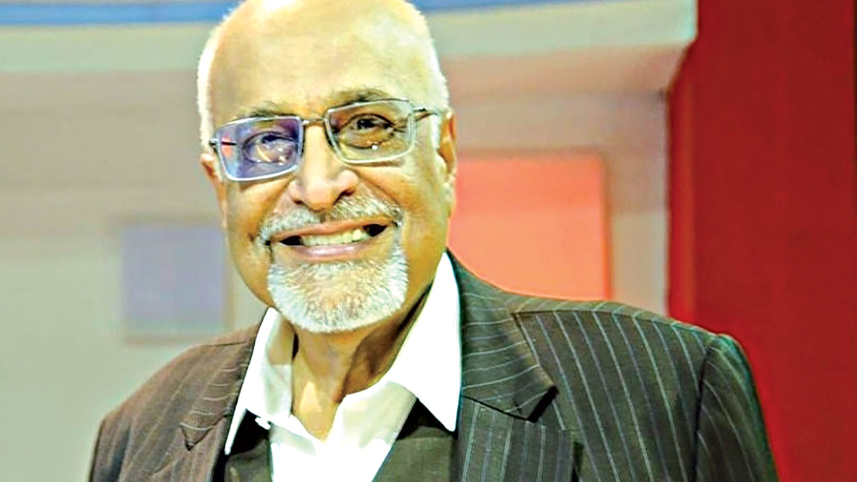
Bangladesh can no longer afford “surreal” budgets built on inflated projections and political convenience, warned eminent economist Debapriya Bhattacharya.
He urged the government to confront its fiscal realities through difficult but necessary reforms.

“Don’t make a surreal budget -- an illusory one that defies realities. Artificially inflated expenditures and income may be politically saleable at the moment, but everyone knows these numbers cannot be delivered,” he said.
“However unpalatable it may sound, the government does not have the luxury of fiscal profligacy. The guiding factor must be the government’s available fiscal space,” he said.
In an interview with The Daily Star, the distinguished fellow of the Centre for Policy Dialogue (CPD) shared his perspectives on the government’s upcoming budget for the fiscal year 2026-27.
He outlined potential avenues for revenue mobilisation, flagged concerns over public expenditure, and stressed the need for a credible and transparent fiscal framework to navigate mounting economic pressures.
At the core of the upcoming budget lies a critical challenge: how to mobilise adequate revenue without overburdening taxpayers.
According to Debapriya, a significant portion of potential revenue is lost through tax exemptions.
“Income tax exemptions alone account for around 3 percent of GDP. If you add VAT and customs exemptions, total tax expenditures rise to about 6.8 percent,” he said, citing data from the National Board of Revenue (NBR).
But he cautioned against blanket removal.
“The priority should be rationalisation. We need to assess whether these exemptions are disproportionately benefiting certain business groups and whether they are actually improving productivity and competitiveness of the sector concerned,” he said.
Ensuring that small and medium enterprises receive adequate tax support should also be part of that review, he added.
Beyond tax dispensations, the government faces growing fiscal pressure from demand for subsidies and incentives.
“Subsidies account for about 1.8 percent of GDP, with a large share going to the power sector. There are also significant export and agricultural incentives, Debapriya said.
“When you combine tax expenditures, subsidies, and fiscal incentives, the total fiscal exposure reaches around 9 to 10 percent of GDP. Including contingent liabilities, it exceeds 12 percent. That is substantial for an economy which collects less than 7 percent of GDP as total revenue.”
To address the existing revenue gap, Debapriya stressed the importance of expanding the tax base. Out of 1.28 crore tax identification number (TIN) holders, less than 23 lakhs (18 percent) actually pay taxes.
“The principle should be low tax rates with high coverage,” he said. “We need to bring more people into the tax net rather than increasing the burden on a small group.”
He also highlighted the need to distinguish between taxable individuals and taxable income.
“Someone may be within the tax net but have little taxable income, while others with significant income remain under-taxed. That imbalance needs to be corrected.”
He suggested exploring new areas of taxation, including property and inheritance taxes.
 For all latest news, follow The Daily Star's Google News channel.
 “In most developed economies, inheritance tax is used to address intergenerational inequality. You cannot tackle inequality by taxing income alone; asset inequality is far greater in our country,” he said.
Asset recovery, particularly by bringing back stolen resources and making large defaulters pay, could also provide an additional source of revenue if pursued effectively, he added.
SHRINKING FISCAL SPACE
Debapriya warned that Bangladesh’s fiscal space is narrowing, as operating expenditures continue to rise. The newly elected government will have to prudently consider the recommendations made by the National Pay Commission 2025 under the interim government.
“Salaries, subsidies, and interest payments are consuming revenue budget,” he said.
“Debt stress is now emerging as a major macroeconomic challenge.” Currently, the debt servicing liabilities of the government -- domestic and external -- are almost double the amount of total public expenditure for health and education.
He noted that public expectations from the new government remain high. Some early measures based on electoral commitments may appear to be populist in nature. However, these initiatives are being rolled out in phases and remain relatively contained in fiscal terms, he added.
URGENCY OF TAX REFORMS
Debapriya stressed that delays in tax administration reform, particularly within the NBR, could undermine domestic revenue mobilisation.
“If the reform process is not completed quickly, especially the institutional restructuring, tax collection may suffer at a critical time,” he warned.
He pointed out that both revenue collection and public expenditure will peak during the last quarter (April-June) of the current fiscal year.
“Reducing human interaction, minimising discretionary power, and ensuring transparency through digital systems are essential for improving efficiency and accountability,” he said.
For Bangladesh, he concluded, the way forward lies in realism, discipline, and coherent policymaking.
“We often see policy contradictions-- where one measure offsets another. That reduces overall effectiveness,” he said. Thus, there is a need for consistency and coordination.
“The opportunity is still there,” he said. “But it is narrowing.”
The policy expert urged the finance minister to adopt a pragmatic but structured approach to fiscal reform, stressing the need for policymakers to look beyond immediate pressures.
“My suggestion is simple: take the hard path, but place it within a medium-term budgetary framework -- a three-year horizon. That way, people can be assured that short-term difficulties will lead to longer-term stability,” he said.
“You should not be overly concerned about what happens in just one year. The real focus should be on where the national economy would stand before the next national election, he observed.
Using an analogy, he explained the need for short-term restraint to enable long-term gains.
“If you want to make a long jump, you have to step back first, gather momentum, and then leap forward. This is that moment-- we may need to pull back now to create the space for consolidation and future growth.”
STALLED CAPITAL MARKET REFORMS
Debapriya pointed to the long-standing proposal of offloading shares of multinational companies (MNCs), state-owned banks and enterprises (SOEs) to deepen the capital market.
“This idea dates back to the former finance minister Saifur Rahman’s time, but implementation has been continuously aborted,” he said.
The interim government also gave instructions to bring in shares of profitable SOEs and multinational companies to the capital market. The government and the MNCs each were to offload at least 5 percent of their shares. “But to no avail.”
He attributed the failure to bureaucratic resistance, as officials often benefit from maintaining control over these entities. Offloading the shares would have given the capital market some positive vibes and, at the same time, generated some much-needed resources for the government.
On the expenditure side, he expressed concern over the effectiveness of public spending, particularly under the Annual Development Programme (ADP).
“Many projects are delayed, repeatedly revised, and suffer from poor feasibility studies,” he said.
“Protracted land acquisition process and deficient project management, epitomised by inappropriate project directors, are also common.” There are more than 1300 projects under the ADP, one-third of which are six to eleven years old.
He recommended forming a dedicated review body to weed out the “zombie projects” that have been continuing without meaningful progress.
“There is also a need to appoint skilled project directors and, where necessary, bring in professionals from outside the government,” he added.
Improving the quality of spending, he noted, would increase public trust and tax compliance.
Comments