


Jute farmers expanded acreage, extreme weather cut harvests


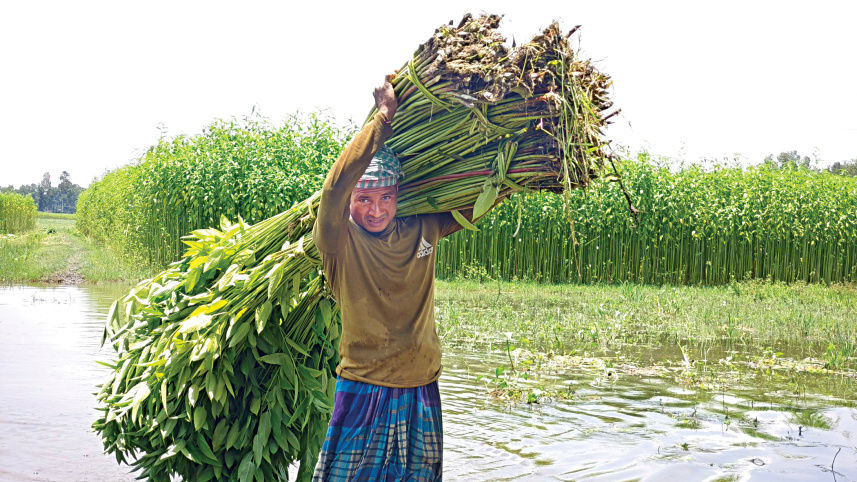
Nader Ali Mondal, a farmer from Jadurchar village in Kurigram’s Roumari upazila, expanded jute cultivation from eight to 10 bighas this season after earning good returns last year. But heavy rainfall during April and May reduced yields, and he now fears losses.
“Last year I harvested around six maunds per bigha, but this year I expect less than five. If market prices are not favourable, I will not even recover my production costs.”

High-quality jute sold for around Tk 4,000 per maund (37.32 kg) in September and October last year, according to the Bangladesh Jute Association, before rising to about Tk 4,300 in November.
Like Nader, thousands of farmers expanded jute cultivation this season after favourable prices last year. But a prolonged dry spell followed by heavy rainfall during the crop’s early growth stage reduced plant height and fibre yields despite the larger cultivated area.
Officials and farmers said the adverse weather, coupled with higher fertiliser, pesticide and labour costs, has sharply reduced farmers’ profit prospects.
SHORTER PLANTS, THINNER HARVESTS
According to the Department of Agricultural Extension (DAE), jute has been cultivated on 720,000 hectares this year, with a production target of 1.52 million tonnes. Last year, the crop covered 705,000 hectares. One hectare is equal to about 7.5 bighas of land.
Encouraged by favourable prices in 2025, many farmers expanded cultivation this season, expecting another profitable harvest. However, weather conditions turned unfavourable soon after sowing.
Officials from the Rangpur Meteorological Office and the DAE said the Rangpur region received 504 millimetres of rainfall in April, nearly three times the 170 mm recorded a year earlier. Rainfall rose further to 786 mm in May from 195 mm in the same month last year.
Agricultural experts said jute requires only 150 to 200 mm of rainfall during April and May, making this year’s precipitation far higher than the crop’s optimum requirement.
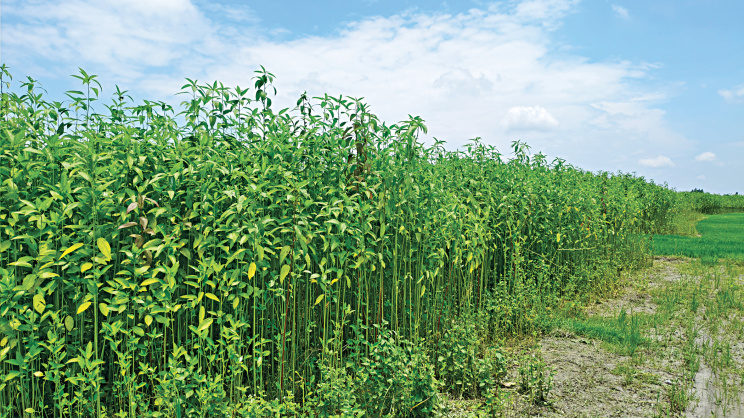
Sirajul Islam, additional director of the DAE’s Rangpur regional office, said continuous rainfall during sowing and early growth left plants 2 to 5 feet shorter than usual, cutting yields by 40 to 60 kilograms per bigha.
“Farmers earned good profits last year because of favourable prices, but this year they are worried due to lower production,” he said.
According to the official, about 30 percent of the region’s jute has been harvested, while the remaining 70 percent is still in the fields. Fresh jute is expected to reach local markets within the next month.
DROUGHT AND RAIN SQUEEZE GROWERS
Jute farmers in Faridpur and Rajbari, two of Bangladesh’s leading jute-producing districts, are bracing for financial losses this season.
A prolonged dry spell forced many farmers to irrigate repeatedly, but fuel shortages limited irrigation. Heavy rainfall before harvest then caused widespread lodging, forcing premature harvesting.
Farmers say lower yields, higher irrigation costs and rising labour expenses have pushed production costs to record levels.
Faridpur produces around 2.14 lakh tonnes of premium-grade jute annually, making it the country’s leading hub for high-quality fibre.
Md Asaduzzaman, a farmer from Basakustia village in Pangsha upazila of Rajbari, said he cultivated jute on 45 decimals of land this year and spent around Tk 22,000 from sowing to retting.
“Because of the drought, the plants did not grow properly. Then excessive rainfall forced me to harvest earlier than expected,” he said.
 For all latest news, follow The Daily Star's Google News channel.
 Asaduzzaman expects no more than eight maunds of fibre, worth around Tk 32,000 to Tk 33,000 at current market prices. Department of Agricultural Extension (DAE) data show that jute has been cultivated on 86,531 hectares in Faridpur this season.
In neighbouring Rajbari, the crop covers 47,780 hectares across the district’s five upazilas in the 2026-27 fiscal year, underscoring the region’s importance to Bangladesh’s jute production.
Faridpur DAE Deputy Director Md Shahaduzzaman, however, said the recent rain is unlikely to affect overall production and has instead helped farmers ret harvested jute closer to their fields.
He added that labour wages typically rise during peak harvesting.
EXPERTS URGE CLIMATE RESILIENCE
Tarana Afroj Shajoni, chief inspector of the Department of Jute’s Rangpur regional office, said lower production is likely to reduce farmers’ incomes despite relatively favourable prices.
“Last year, farmers received up to Tk 4,500 per maund. Trading of the new crop has not yet started on a large scale, and prices will largely depend on market arrivals and demand,” she said.
She added that expanding export markets for raw jute and jute goods would strengthen domestic prices, ensuring fair returns for growers and encouraging future investment in cultivation.
Agricultural researcher and economist Mamunur Rashid said the latest situation highlights the growing vulnerability of Bangladesh’s traditional cash crops to climate variability.
Increasingly erratic rainfall is making jute cultivation more unpredictable, reducing productivity despite expanded cultivation, he said.
He called for developing climate-resilient jute varieties, improving field drainage, strengthening extension services, ensuring fair farmgate prices and expanding export markets to protect farmers’ incomes and sustain the long-term competitiveness of Bangladesh’s jute sector.
For more than a year, farmers have been incurring losses on almost every crop, said Amzad Hossain, a farmer from Char Mahipur village in Rangpur’s Gangachara upazila.
“We lost money on potatoes, barely recovered our costs from paddy, maize prices have fallen, and now jute yields have also declined. It is becoming increasingly difficult to survive.”
Comments