


Informal sector workers remain marginal: experts
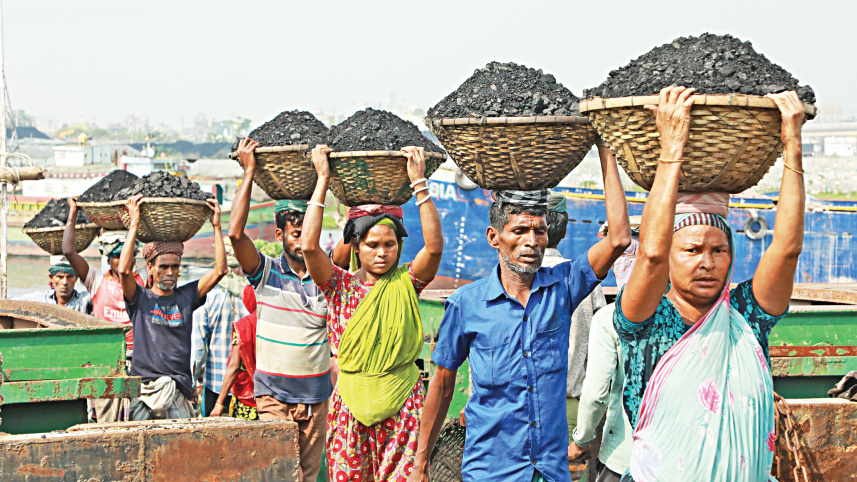
The vast majority of Bangladesh’s workforce remains in marginal conditions, outside the reach of formal labour protections, experts warned yesterday, calling for a shift in policy focus beyond the garment sector.
Around 85 percent of workers are engaged in the informal sector with little regulation or protection, Syed Sultan Uddin Ahmmed, former chairman of the Labour Reform Commission, said at a May Day discussion in Dhaka.

The programme, held at the Economics Reporters Forum office, was organised by the Network for People’s Action (NPA), a newly formed political party.
At the event, Ahmmed also noted that the dominance of ready-made garments (RMG) in national and international labour discourse obscures a far wider problem.
“As an export-oriented industry, the RMG sector remains at the centre of national and international discussion. While this sector is important, it should not overshadow the broader reality,” he said.
A stronger industrial base and labour movement in large sectors could eventually benefit workers in other areas, he said, calling for a more inclusive labour perspective.
“Sanitation workers, day labourers and informal workers continue to live in precarious conditions,” said the labour policy expert.
He added, “We celebrate long holidays, but for day labourers, even a few days without work can mean going without food… Yet there is no universal social security system to protect them.”
Ahmmed also criticised existing social protection measures as charity-driven rather than rights-based. “The fact that a single rainy day can leave a labourer’s family without food rarely enters policy thinking.”
Echoing the same, Prof Selim Raihan, executive director of the South Asian Network on Economic Modeling (Sanem), said the garment sector’s export growth had not translated into proportional gains for workers.
“Productivity has increased over the decades, yet real wages have lagged. That disconnect tells us something fundamental about the structure of our growth,” he said.
Raihan also pointed to a persistent narrative that stronger labour rights would hurt competitiveness. “This (narrative) has often been used to discourage workers from organising or demanding more.”
He added that labour discussions in Bangladesh too often stop at minimum standards.
“We rarely move beyond ensuring the bare minimum to discussing living wages or broader social protections,” he said.
Among others, Taslima Akhter, president of the Bangladesh Garment Sramik Samhati, also spoke at the event.
 For all latest news, follow The Daily Star's Google News channel.
Comments