


Impose a hard budget constraint for rest of FY26: Debapriya
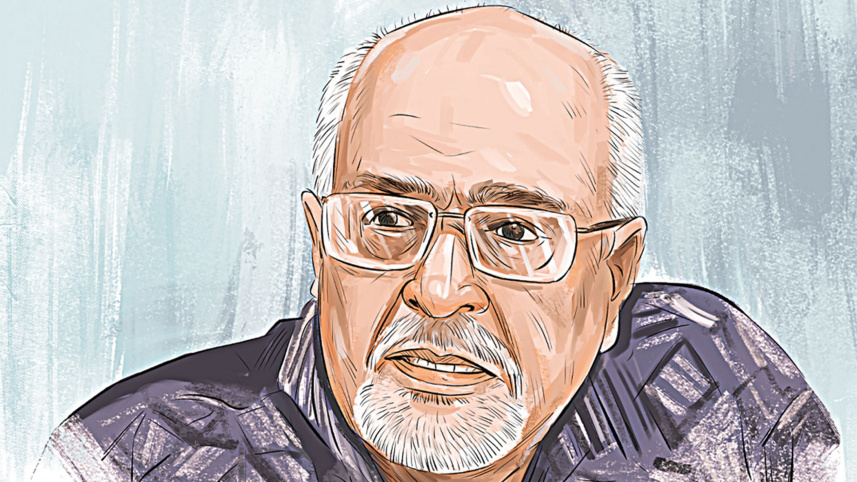
Taking into consideration the prevailing constrained fiscal space and fragile macroeconomic situation, Debapriya Bhattacharya, convenor of the Citizen’s Platform for SDGs, Bangladesh, said the government should implement an economic stabilisation plan with a hard budget constraint for the remainder of the fiscal year (FY) 2025-26.
Implementing a hard budget constraint means the state will not step in when an organisation’s spending exceeds its income and it incurs losses, leaving it to bear the consequences of financial mismanagement and, if necessary, cease operations.
 For all latest news, follow The Daily Star's Google News channel.
Along with the stabilisation plan, the government should realistically revise the current budget, Bhattacharya said at a media briefing titled “Economic Review at the Outset of the New Government”, held at BRAC Inn Centre in the capital, organised by the platform.
He identified fragile macroeconomic stability, weakened private investment and employment, and diminishing fiscal space as major challenges for the government sworn in on February 17.
In this regard, he added, if the foundation of an economy is weak, its structure cannot remain sustainable.
“Macroeconomic stability is the mother of all reforms,” he said, explaining that it can be assessed through at least four key indicators: inflation, interest rates, the exchange rate or value of the currency, and the domestic and external debt situation.
These four indicators must be closely and continuously monitored by the government, the eminent economist said. If inflation is not controlled, purchasing power declines. If interest rates are misaligned, investment suffers. If the exchange rate is unstable, both importers and exporters face uncertainty. And if the debt burden becomes unsustainable, financial sovereignty may be undermined.
Without consolidating macroeconomic stability, it will not be possible to sustainably increase private investment, generate employment, secure foreign financing, repay external debt, or ensure food security. Therefore, the overriding policy objective must be to restore and strengthen macroeconomic stability, Bhattacharya said.
The platform gave several policy recommendations. “A small cut in policy rate may be considered, as the higher policy rate is not working to reduce inflation,” said Towfiqul Islam Khan, Additional Research Director of the Centre for Policy Dialogue (CPD), while he gave a presentation at the event.
A small and gradual depreciation policy may be pursued, he said, adding it will incentivise remitters and exporters even if their cash incentive is cut. “Prioritisation of public expenditure will be required to reduce wastage as much as possible. Taking a miserly approach for the rest of FY26 is recommended.”
No more public money should be allocated for troubled banks in FY26, he stressed.
Recovery of stolen and bad assets should be given attention, both at technical (including diplomatic) and legal levels.
There should be no compromise in formulating a realistic revised budget for FY26, including projections for the debt stress situation, he added.
Bhattacharya recommended forming a “transition team.” Although not widely practised in Bangladesh, such teams are well established in many countries during a change of government.
The purpose of this team will be to conduct a transparent and systematic assessment of the situation inherited from the outgoing administration, examining financial commitments, contractual obligations, debt exposure, and policy decisions that will affect the incoming government.
This transition team could consist of both political representatives and policy experts. Its task would be to conduct a kind of forensic review of each ministry’s financial and policy position and prepare a comprehensive briefing document. Such documents would serve as the foundation for informed decision-making.
Several areas should receive particular attention, such as the debt situation, both domestic and external. A clear understanding of loan terms, repayment schedules, interest rates, and contingent liabilities is essential for sound policymaking.
Apart from this, foreign agreements and memoranda of understanding (MoU) should be reviewed. Beyond agreements with any single country, all international commitments should be reviewed to assess their obligations, risks, and implications for the new government.
If the country is willing to reconsider aspects of its LDC graduation process, then it is equally reasonable to re-evaluate international commitments in that broader context, the economist said.
“Ultimately, slogans and stated goals are not sufficient. What is needed is a clear roadmap, strengthened institutional capacity, policy coherence, and accountability.”
Talking about several election pledges of the BNP, Khan said that the goal of a one trillion-dollar national GDP by 2034 is achievable.
However, pledges like raising foreign investment to 2.5 percent of GDP, raising the tax-to-GDP ratio to 15 percent, and allocating 5 percent of GDP each to health and education sectors are highly ambitious.
Pursue a coherent mid-term plan with realistic attainment targets in view of the election manifesto, he added.
CPD Distinguished Fellow Mustafizur Rahman also spoke at the event.
Comments