


IMF reviews bad loans, bank reforms
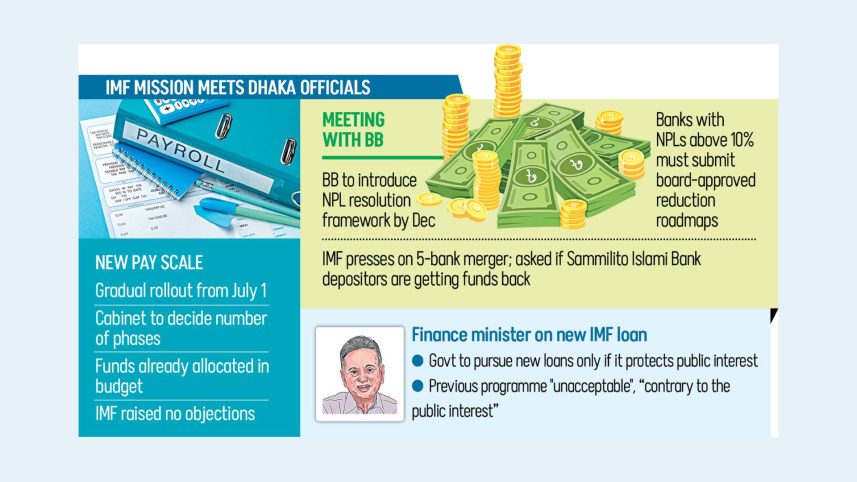
The authorities yesterday briefed the International Monetary Fund (IMF) on the new pay scale for public sector employees, while the visiting mission also received updates on bad loans and banking sector reforms.
The IMF mission held day-long talks at the Ministry of Finance with senior officials, including Finance Secretary Khairuzzaman Mozumder. It was told that the new pay scale for public sector employees would be introduced in phases from July 1.

Finance ministry officials said the IMF only wanted to understand how the new pay scale would be implemented.
During separate meetings with Bangladesh Bank, however, the mission also reviewed progress on tackling bad loans and raised concerns about the implementation of bank resolution measures.
At the ministry, the mission’s scheduled meeting with the finance minister did not take place yesterday as he left office to attend the Janaza of former Speaker Barrister Jamiruddin Sircar, according to officials. The meeting has been rescheduled for today.
During the discussions, IMF officials sought updates on the government’s plans for the current fiscal year, including details of the new pay scale.
Finance ministry officials said the Cabinet will decide how many phases will be used to introduce the pay scale. They added that the required funds have already been set aside in the current budget.
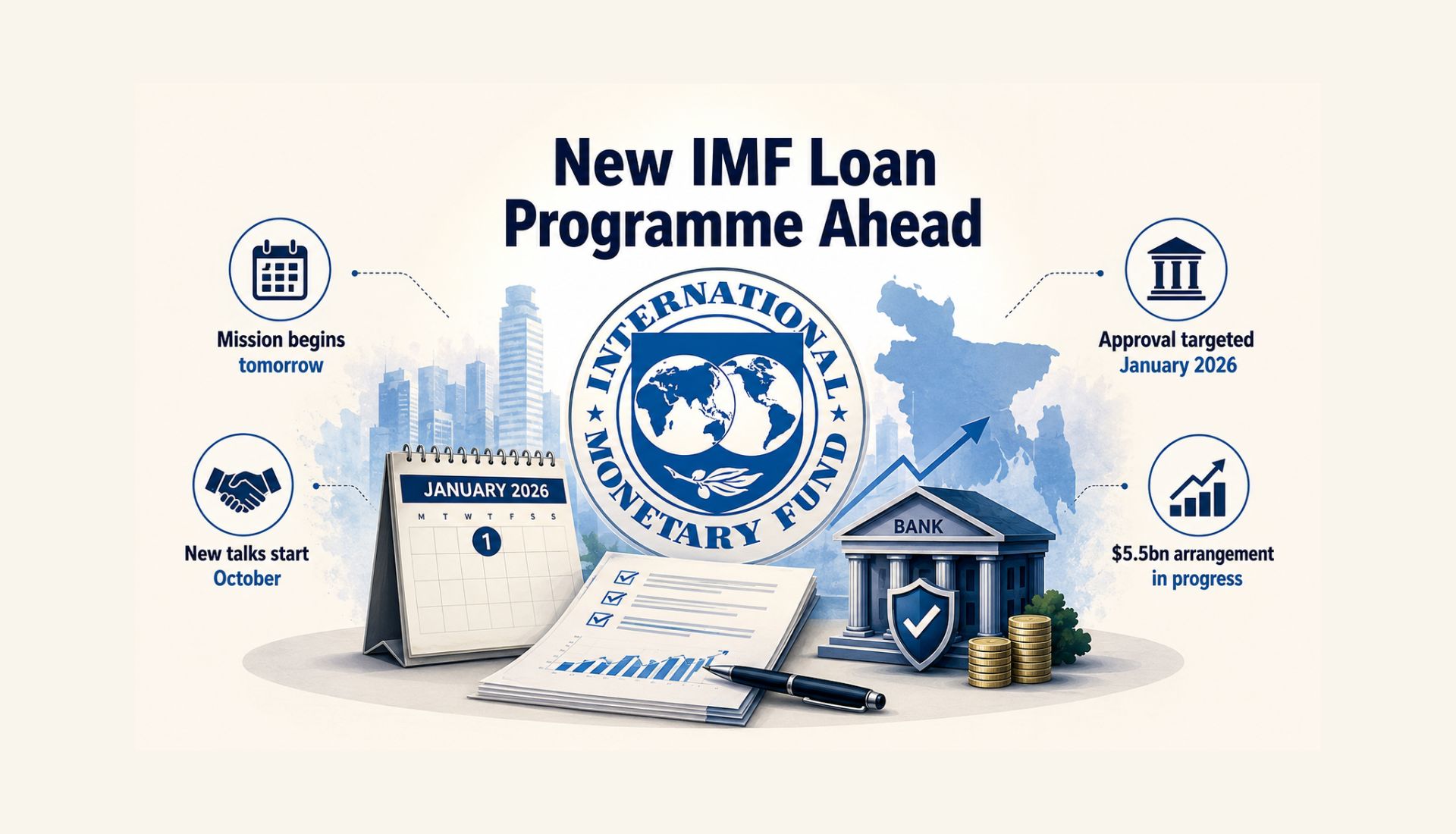
The IMF mission is assessing the feasibility of a government proposal for a loan package worth nearly $4.5 billion. It will continue till July 16 and review the government’s progress on reforms and future plans.
A senior finance ministry official told The Daily Star that the IMF has no objections to the new pay scale and only wanted to know how it would be implemented.
Officials said the last pay scale was introduced in 2015 and inflation has risen sharply since then. As salaries and allowances have not kept pace, the government has decided to introduce a new pay scale.
They said the amount needed from the budget will depend on how many phases the Cabinet approves.
A secretary-level committee led by the cabinet secretary has already reviewed the proposal, officials said. The process is now in its final stage. After one or two more meetings, the proposal will be sent to the Cabinet for approval.
Speaking at a separate programme yesterday, Finance Minister Amir Khosru Mahmud Chowdhury said Bangladesh will seek a new IMF programme only if it protects public interest and the country’s economic security. “The issue for us is not obtaining funds; our primary concern is protecting the country’s interests. The government will not join any IMF programme that compromises the interests of the people,” Chowdhury said.
The minister criticised the previous IMF programme undertaken by the ousted government, saying it “went against the public interest”.
The finance minister said the programme contained conditions that were “unacceptable to a democratically elected government”, leading the current administration to withdraw from it.
“As an elected government, our foremost priority is to safeguard the interests of the people of Bangladesh and the national economy,” he said.
NPL FRAMEWORK BY DEC, BB INFORMS
The Bangladesh Bank (BB) has told the IMF that it plans to introduce a comprehensive framework by December to resolve non-performing loans (NPLs), as part of wider efforts to reduce bad loans and strengthen the banking sector.
Under the proposed framework, banks with NPLs above 10 percent will have to prepare a detailed roadmap, timeline and targets for cutting their bad loans. The plans will require approval from their boards of directors, central bank officials said.
 For all latest news, follow The Daily Star's Google News channel.
 BB shared the plan with the fact-finding mission led by Ivo Krznar, the IMF mission chief for Bangladesh, during the meeting yesterday.
The IMF also sought an update on the implementation of International Financial Reporting Standards (IFRS), and BB officials briefed the mission on the latest progress.
The mission met officials from several BB departments to discuss legal reforms, including distressed asset management, the proposed NPL resolution framework, the insolvency framework, out-of-court debt restructuring, and the new stimulus programme, covering its objectives, funding sources, terms and conditions.
It also met officials from the Monetary Policy Department and the Forex Reserve and Treasury Management Department to discuss BB’s intervention in the spot foreign exchange market and other operations connected to the country’s foreign exchange reserves.
IMF RAISES BANK RESOLUTION CONCERNS
An IMF team met officials from BB’s Bank Resolution Department and raised concerns about progress in implementing bank resolution measures and the merger of five banks, central bank officials said.
The mission also sought an update on Sammilito Islami Bank, which was created through the merger of five troubled banks. It asked whether depositors were able to withdraw their money.
BB officials said they briefed the mission on the latest developments in the bank resolution process and the merger programme.
They also told the mission that the government has decided to scrap Section 18(a) of the Bank Resolution Act, 2026. The provision would have allowed former owners to regain control of weak banks after they had been merged.
Comments