


Haor Boro fetching throwaway prices


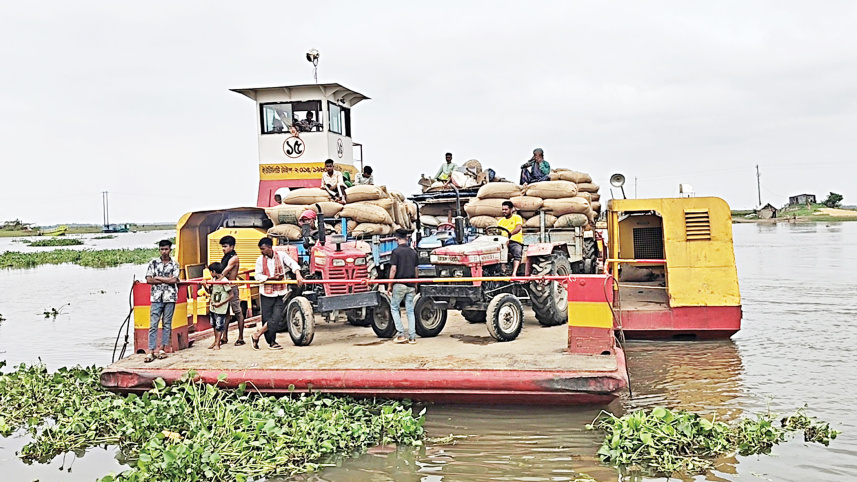
Atikur Rahman braved lightning and waist-deep water to harvest his half-ripened Boro crop. Rain lashed the haor almost without pause. Upstream water surged in. He raced against nature, trying to salvage whatever paddy he could.
When the frantic harvest ended, the Kishoreganj farmer found he had saved grain from just one bigha (one bigha is around 20 katha) of his four bighas of cropland at Khoyarkanda haor of Mithamoin upazila.

There was little sunshine to dry the crop. The paddy turned blackish.
On Saturday, Rahman brought 100 sacks of Boro to Chamra Ghat, a large local market. Buyers offered Tk 400 to Tk 450 per maund (one maund is around 40kg). Farmers say Boro production costs were more than Tk 1,200 per maund this season.
“If I sell the paddy at this rate, it will merely cover the boat fare for bringing the crop to the market and labour wages for unloading the sacks,” said Rahman. “There will be nothing left for me. It now feels like cultivating paddy was a mistake.”
Across the seven haor districts, farmers are moving from one market to another, trying to sell wet, partly spoiled or discoloured grain. Large buyers are refusing to purchase such paddy. It also does it qualify for the government’s nationwide procurement drive.
The Daily Star spoke to more than 30 haor farmers. Twenty-three said they faced the same crisis.
Many of the farmers said they borrowed money to cultivate the crop and planned to repay the loans after harvest.
“We are trying to see if anyone buys this at least for poultry feed so I can at least recover something,” said Mohammad Asaduzzaman, a farmer from Netrokona district. Nearly half of his 100 kathas of Boro went under water.
BORO LOSS IN HAOR 2.30 LAKH TONNES
Rains, floods and upstream inflows between April 26 and May 4 destroyed crops worth about Tk 1,128 crore across seven haor districts, according to agriculture ministry data.
A total of 52,575 hectares, or 11.05 percent of haor cropland, was damaged, said Mohammad Zakir Hossain, senior information officer at the ministry. The loss of Boro paddy amounts to 2.30 lakh tonnes and around 2.88 lakh farmers have been affected.
In the seven districts, Boro was cultivated on 4.55 lakh hectares, show data from the Department of Agricultural Extension (DAE).
Nationwide, Boro acreage reached 50.50 lakh hectares in fiscal year 2025-26, a 3.29 percent year-on-year increase, according to provisional DAE data.
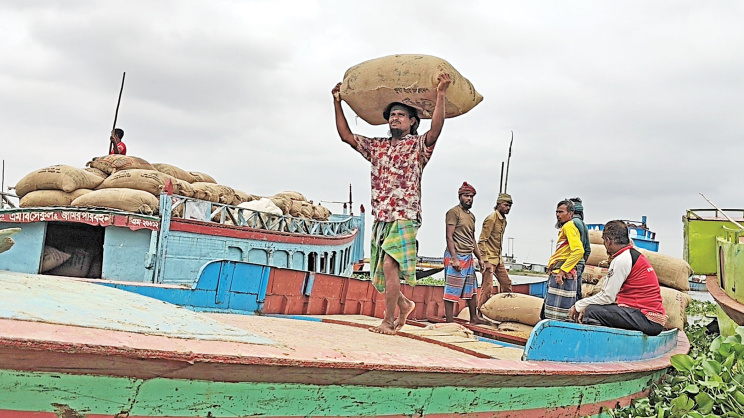
GOVT NOT BUYING DISCOLOURED PADDY
The government began procuring paddy and rice in the haor region on May 3. It will continue until August 31.
Musharaf Hossen, assistant food controller of Kishoreganj, said they are not accepting any discoloured or wet paddy from farmers.
Md Moyatasimur Rahman, district controller of food in Netrokona, said officials assess paddy against 14 parameters, including moisture content and impurity standards, before purchase.
Speaking on condition of anonymity, a senior official at the Directorate General of Food said the government cannot buy grain that fails to meet the 14 procurement criteria because it must be stored safely. Wet or rotten paddy risks spoilage or germination, leaving no room to relax the standards.
So far, about 10 percent of the paddy target in the seven haors has been purchased. Rice procurement has reached around 18 percent of its target. The official said the government expects to complete the drive within the deadline.
 For all latest news, follow The Daily Star's Google News channel.
 The government plans to provide Tk 7,500 to each affected farmer in the haor region.
Mohammed Amin Ur Rashid, minister of agriculture, said the government is preparing an accurate list of genuinely affected haor farmers to ensure support reaches the right people. An initial list, compiled from field data, is being reverified with the involvement of local MPs, ministers and officials to avoid errors of inclusion or exclusion.
“We will launch the financial assistance programme this month, and it will continue throughout May, June, and July. The Department of Agricultural Extension has estimated that the initiative will require a total allocation of Tk 177 crore,” he added.
[Our Sylhet Correspondent Dwoha Chowdhury contributed to this report.]
Comments