


Fair on jute’s many uses begins
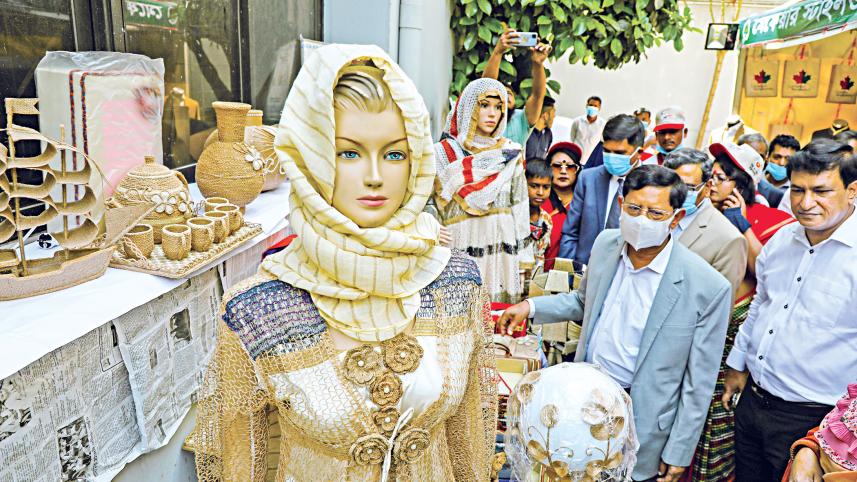
A three-day exhibition on the diversified use of jute began in Dhaka yesterday with the objective of encouraging people to use products made out of the environmentally-friendly fibre.
The event is taking place a year past being put on hold in 2021 in the face of rising infections amidst the coronavirus pandemic.

Some 33 organisations are participating in the fair with a diverse array of products.
"Hold as many fairs as possible. This will increase demand for jute goods and boost sales of entrepreneurs," said Textiles and Jute Minister Golam Dastagir Gazi inaugurating the fair at Jute Diversification Promotion Centre near Farmgate marking National Jute Day.
He said many entrepreneurs cannot travel abroad to exhibit their products and holding this fair would be beneficial for them.
Secretary to the ministry Md Abdur Rauf suggested diversifying the range of jute goods available to increase productivity as prices of raw jute remain high.
"Productivity should be increased. Because it seems that prices of raw jute will not decline," he said.
Earlier the textiles and jute ministry at an event at Osmani Memorial Auditorium honoured 11 persons and organisations for their contributions to the jute sector.
At the event, Agriculture Minister Muhammad Abdur Razzaque said the agriculture ministry had prepared a roadmap to attain self-sufficiency in jute seed production and reduce dependency on Indian seeds.
"We want to be self-sufficient as we do not depend on any country for jute seeds. After three years, jute seeds will no longer have to be imported from India," he said.
He said farmers in India cultivate jute seeds in barren lands and export those to Bangladesh at low prices.
"Our farmers are not very interested in cultivating jute seeds as compared to other crops," he said.
Scientists at Bangladesh Jute Research Institute developed improved varieties of jute, which enable higher yields compared to Indian varieties, added Razzaque.
"Work is underway to popularise its cultivation among farmers within the next three years," he said.
Bangladesh requires around 5,500 tonnes of jute seeds, most of which are imported from India for scanty domestic production.
 For all latest news, follow The Daily Star's Google News channel.
Comments