


Dairy farmers urge govt to stop soybean meal export
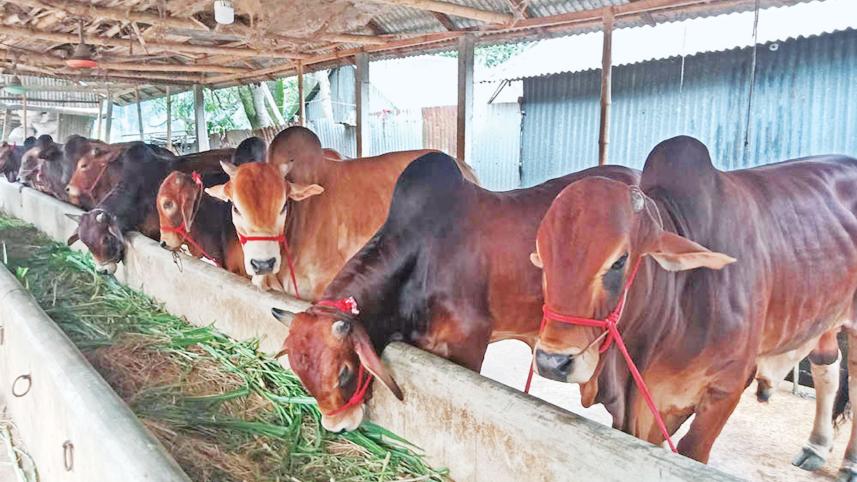
Dairy farmers yesterday urged the government to stop the export of soybean meal in order to ensure an adequate supply of animal feed for the domestic market.
Soybean meal, a key ingredient of animal feed, sold for about $470 per tonne at international markets during the April-June period earlier this year, up 35 per cent from $349 per tonne a year ago, as per the World Bank Commodities Price Data.

The domestic price of soybean meal rose in line with changes in the international market as Bangladesh relies on imported oilseed and soybean meal to meet the demand from local farms.
As such, the price of soybean meal increased by 41 per cent to Tk 54 per kilogramme (kg) in August this year from Tk 38 per kg a year ago, as per data from the Feed Industries Association of Bangladesh.
Feed millers and soybean farmers say prices may go up further as some local seed crushing mills started to export the ingredient to India.
The neighbouring country had allowed soybean meal imports in the wake of a domestic shortage that pushed the cost of de-oiled soya cakes to an all-time high, according to a recent report by The India Express.
At the time, multiple representatives of the poultry industry in India had urged their government to allow the import of 12 lakh tonnes of genetically modified soybean meal, the report said.
But considering the impact these exports have had on the domestic market, feed millers demanded the curbing of soybean meal exports with dairy farmers now joining the call.
"Continuing these exports will cause huge losses for farmers," said Mohammad Imran Hossain, president of the Bangladesh Dairy Farmers' Association (BDFA).
Feed prices will go up further for the country's livestock sector, which includes poultry, fisheries, and cattle farming, unless these exports stop, he said during a press conference at the National Press Club yesterday.
Terming the export of soybean meal as a suicidal decision for Bangladesh, Hossain went on to say that the increased prices have created an artificial crisis in the domestic market.
"If prices continue to rise in this way, there will be no option but to close our farms," he added.
Mohammad Shah Emran, general secretary of the BDFA, said the country's annual demand for soybean meal currently stands at about 18 to 20 lakh tonnes, of which nearly 80 per cent is produced locally while the rest is imported.
Soybean mean is imported various countries, including India, the US, Brazil, and Argentina.
Farmers have to spend up to 75 per cent of their production cost to buy feed for their chickens, fish or cattle.
So, they will face huge losses if deprived of fair prices for the product considering their other costs, Emran added.
Finance Secretary Jafar Ahmed Patwary said three or four soybean oil producing firms who previously imported soybean meal with zero-duty benefits are now exporting the ingredient to make a profit.
"Soybean meal was never exported to India before but a significant quantity of soybean meal is imported from the neighbouring nation almost every year," he added.
The BDFA also demanded that the import of packaged frozen meat be stopped.
In addition, the organisation said commercial farms should be given reduced electricity bills under the benefits provided to agro-industries in order to reduce food prices.
 For all latest news, follow The Daily Star's Google News channel.
 Ali Azam Rahman Shibly, vice president of the BDFA, and Nazib ullah, joint general secretary, were among others present at the event.
Comments