


China may give more duty benefits for Bangladeshi goods
China is going to increase duty benefits for Bangladesh, allowing one percentage point more Bangladeshi products free access to its markets, saying it was to reduce the trade imbalance between the two countries.
Some 97 per cent of goods originating from Bangladesh have already been enjoying the duty benefit since July 2020. The package covers nearly 9,000 Bangladeshi goods.

The proposed 98 per cent will cover more than 9,000 locally produced goods.
However, the duty benefit will cease to exist once Bangladesh makes the status graduation from a least developed country to a developing one in 2026. However, it could be retained through a trade deal.
The tariff free quota will be expanded by 1 percentage point as soon as possible, said Li Jiming, Chinese ambassador to Bangladesh, yesterday.
"We are at the final stage of now," he told a seminar on "Making the Most of Market Access in China: What Needs to be Done?".
The event was jointly organised by the Bangladesh China Chamber of Commerce and Industry (BCCCI) and Research and Policy Integration for Development (RAPID) at Pan Pacific Sonargaon in Dhaka.
"One per cent is very crucial…We also need to make the free trade agreement (FTA). A joint working group is working on it. I hope the FTA can be signed as soon as possible," said Jiming.
An FTA will not only increase the trade but also increase investment from China, boost tourism and education, said the Chinese envoy.
He said Bangladesh may also join the Regional Comprehensive Economic Partnership (RCEP), the largest regional free trade bloc led by China.
The envoy also said a bilateral economic committee would sit in an important meeting at the end of this month to resolve pending issues related to livestock and agriculture.
A Chinese special economic zone is also nearly ready for development, he said.
"Deeper financial cooperation is also needed between the two countries," said Jiming, adding that setting up of Chinese banks in Bangladesh was also important for currency exchange in the future.
However, peace and political stability are important for economic growth of this region, he said.
Signing of the FTA can be a good solution for long term business with China, said Commerce Minister Tipu Munshi. He said an agreement was signed on signing the FTA in 2018.
At the end of the current fiscal year, the total export of the country will cross the $51 billion mark and in the next fiscal year, the amount will stand at $60 billion, he said.
In a keynote paper, Mohammad Abdur Razzaque, chairman of the RAPID, said every year China imports $2.7 trillion worth of goods from different countries of the world.
If Bangladesh can grab even 1 per cent, the amount will be $27 billion, he said.
However, practically the scenario of exports to China is not so rosy although 97 per cent of goods get duty benefit, he said.
 For all latest news, follow The Daily Star's Google News channel.
 Bangladesh's share in Chinese imports is 0.004 per cent, which was $680 million last year.
Exports are not increasing from Bangladesh to China because of a lack of product diversification, he said.
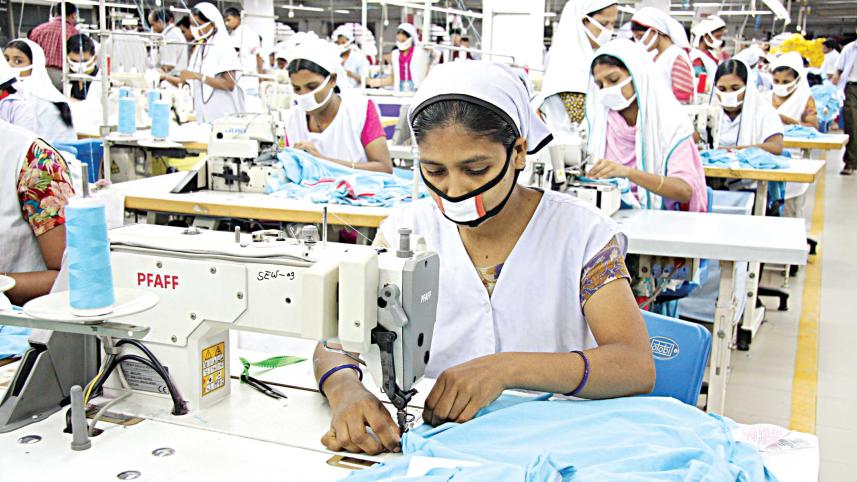
China imports clothing items worth $9.7 billion from the world in a year.
So, even if Bangladesh is able to grab the whole of Chinese imports of clothing items, the amount is not big in the garment segment.
The global garment business is worth $436 billion, with China itself exporting goods worth $180 billion to the European Union and $90 billion to the US.
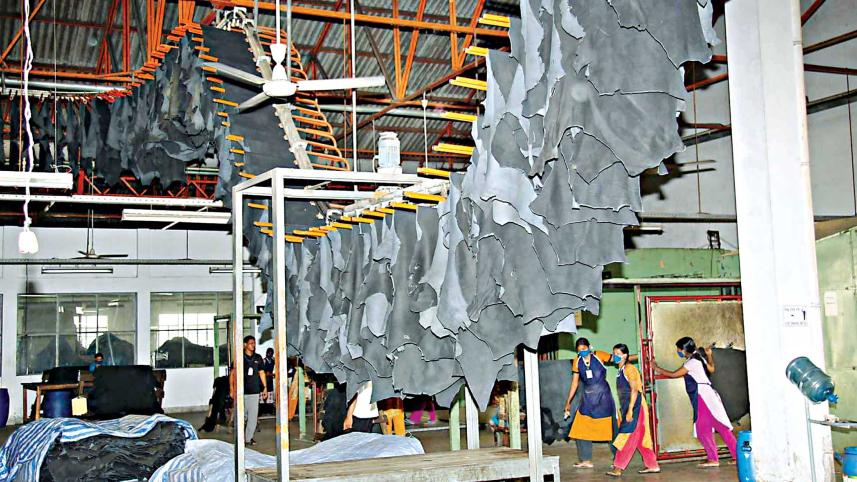
Bangladesh needs to diversify its export items such as engineering items, electrical machinery, leather and leather goods and electronic goods to utilise the access to Chinese markets, he said.
Dependence on clothing items will not help grow exports to China, he said.
Bangladesh needs to prepare to grab a bigger market share of China, said AHM Ahsan, vice-chairman of the Export Promotion Bureau.
The tastes of the new generation of Chinese consumers have also changed a lot and they like online businesses and to buy branded goods, he said.
Comments