


Bangladesh should negotiate duty benefit extension
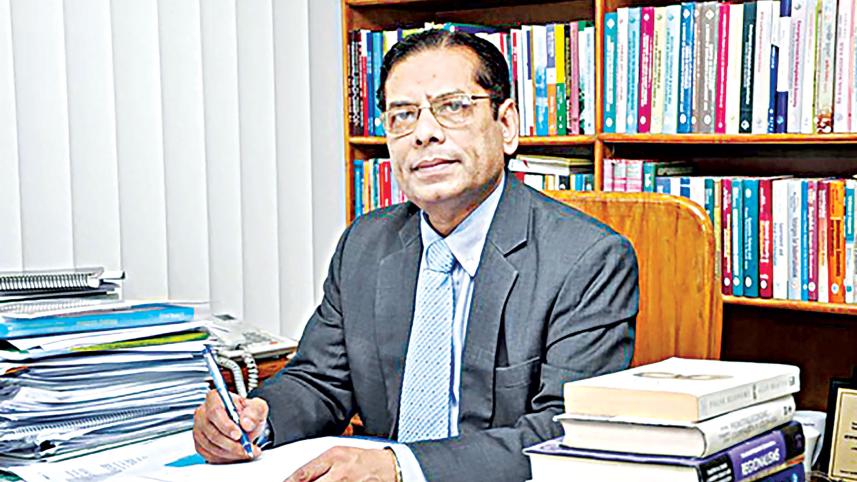
Bangladesh should engage in negotiations at the upcoming 12th World Trade Organization (WTO) Ministerial Conference (MC 12) for extension of duty privileges to some extent following the status graduation to a developing country in 2026, said a noted economist yesterday.
Even if the privileges are for six or nine years following the graduation from a least developed country (LDC), it is still good for the country, said Mustafizur Rahman, a distinguished fellow of the Centre for Policy Dialogue (CPD).

He was addressing a virtual discussion on "Upcoming MC12: Bangladesh's Expectations and Possible Stance" jointly organised by the CPD and Friedrich-Ebert-Stiftung's (FES) Bangladesh office.
The MC 12 will be held in Geneva between November 30 and December 3.
Rahman, however, also said Bangladesh needs to learn to compete in an open market regime without depending on market access facilities as duty facilities would not be available forever.
In a virtual keynote presentation, he said the country needs to think beyond the LDC graduation and duty facilities for other ways of continuing policy support and subsidies in fisheries, such as holding negotiations with major trading partners.
Rahman said China has been continuing to provide duty facilities to Samoa even after the latter's graduation while India has been doing the same for the Maldives.
Bangladesh's major trading partners are China, India and Canada and there is a scope to seek continuation of duty facility even after the graduation so that the country's export business could continue to grow, Rahman said.
Rules based trade facilities under the WTO should be in place for the graduating LDCs and it should be an agenda in the MC 12, he said.
Bangladesh should also focus on negotiations on how to be competitive after 2026 and 2029 facing 11 per cent to 12 per cent duty on exportable goods, he said.
Some other issues like formation of a graduation support fund and how to support the small farmers should also be focused in the negotiation, added Rahman.
Bringing together the three important issues of trade, investment and transport under regional connectivity can play a very vital role in flourishing trade, he said.
For instance, China imports $2,800 billion-worth of goods in a year and that less than $1 billion from Bangladesh. Similarly, India imports goods worth $450 billion in a year and that of only $1.2 billion from Bangladesh, Rahman said.
Bangladesh should also look for joining regional free trade agreements (FTA) such as Regional Comprehensive Economic Partnership Agreement (RCEP) so that business grows after the graduation, Rahman said.
Hafizur Rahman, director general of the WTO Cell under the commerce ministry, said the main target of negotiations was to prolong the trade benefits after the graduation.
The continuation of fisheries subsidies is almost at the final stage, as it is badly needed for Bangladesh while more than 4 million people are dependent on fishing in the county, he said.
He said Bangladesh in December last year already sought 12 years' extension of trade benefits alongside for other LDCs at the WTO.
"We should take the advantage of the LDC status for as many years as possible but at the same time we want graduation," said Faruque Hassan, president of the Bangladesh Garment Manufacturers and Exporters Association (BGMEA).
He, however, said Bangladesh was already capable of competing with other countries for its strength in backward linkage in garment industry.
Nazneen Ahmed, Bangladesh country economist of United Nations Development Programme, said already seven sub-committees have been working on enabling a smooth graduation.
 For all latest news, follow The Daily Star's Google News channel.
 The market access sub-committee, WTO and intellectual property rights-bodies and country branding sub-committees need to also work with the help of different UN bodies, she said.
Syed Manzur Elahi, treasurer of the CPD Board of Trustees, a former caretaker government adviser and chairman of Apex Group, moderated the dialogue with Rehman Sobhan, chairman of the CPD, in the chair.
Khondaker Golam Moazzem, research director of the CPD, Mostafa Abid Khan, former member of the Bangladesh Trade and Tariff Commission, and Shadhan Kumar Das, programme co-ordinator of the FES Bangladesh office, also spoke.
Comments