


Bangladesh needs 8% annual GDP growth to be a developed nation
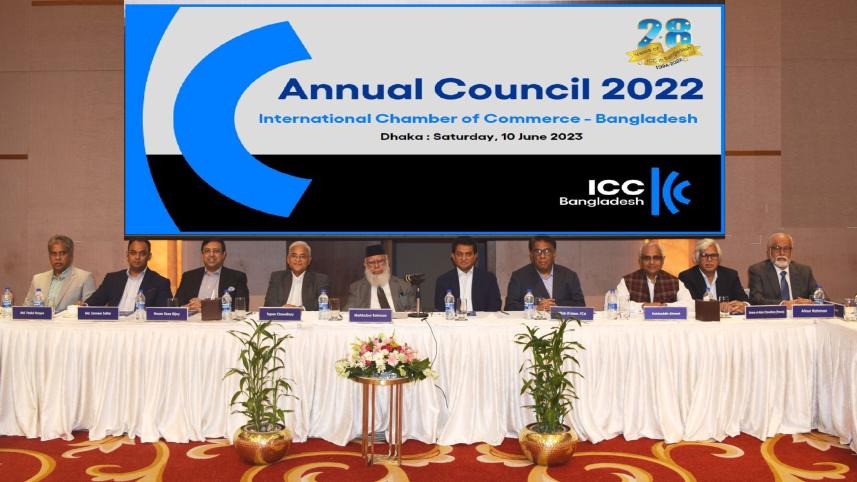
Bangladesh needs to maintain a GDP growth rate of over 8 per cent and increase its per capita income to around $13,000 in less than two decades to become a developed nation, said Mahbubur Rahman, president of the International Chamber of Commerce Bangladesh (ICCB).
After becoming a developing country following graduation from the least-developed nation category in 2026, Bangladesh will require to fulfill a number of international compliance.

Therefore, good governance must be ensured in both public and private sectors, which is still far below the global indexes, he said.
The business leader made the comments while presenting the executive board report at the ICCB's 28th annual council in Dhaka yesterday, said a press release.
The ICCB president said Bangladesh made a rapid recovery from the Covid-19 pandemic supported by prudent macroeconomic policies.
"Bangladesh is now on track to graduating from the LDC category."
He mentioned that there are also mega challenges while chasing big dreams.
The executive board of the local chamber of the Paris-based global organisation suggested addressing some key issues for overcoming the challenges.
The challenges include inflationary pressure, energy crunch, balance-of-payments deficit, slower project implementation, and non-performing loans.
"In order to contain the inflationary pressure, there should be appropriate monetary and fiscal policies," Rahman said.
He said increasing dependence on imported fossil fuels, liquefied natural gas and coal for power generation has intensified risks, negatively affecting foreign currency reserves and swelling subsidy burdens.
So, Bangladesh should move faster with its exploration activities both onshore and offshore to replace expensive LNG with its own natural gas reserve, nuclear power and renewable energies with a view to avoiding the adverse effects of climate change, he said.
"Rising commodity prices and a surge in imports resulted in a balance of payments deficit."
The ICCB chief said there is an urgent need for Bangladesh to diversify its export markets and products and sign free trade agreements with major Asian countries.
"As Bangladesh moves forward, infrastructure will play a crucial role in stimulating and crowding-in private sector investment."
By some estimates, Bangladesh will require to make investments of well over $100 billion in the course of the next decade to build ports and roads, set up rail lines for management of goods, establish power generation and distribution capabilities, provide utilities and services to meet the ever-increasing demands of the economy.
Several studies conducted by the Bangladesh Institute of Development Studies (BIDS) have revealed a substantial gap in the skill sets of workers in labour-intensive industries such as readymade garments, light engineering and electronics, leather and footwear and agro-food processing.
AK Azad, vice-president of the ICCB, Md Fazlul Hoque, Md Sameer Sattar, Naser Ezaz Bijoy, Tapan Chowdhury, Aftab Ul Islam, Kutubuddin Ahmed and Anwar-ul-Alam Chowdhury, executive board members, and Ataur Rahman, secretary general, were present.
Muhammad A (Rumee) Ali, chairman of the ICCB Banking Commission, Syed Ali Jowher Rizvi, managing director of Summit Alliance Port, Bibhabasu Sengupta, managing director of Linde Bangladesh, M Shah Alam Sarwer, managing director of IFIC Bank, and MHM Fairoz, managing director of Singer Bangladesh, were also present.
 For all latest news, follow The Daily Star's Google News channel.
Comments