


Arundhati Roy skips Berlinale over Gaza comments and festival response
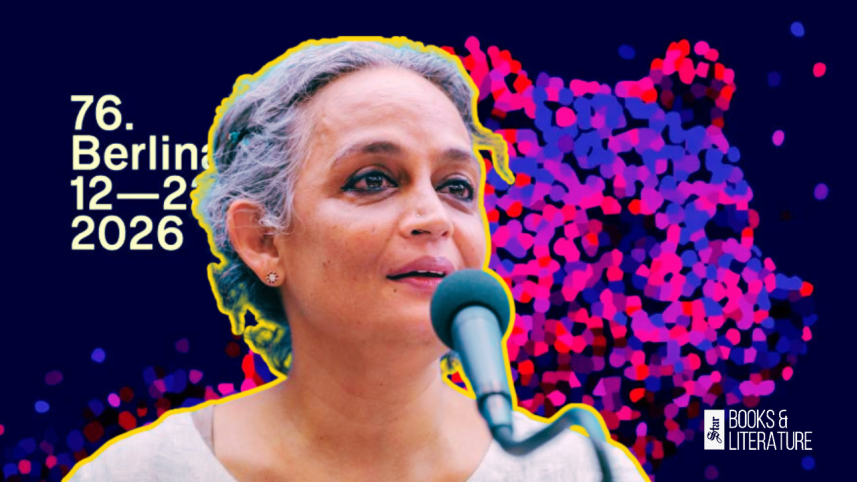
Arundhati Roy, celebrated Indian writer, essayist, and activist, has recently been at the centre of a controversy surrounding the Berlin International Film Festival regarding comments on the ongoing genocide in Palestine.
At a press conference for the 76th Berlinale on February 12, veteran German filmmaker Wim Wenders—president of the International Jury for the festival—said in response to a journalist’s question regarding the festival’s lack of support for Palestine despite its prior expressions of solidarity with people in Iran and Ukraine: “We have to stay out of politics because if we make movies that are dedicatedly political, we enter the field of politics; but we are the counterweight to politics.”

Roy—who was due to participate in the festival as her 1989 film In Which Annie Gives It Those Ones was selected to be screened in the Classics section—responded to these comments on the next day, stating that she was “shocked and disgusted” and that “artists, writers and filmmakers should be doing everything in their power to stop” the atrocities unfolding in Palestine. She reaffirmed her stance in support of the Palestinian cause writing, “Let me say this clearly: what has happened in Gaza, what continues to happen, is a genocide of the Palestinian people by the State of Israel.”
On February 14, Festival head Tricia Tuttle released a statement on “free speech at the Berlinale” and its stance on political matters, defending Wim Wenders. She noted, “Artists are free to exercise their right of free speech in whatever way they choose. Artists should not be expected to comment on all broader debates about a festival’s previous or current practices over which they have no control. Nor should they be expected to speak on every political issue raised to them unless they want to.”
Additionally, Tuttle’s statement also mentioned, “We do not believe there is a filmmaker screening in this festival who is indifferent to what is happening in this world, who does not take the rights, the lives and the immense suffering of people in Gaza and the West Bank, in the Democratic Republic of the Congo, in Sudan, in Iran, in Ukraine, in Minneapolis, and in a terrifying number of places, seriously,”.
Following her response to Wenders and the Berlinale jury, Roy has stated she will not be attending the 2026 Berlin International Film Festival. The author of The God of Small Things (1997), Azadi (2020), The Ministry of Utmost Happiness (2017), and, most recently, Mother Mary Comes to Me (2025) has been a vocal critic of the Israeli apartheid regime and has spoken out in support of Palestine since the beginning of the current conflict.
 For all latest news, follow The Daily Star's Google News channel.
Comments