


Lessons in Chemistry : A novel that reads you
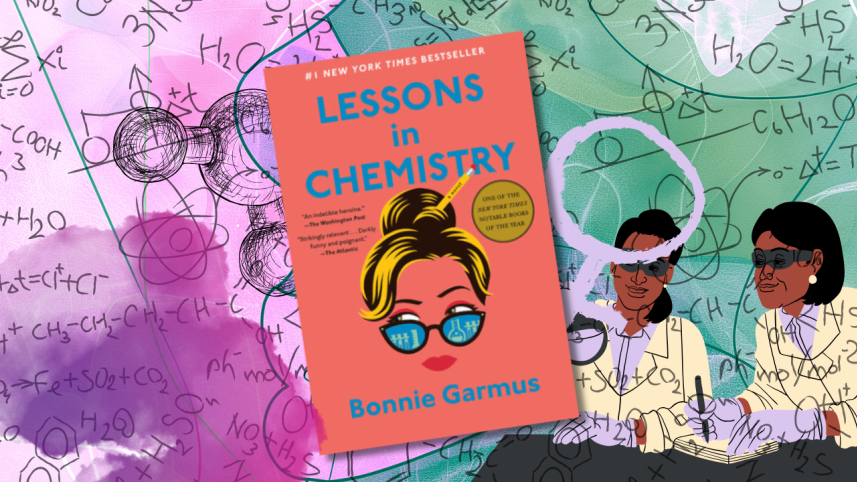
What happens when a woman refuses to shrink herself in a world designed to make her smaller? Lessons in Chemistry explores this very question—and the answer is both heartbreaking and empowering.

It is the debut novel of Bonnie Garmus. The writing was inspired by Garmus’s own experience as a creative director, when a male colleague took credit for her idea. The novel serves as a stark representation of a patriarchal world and the suffering women endure within it. It offers a sharp critique of rigid gender roles, and beyond exposing a misogynistic society, it paints a powerful picture of human resilience—the ability to survive even the worst circumstances without support.
The story is set in 1960s Southern California. It begins by describing how Elizabeth and her daughter Madeline’s day starts. Elizabeth keeps herself moving despite being certain that her life is over. From the very first chapter, the novel unfolds a somewhat unusual mother–daughter relationship, distinct from the conventional dynamic.
The protagonist, Elizabeth, is an indomitable character who challenges the status quo of a patriarchal society. Her fiery spirit and extraordinary determination are exemplary. She has the face, the brain, and the charm—but fate never seems to favour her. Elizabeth endures a traumatic childhood filled with obstacles that stand in the way of her dreams. Nevertheless, she continues working relentlessly, with no one supporting her ambitions—only pulling her down. Bitter experiences from childhood shape her into someone perpetually alienated.
Elizabeth is an ambitious chemist who once worked at the Hastings Research Institute. Due to life’s twists and turns, she later becomes a popular cooking show host. Along the way, she finds the best kind of friends and confidants in the most unexpected people. She also finds love in Calvin. The bond between Elizabeth and Calvin is admirable. They heal each other without having to excavate their pasts.
In Lessons in Chemistry, Elizabeth’s odyssey illustrates the art of holding onto one’s identity, of finding oneself even after losing everything. Her life reflects how women can be despised simply for being aware of their rights, for being bold and strong. Bonnie Garmus portrays the cruelty of the world towards women through Elizabeth’s experiences in a commendable manner. The novel highlights society’s tendency to make women appear “hateable” by questioning their integrity when they fail to meet certain expectations. Garmus carefully exposes the patriarchal structure of victim-blaming and how it impacts a woman’s entire life. The 1960s were supposed to be behind us—yet here we are, still fighting the same battles Elizabeth Zott faced decades ago.
While many women will connect deeply with the portrayal of female struggle, the lack of sufficient character development slightly reduces the emotional gravity of the narrative. The absence of deeper reasoning behind Elizabeth’s present-day behaviour sometimes makes her appear unreasonable. The tendency to over-explain societal issues occasionally feels heavy-handed, pulling focus away from the narrative itself. This reduces the emotional impact and leaves less room for personal connection with the story. Additionally, the parallel between chemistry and life is engaging at first, but the excessive use of chemical terminology sometimes diminishes the warmth of the reading experience. Elizabeth’s tendency to frame nearly every thought and conversation through a scientific lens makes certain passages feel laboured rather than authentic.
Although it does not escape its flaws, the timelessness of the novel makes it compelling. The writing feels modern because of the questions it raises about equality, recognition, and the value of women’s work.
Lessons in Chemistry is a powerful read for anyone who feels alone in a male-dominated world. For those who have been vilified for having a voice, dignity, and the courage to exist unapologetically in a world that resists change, this novel proves galvanising. It offers a vivid portrayal of the explosive reaction that happens when talent meets prejudice. The struggles, failures, and resilience of the female characters mirror the lived realities of countless women who are forced to diminish themselves in order to survive. Elizabeth’s endurance, shaped by loss and isolation, becomes the heart of the story. Long after the final page, the narrative lingers—because it insists on encouraging women to thrive, no matter how relentlessly the world attempts to shatter their aspirations.
Amrin Binte Islam is an economics major with a keen interest in fiction, social issues, and feminism, fueled by curiosity and a strong will. Feel free to reach out at amrinswork004@gmail.com.
 For all latest news, follow The Daily Star's Google News channel.
Comments