


A village of potters
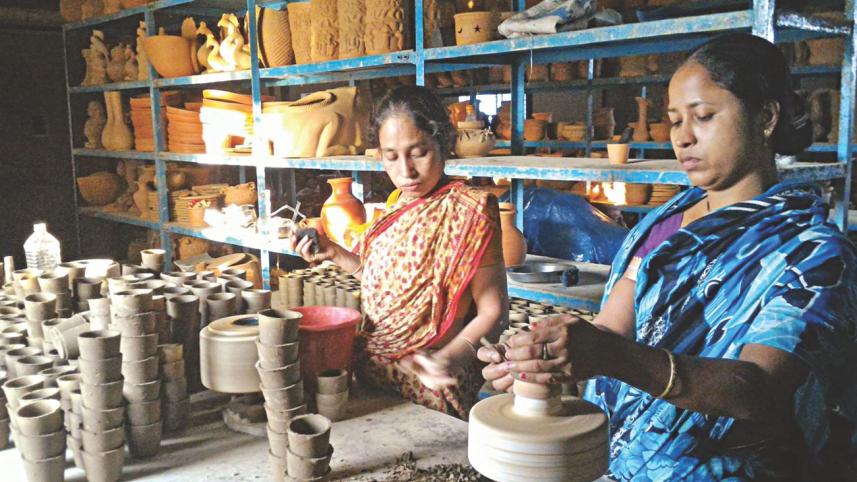
Clay, water and sunshine: these ingredients constitute the heart of Bijoypur, a village a few kilometres from Comilla town. For decades locals there have pursued a pottery tradition, crafting all manner of wares from raw clay to fire in the kilns. They still do. Indeed, the distinctive red tones of fired pottery are surely the colour that best symbolises both heritage and hopes in Bijoypur.
Although the pottery tradition has long roots, in 1961 Dr Akhter Hamid Khan first formally organised the potters of Lalmai Hills. With the establishment of Bijoypur Rudro Pal Cooperative Society, Bijoypur's status as a flourishing pottery centre was assured.

Nowadays, government-established Bijoypur Pottery Training Centre continues to recognise Bijoypur's claim to a place in the centre of an age-old industry that seeks to adapt and further develop to meet the demands of a modern era. About 50 potters work at the centre.
“At first I worked at the cooperative society,” says potter Rabindar Chandra Paul.
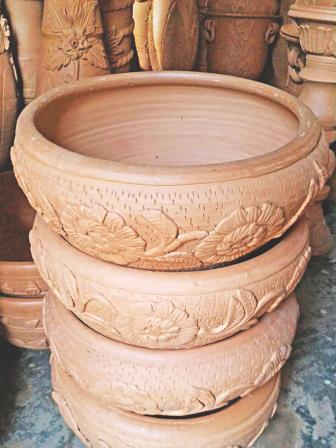
“I served 28 years there before starting my own business. My pottery factory has been running for the last 17 years.” This successful potter hopes that with further government support it will be possible to develop export markets for the products.
He also notes that of late a rise in the price of paints used in finishing design work also offers local potters a challenge.
Pots and pans, flower tubs, vases, showpieces, lamps, umbrella stands, portraits, toys and wall tiles: the nimble hands of Bijoypur's potters bring intricate designs to any project. In recognition of their skill, buyers arrive from Dhaka and other cities to purchase in bulk. Bijoypur pottery is sold nationwide.
As with other Bangladeshi pottery centres Bijoypur these days struggles to realise reasonable profits from pottery. A few of the local potters have been able to set up their own businesses. Artisans live in the hope that future initiatives such as flexible loan facilities and export development will be able to turn the tide and help their heritage industry survive.
 For all latest news, follow The Daily Star's Google News channel.
Comments