


S Korea’s virus cases rebound
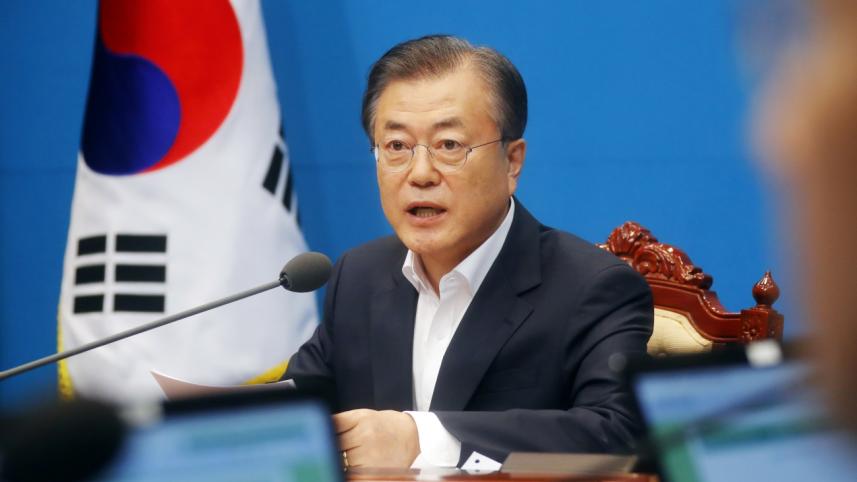
South Korea yesterday warned of a second wave of the new coronavirus as infections rebounded to a one-month high, just as some of the hardest-hit countries readied to lift lockdown restrictions.
"It's not over until it's over," President Moon Jae-in told the nation, saying a new cluster shows the virus can spread widely at any time, and warning of a second wave late this year.

The Korea Centers for Disease Control and Prevention (KCDC) reported 34 new infections, the highest since April 9, after a small outbreak emerged around a slew of nightclubs, prompting the authorities to temporary close all nightly entertainment facilities around the capital.
The death toll remained at 256.
Health Minister Park Neung-hoo said the government will decide on whether it will reopen schools in stages starting from May 13 as planned after examining the impact of the nightclub cases for two to three days.
Battling the first major coronavirus outbreak outside China, South Korea brought infections of the virus, and the disease Covid-19 that it causes, down drastically through widespread testing, aggressive contact tracing and tracking apps. The response has helped Asia's fourth-largest economy come to grips with the pandemic without extensive the lockdowns seen elsewhere.
The daily tally of new infections had hovered around 10 or less in recent weeks, with no or very few domestic cases over the past 10 days.
The fresh outbreak comes just as the government was easing some social distancing restrictions and moving to fully reopen schools and businesses, in a transition from intensive social distancing to "distancing in daily life."
"We must never lower our guard regarding epidemic prevention," Moon said in a televised speech marking the third anniversary of his inauguration. "We are in a prolonged war. I ask everyone to comply with safety precautions and rules until the situation is over even after resuming daily lives."
He said the KCDC will get greater power as part of the long-term fight and be renamed the Disease Control and Prevention Administration to reflect its enhanced position, while the authorities beef up local expertise.
The resurgence is driven by an outbreak centred around a handful of Seoul nightclubs, which a man in his late 20s had visited before testing positive last week, reports Reuters.
GLOBAL CASES HIT 4M
The number of coronavirus cases worldwide topped four million as governments are trying to stop the spread of the deadly disease while scrambling for ways to relieve pressure on their economies, which are facing a historic downturn with millions pushed into unemployment.
In the United States, media reported Saturday that the nation's top infectious disease expert, Anthony Fauci, was among three members of the White House coronavirus task force who will self-isolate after potential exposure.
China reported the first infection in over a month yesterday in Wuhan, the city where the outbreak first started late last year.
Despite the risks, some governments in hard-hit Europe have said there are signs of progress that justify cautious steps towards normality.
Officials in France on Saturday said the day's death toll of 80 was the lowest since early April, while nursing home fatalities also fell sharply as the nation prepared to relax curbs on public movement imposed eight weeks ago.
The easing, to begin today, has brought mixed reactions.
"I've been scared to death" about the reopening, said Maya Flandin, a bookshop manager from Lyon. "It's a big responsibility to have to protect my staff and my customers."
In Spain, about half the population will be allowed out today for limited socialisation, and restaurants will be able to offer some outdoor service as the country begins a phased transition set to last through June.
 For all latest news, follow The Daily Star's Google News channel.
 Belgium is also easing some restrictions today, and in some parts of Germany, bars and restaurants reopened on Saturday with further easing set for today.
In Britain, Prime Minister Boris Johnson was expected to lay out a plan for the nation to emerge out of its current lockdown.
Media reports have suggested that Britain may introduce a mandatory 14-day quarantine for international arrivals to stop the spread of the virus.
'MODIFIED QUARANTINE'
In the United States, the country with the highest death toll and where more than 20 million people have lost their jobs, President Donald Trump has insisted that next year would be "phenomenal" for the economy, urging reopening despite the virus still claiming well over 1,000 lives daily in the country.
The scale of the challenge was brought in sharp focus over the weekend as US media reported that top disease expert Anthony Fauci, who has become the trusted face of the government response to the pandemic, is going to self-isolate after possible exposure to an infected White House staffer.
Fauci told CNN that he will undergo a "modified quarantine" as he had not been in close proximity to the staffer, the network reported. He will remain at home teleworking, and will wear a mask for two weeks.
Robert Redfield, the director of the Centers for Disease Control and Prevention, and Stephen Hahn, the commissioner of the Food and Drug Administration, will also self-isolate, CNN added.
With people wearying of being indoors and under economic pressure, anti-lockdown protests have been held in a number of countries in recent weeks, with some demonstrators arguing that such restrictions violate their rights and others promoting conspiracy theories about the pandemic.
Ten people were arrested and a police officer injured in Melbourne, Australia, yesterday in the latest such protest, where around 150 people gathered to demand an end to the shutdown.


Comments