


Pandemic bites Latin America
as Peru, Mexico, Chile report steady rise in cases
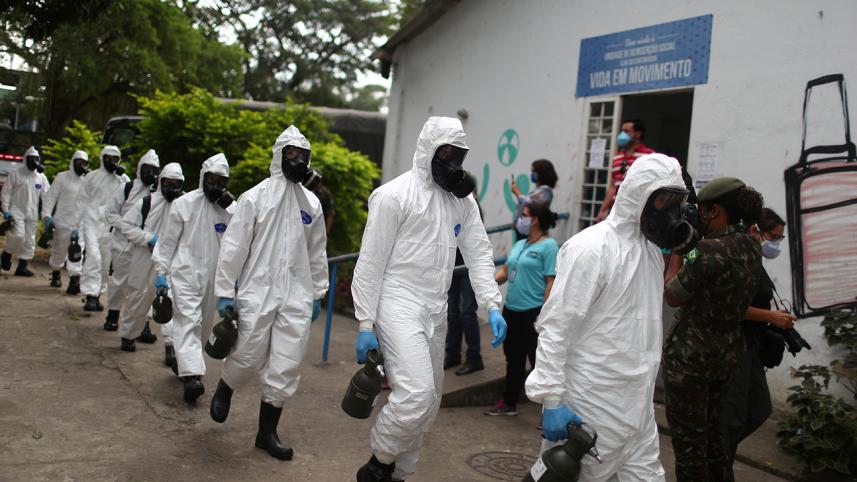
Brazil has seen a record number of coronavirus deaths as the pandemic that has swept across the world begins to hit Latin America with its full force.
After Asia, Europe and North America, Latin America has seen coronavirus infections surge in recent days and now accounts for about 580,000 of the world's nearly five million confirmed cases.

Brazil has been hardest-hit in the region, rising to the third-highest number of cases in the world, as Peru, Mexico and Chile also see steady increases in infections.
Health officials in Brazil reported 1,179 new coronavirus deaths on Tuesday, the first time the daily toll exceeded 1,000, but far-right President Jair Bolsonaro remains bitterly opposed to lockdowns, having described them as unnecessary over a "little flu".
With the outbreak in the world's sixth-largest country expected to accelerate until early June, many Brazilians are deeply worried about the next few weeks.
"Our country is going from bad to worse," said retiree Gilberto Ferreira in Rio de Janeiro.
Bolsonaro has refused to accept experts' advice on responding to the pandemic, pressing regional governors to end stay-at-home measures.
And like US counterpart Donald Trump he has also promoted the use of anti-malaria drug hydroxychloroquine against the virus despite studies showing it has no benefit. Brazil's health ministry yesterday recommended using chloroquine and hydroxychloroquine to treat even mild and moderate cases of Covid-19.
CLASHES IN CHILE
Chile is also suffering from a sharp rise in cases and on Tuesday deployed soldiers on the outskirts of its locked-down capital Santiago after clashes with protesters angry about food shortages and job losses.
"People don't have work, they don't have money and they don't have food," said Monica Sepulveda, a 46-year-old unemployed security guard from El Bosque, a working class neighbourhood where residents armed with clubs and stones clashed with riot police.
There were worrying signs in Argentina too, with authorities in the second city Cordoba having to backtrack on easing lockdown measures following a sharp spike in infections.
Experts have been warning for weeks of the devastating impact the pandemic is set to have as it moves from northern countries to the less-developed south.
In Africa, the pandemic is still in its "early days", UN Secretary-General Antonio Guterres warned, calling for "global solidarity" with the continent. "The pandemic threatens African progress," he said.
Europe is meanwhile hoping the worst is behind it, with the number of new cases and deaths on a steady decline after the continent suffered nearly 170,000 fatalities from the pandemic.
The global toll now stands at more than 323,000, according to an AFP tally.
EUROPE LOOKS TO SAVE TOURISM
Lockdown measures in place for weeks are being eased and officials are scrambling to try to save the summer tourism season, which is crucial for Europe's economies.
European Union tourism ministers were set to hold a virtual meeting yesterday and authorities in Greece were set to announce plans for reopening the country to travel.
Russia reported its highest daily death toll to date, registering 135 fatalities, but also saw the number of active virus cases drop for the first time.
 For all latest news, follow The Daily Star's Google News channel.
 Pressure is also building in the United States -- the world's worst-hit country with nearly 92,000 deaths and more than 1.5 million cases -- for an end to confinement measures that have hammered the economy and left tens of millions unemployed.
Trump is especially keen to reopen businesses ahead of an election due in November, and his Treasury Secretary Steven Mnuchin warned the American economy risks suffering "permanent damage" the longer the lockdown continues.
Trump has blamed China and the World Health Organization for failing to contain the global outbreak, threatening to permanently cut US funding to the WHO.
The agency agreed this week to launch an independent investigation into its handling of the outbreak.
Trump again lashed out at China yesterday over the coronavirus pandemic, blaming Beijing for "mass Worldwide killing."
GAINS FROM PANDEMIC
Some countries have reported unforeseen gains from the pandemic, despite the larger economic destruction.
Vietnam has seen a drop in crime during its nationwide isolation, Hong Kong has hailed an early end to its annual flu season, and now Thailand -- notorious for its high number of motor vehicle fatalities -- has reported a marked improvement in road safety.
"Accidents have gone down quite a lot," said Banjerd Premjit, chief of an emergency medical team operating just outside Bangkok, crediting Thailand's virus measures -- including a ban on alcohol sales -- for the trend.
India's aviation minister said yesterday domestic air travel will resume on May 25 after a two-month shutdown imposed to stop the spread of coronavirus, in a further easing of national lockdown restrictions.
"All airports and air carriers are being informed to be ready for operations from 25th May," Civil Aviation Minister Hardeep Singh Puri said on Twitter.
Hundreds of thousands of South Korean students returned to school as educational establishments started re-opening after being shuttered by coronavirus for more than two months.
In New Zealand, Prime Minister Jacinda Ardern yesterday raised the prospect of Kiwis enjoying extra public holidays and a shorter working week to help kickstart the country's post-lockdown economy.
Cambodia has lifted a ban on travellers from six virus-ravaged countries -- Iran, Italy, Germany, Spain, France and the US -- that was imposed more than two months ago.
But some conditions still apply to travellers from the affected nations, as it does to all arriving foreigners. These include obtaining a health certificate declaring them coronavirus-free and having health insurance.


Comments