

Migrants in KSA in the soup
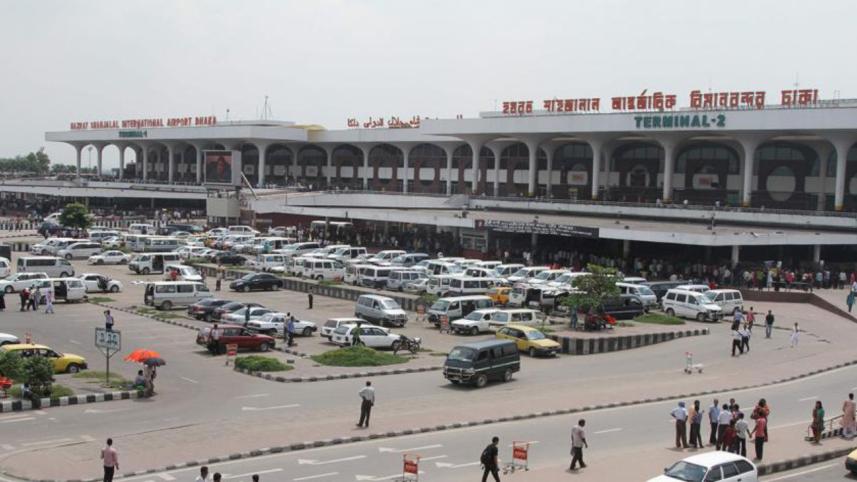
Delowar Sharif flew to Dhaka from Saudi Arabia on Sunday, but this was different from his earlier journeys home in his 11-odd years of life as a migrant worker. He had just been deported with a five-year ban on his re-entering the Middle Eastern country.
The 45-year-old had a good time working for his Saudi employer, but what he did wrong was that he worked for two other Saudis in violation of his work permit.

Delowar returned home along with 174 others in a flight. He said a good number of them had valid work permits, yet the Saudi police detained and deported them.
On Tuesday, another 160 Bangladeshi workers returned home from Saudi Arabia.
Shariful Hasan, head of Brac’s migration programme, said about 25,000 Bangladeshi migrants were sent back from the Middle East, Malaysia and other countries in the last nine months. Almost half of them were deported from Saudi Arabia.
Experts said migrants over the years used to work for several companies and individuals to earn extra money. While arranging their visas and work permits, brokers assured them that they would be free to do whatever work they wanted to do and they were charged heftily by brokers for so-called “free visas”.
To earn back the money, migrants looked for work beyond their contract.
It had not been a problem for them until recently, Shariful said, as Saudi police started strictly enforcing a law forbidding work without work permits.
“There is an increasing trend of deportation for working without permit.”
Echoing the views of Shariful, an official at the Bangladesh embassy in Riyadh said according to Saudi law, a foreign worker has to work under the employer who arranged his work visa, and working somewhere else is illegal.
Saudi Arabia, home to around 11 lakh Bangladeshis, had been lenient in enforcing the law until the middle of 2017, but since then it has been strictly enforcing the law, he told The Daily Star by phone, preferring anonymity as he is not authorised to talk to the media.
GOING FOR EXTRA MONEY
Delowar yesterday said he was a caretaker of a building owned by his official employer, but his work contract showed that he was a driver. He used to clean the building, collect rents from tenants, and repaint walls whenever necessary.
As he was done with the job, he cleaned and looked after two other buildings owned by other Saudis for making extra money.
His monthly pay had increased from Saudi Riyal 800 (Tk 18,000) in 2007 to SR 1,200 (Tk 27,000) this year.
“My employer took care of all my needs -- food, clothing and accommodation. He even bought me tickets to come home in every two years,” Delowar told The Daily Star over the phone.
He had been working happily until two weeks back when the Saudi police arrested him along with 18 other migrants at a grocery shop.
A father of two boys and a girl, Delowar said he wanted to go back to Saudi Arabia, but he could not because of the ban.
Another returnee, Monir Hossain, still has a debt of Tk 1 lakh that he could not pay back in the last two years.
His brokers took Tk 5 lakh to send him to Saudi Arabia, promising him a job of a machine operator. Later, he found it to be of a construction worker. He got a monthly salary of SR 1,000 instead of SR 1,600 as mentioned in the contract.
 For all latest news, follow The Daily Star's Google News channel.
 “My company didn’t have any work for the last five-six months. So we didn’t receive any pay,” Monir said.
During this period, he switched jobs and worked as a plumber, cleaner and in a clothing factory producing burqas. He earned SR 2,000 to SR 2,200 a month.
“I don’t want to go back, but I don’t know what I will do here,” he said.
The Bangladesh embassy official said they contacted the Saudi interior ministry several times to say that the Saudi law was abused in some cases, as some migrants alleged that they were detained from markets when they were buying daily essentials.
The Saudi ministry provided the embassy with some photographs and said if the workers were buying essentials, they would have been staying in front of the shop, rather than staying behind, the official added.
“Therefore, our advice is that the Bangladeshis should go by the Saudi law,” he said.


Comments