


‘Long way to go’ to end virus crisis
give world body $30m more
The global coronavirus crisis will not end any time soon, with many countries still in the early stages of the fight, health experts have warned as researchers revealed the first US deaths from the disease came weeks before the alarm was raised there.

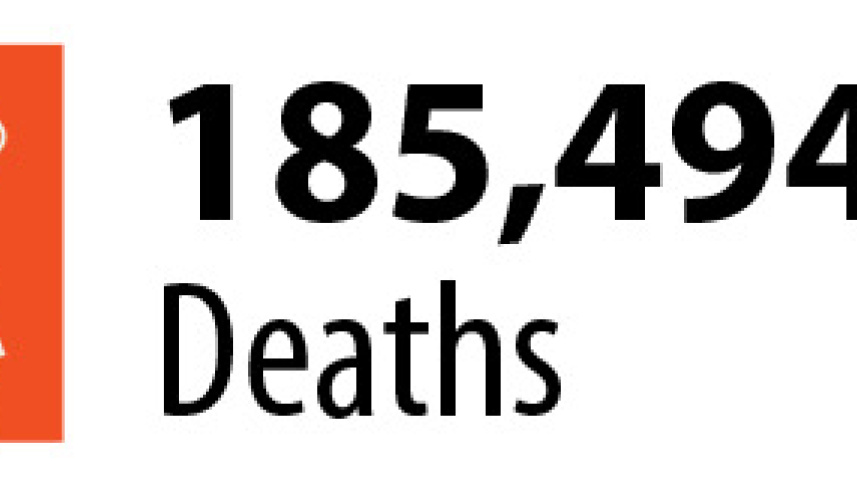
The COVID-19 pandemic has killed more than 184,000 people and infected 2.6 million, and nations are struggling to check its spread with social distancing measures and lockdowns, while trying to repair their virus-ravaged economies.
Some have started to slowly ease restrictions as pressure mounts on governments to find ways to reopen their societies after tens of millions of jobs were wiped out.
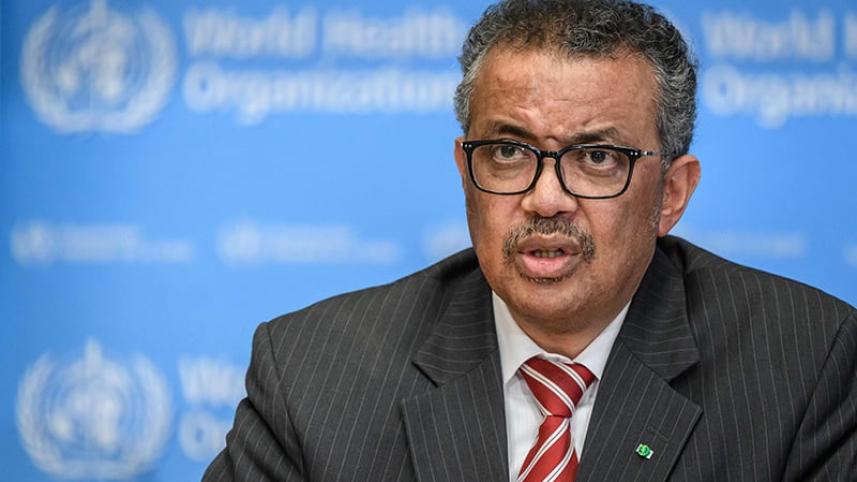
But World Health Organization chief Tedros Adhanom Ghebreyesus on Wednesday cautioned that the struggle is far from over.
"Make no mistake: we have a long way to go. This virus will be with us for a long time," he said.
"Most countries are still in the early stages of their epidemics. And some that were affected early in the pandemic are now starting to see a resurgence in cases."
Meanwhile, China yesterday announced it will give another $30 million to WHO to help in the global fight against the pandemic, days after Washington said it would freeze funding.
The US, which is the WHO's biggest contributor, accused the organisation last week of "mismanaging" the COVID-19 crisis, drawing ire from Beijing as both countries spar over the deadly virus.
Foreign ministry spokesman Geng Shuang said the new donation would be in addition to a previous $20 million committed, and would help "strengthen developing countries' health systems".
In announcing the funding freeze last week, US President Donald Trump accused the WHO of covering up the seriousness of the coronavirus outbreak in China before it spread.
He has also charged the WHO with being "very China-centric" despite Washington's heavy funding.
According to Trump, US taxpayers provided between $400 million and $500 million per year to the WHO, while "in contrast, China contributes roughly $40 million a year and even less".
Trump also claimed the outbreak could have been contained with "very little death" had the WHO assessed the situation in China accurately.
The deadly virus first emerged in the central Chinese city of Wuhan, which was locked down in late January to curb the spread. China has denied Western suggestions that it covered up the extent of the virus outbreak, rejecting claims it has an overly cosy relationship with the WHO as well.
The comments came after the director of the US Centers for Disease Control asked Americans to prepare for a second, possibly more devastating, wave of coronavirus infections.
The United States is the hardest-hit country on the planet, with more than 46,500 coronavirus deaths and over 840,000 infections.
But pressure is growing on authorities to ease restrictions to boost the economy, which is reeling from the pandemic.
Trump, who is keen to restart the US economy, issued rare criticism of a Republican state governor on Wednesday, after Georgia allowed small businesses to reopen.
"It's too soon," the president said.
 For all latest news, follow The Daily Star's Google News channel.
 The explosion of coronavirus cases across the United States has overwhelmed healthcare facilities, from the most developed parts like New York City to the Native American territory of the Navajo Nation in the southwest, where a lack of running water and poor infrastructure has made the situation worse.
The WHO and other health experts have warned that strict containment measures like lockdowns should remain until there is a viable treatment or vaccine for the coronavirus.
There was a ray of hope on that front in Europe, where Germany announced Wednesday that human trials for a vaccine will start by next week.
It is only the fifth such effort to have been authorised worldwide, and is a significant step in making a vaccine "available as soon as possible", Germany's regulatory body said.
But even at the current, rapid pace of development, an effective prophylactic could be several months away.
In Europe -- where the death toll climbed past 110,000 -- some countries have slightly eased coronavirus measures, but bans on large gatherings have been extended.
Finland said it would maintain a ban on gatherings of more than 500 people until the end of July, while hard-hit Spain said it did not expect to lift its strict lockdown until mid-May.
"We must be incredibly careful in this phase," said Spanish Prime Minister Pedro Sanchez.
In South Asia, coronavirus infections have crossed 37,000, with more than half in India, official data showed yesterday, complicating the task of governments looking to scale back lockdowns that have destroyed the livelihoods of millions.


Comments