


Cases hit 2m amid chaos
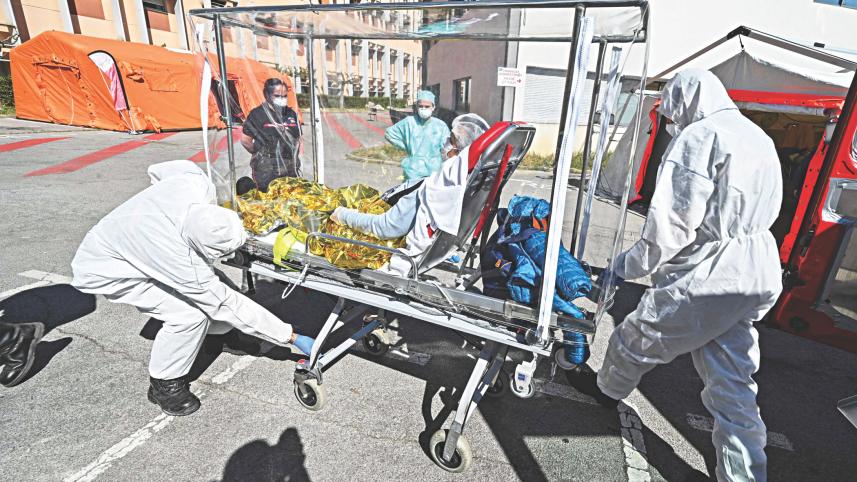
Global efforts to join forces against the coronavirus pandemic faltered yesterday after Donald Trump halted funding for the World Health Organization as number of infected people globally soared past two million mark.

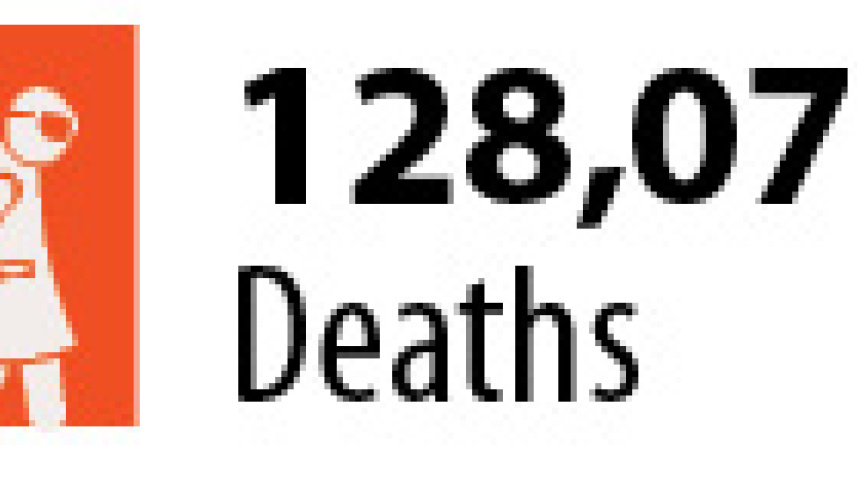
The US president's shock move came as a patchwork of countries experiment with loosening lockdown measures, ushering the planet into a new and uncertain phase of a pandemic that has killed more than 130,000 people worldwide.
In Europe, Denmark became the first country on the badly-hit continent to start reopening schools, while Finland lifted a travel blockade on the Helsinki region.
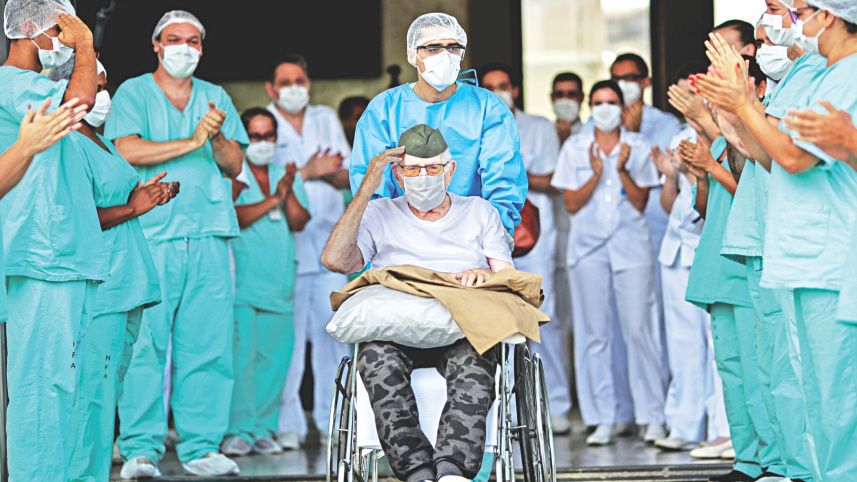
Italy and Spain have also allowed some businesses to restart after signs both are finally flattening the curve following weeks of punishing death tolls.
But as leaders launch into delicate debates of how to jump-start economies without triggering new waves of infection, Trump rattled efforts at global solidarity by ramping up his blame-game with the WHO, the UN's health agency.
The president ordered the US to freeze funding pending a review into the WHO's role in "severely mismanaging and covering up the spread of the coronavirus".
Trump charged that the outbreak could have been contained "with very little death" if the WHO had accurately assessed the situation in China, where the disease broke out late last year.
Leaders around the globe fired back at the US president, who had initially downplayed the dangers of a virus that has now killed more people in the United Sates than any other country on the planet.
Beijing warned that the move would "undermine the international cooperation" at a "critical moment" in the pandemic.
Trump also earned a rebuke from UN chief Antonio Guterres as well as entrepreneur Bill Gates who tweeted that cutting funding was "as dangerous as it sounds".
The European Union's foreign policy chief was similarly disapproving. And African Union chief Moussa Faki Mahamat condemned Trump's decision as "deeply regrettable".
Trump's controversial attack came the world is facing down a looming economic catastrophe, which the International Monetary Fund has said could see $9 trillion wiped from the global economy in the worst downturn since the 1930s Great Depression.
Underlining the point, Europe's powerhouse Germany has been in recession since March, the government said yesterday.
The virus-hit Chinese economy, second only to the US, probably contracted for the first time in around three decades in the first quarter, according to an AFP poll of economists.
Meanwhile finance ministers from the G20 -- the world's richest countries -- held virtual talks Wednesday about a possible debt mororatorium for poor states struggling to weather the costs of the pandemic.
With tentative hope the pandemic could be past its peak in some European hotspots, countries are gradually lifting restrictions -- to mixed reception.
Children started returning to nurseries, kindergartens and primary schools in parts of Denmark, where other measures, such as the closing of borders, bars, restaurants remained in place.
Finland's Prime Minister Sanna Marin also lifted a travel ban in the Helsinki region even as she urged residents to continue avoiding movement.
 For all latest news, follow The Daily Star's Google News channel.
 Italy, the first European country to enter a full lockdown, is allowing bookshops, launderettes, stationers and children's clothing retailers to reopen.
And Spain, which saw another dip in its daily death toll, has permitted work to start some factories and construction sites, though most people remain under strict stay-at-home measures.
Yet warnings abound that a real return to normal is still a long way off.
Spain's Prime Minister Pedro Sanchez said the confinement was working but that "nothing will be the same until a vaccine is found".
Germany was also expected to extend its coronavirus restrictions to May 3, regional government sources said yesterday.
Harvard scientists, meanwhile, have warned it is unlikely that one-time lockdowns will do the job, predicting that repeated periods of social distancing could be needed into 2022 to avoid overwhelming hospitals.
Elsewhere, governments are struggling to enforce lockdowns in impoverished regions where shutdowns are spreading hunger among the poorest.
As the virus appeared to be on the retreat in some parts of richer Europe, it is slowly taking hold in Africa, which has seen 15,000 cases and 800 deaths continent-wide -- with fears over growing hunger and possible social unrest.
A similar crisis is emerging in Ecuador in Latin America, where hunger trumps fear of the virus for residents in rundown areas of the badly affected city of Guayaquil.
"The police come with a whip to send people running, but how do you say to a poor person 'Stay home' if you don't have enough to eat?" said Carlos Valencia, a 35-year-old teacher.
The city's mayor has warned that overstretched medical facilities mean many are dying without the chance to be tested -- a reality that could be hiding the true extent of the carnage in many poorer places.


Comments