


Free, strong state organs needed
Elections in the country have been mired by rising trend of violence with turnout of voters and participation of candidates gradually declining, revealed an annual study report of Brac Institute of Governance and Development (BIGD).
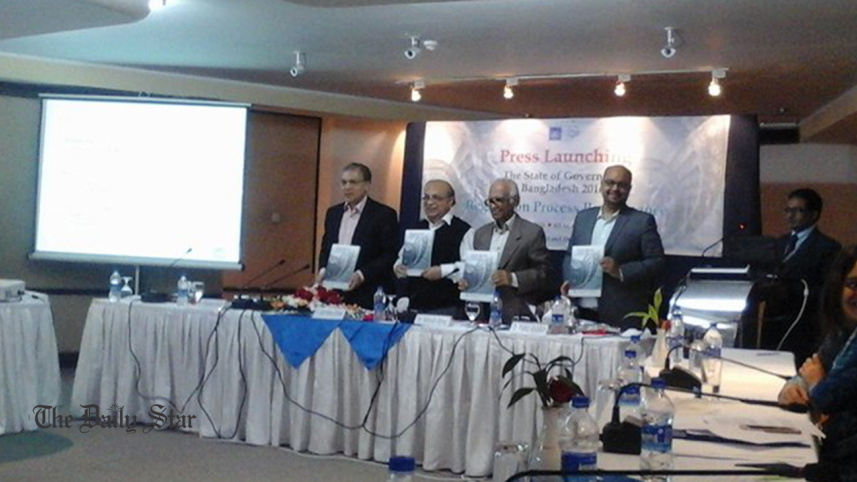
Clashes among political parties and intra-party feuds during the last several elections resulted in deaths and injuries of party men, said the report titled “The State of Governance Bangladesh 2016: Regulation Process Performance.” The BIGD of Brac University unveiled the report at a programme in the city's Brac Centre Inn yesterday.

“After the '90s, the state machinery was politicised and counter-politicised by different governments. This has contributed to the absence of good governance in the election system,” Transparency International Bangladesh's Executive Director Dr Iftekharuzzaman said.
He added that the state organs must be independent and empowered to hold a participatory and credible election.
Referring to the violence in the recently concluded Union Parishad (UP) elections, the report said Dhaka division topped the chart with 35 murders followed by 24 in Rajshahi, 23 in Chittagong, 16 in Barisal, 13 in Khulna and five in Sylhet.
Around 60 of the murders were due to intra-party violence in the ruling party, it said, adding that internal feuds and intense competition for nomination were behind the violence.
Influence of money at the nomination stage pushed the candidates to attempt to win the polls at any cost, including using force, to get the return on their investment, causing widespread electoral violence, the BIGD observed.
Voters' turnout was noticed low in local government elections including the city corporation, upazila parishad, union parishad and municipality elections. Turnout had been significantly low in recent Dhaka North, South and Chittagong city corporations polls compared to other city elections held in the last few years.
Participation of candidates in some elections, including the 10th national election and the recently held city polls, had also been affected by boycotts by major opposition parties, resulting in low turnout, the report added.
Recent local government and national elections lacked competitive process, it said, adding that there was no transparency in electoral fundraising and spending and the reports submitted to the Election Commission.
Commenting on the electoral governance at the programme, Dr Iftekharuzzaman said politicisation of the state machinery led to “controversial” elections in Bangladesh.
Renowned economist Prof Wahiuddin Mahmud and BIGD Executive Director Sultan Hafeez Rahman also spoke at the programme.
 For all latest news, follow The Daily Star's Google News channel.
Comments