


Battle for Mosul nears ancient Nimrud
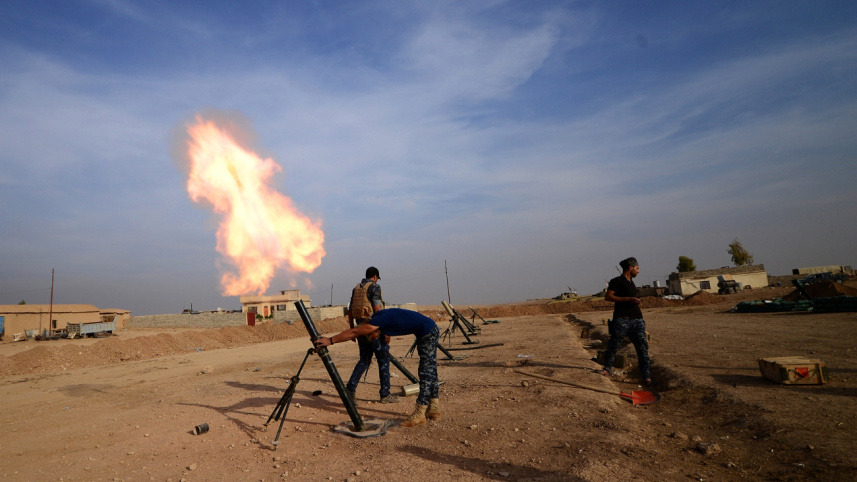
The battle for Iraq's second city Mosul neared the remains of ancient Nimrud yesterday, the military said, raising fears for the famed heritage site already ravaged by jihadist bombs and sledgehammers.
Troops and allied militia were advancing on two villages held by the Islamic State group near the ancient site some 30 kilometres (20 miles) south of Mosul, the Joint Operations Command said.

"Units of the 9th Armoured Division and the Hashed al-Ashaeri (tribal militia) are beginning to advance to liberate the villages of Abbas Rajab and Al-Nomaniyah, toward Nimrud," it said, later announcing that Abbas Rajab had been retaken.
Nimrud was the one of the great centres of the ancient Middle East. Founded in the 13th Century BC, it became the capital of the Assyrian empire, whose rulers built vast palaces and monuments that have drawn archaeologists from around the world for more than 150 years.
Many of its monumental stone sculptures and reliefs were taken away for display in museums around the world but some of the more massive structures remained in place when the jihadists swept through in mid-2014, reports AFP.
Meanwhile, Iraqi government forces killed and tortured civilians south of Mosul, rights groups said yesterday, the first such reports of alleged abuse in a US-backed campaign to retake the city from Islamic State.
Amnesty International said "up to six" people were found dead last month in the Shura and Qayyara sub-districts who security forces suspected of ties to the ultra-hardline jihadist group which seized a third of Iraqi territory in 2014, reports Reuters.
"Men in federal police uniform have carried out multiple unlawful killings, apprehending and then deliberately killing in cold blood residents in villages south of Mosul," said Lynn Maalouf, deputy director for research at Amnesty's Beirut office.
Human Rights Watch (HRW) said at least 37 men suspected of being affiliated with Islamic State had been detained by Iraqi and Kurdish forces from checkpoints, villages, screening centres and camps for displaced people around Mosul and Hawija, further south.
Relatives said they did not know where most of the men were being held and had not been able to contact any of them while in detention, according to the report.
HRW warned that such conduct "significantly increases the risk of other violations", including torture.
An Interior Ministry spokesman denied there had been any violations and said Iraqi forces respect human rights and international law. A spokesman for Iraq's federal police could not be reached for comment.
A spokesman for the Kurdish regional government denied the HRW report, saying any delays in informing families were limited and due to limited resources.
"Nobody has been kept in unknown facilities. They are kept in identified facilities," said Dindar Zebari.
The Mosul operation, involving a 100,000-strong alliance of troops, security forces, Kurdish peshmerga and Shia Muslim militias and backed by US-led air strikes, has entered its fourth week but has so far gained just a small foothold in the city.
 For all latest news, follow The Daily Star's Google News channel.
Comments