


Iran’s struggles under repression and foreign intervention
20 January 2026
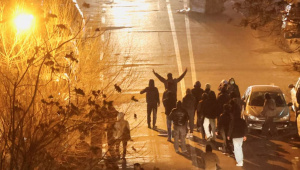
As protests in Iran show signs of waning under the weight of an increasingly brutal crackdown, Iranian officials have claimed that at least 5,000 people, including around 500 security personnel, have been killed nationwide.
20 January 2026

From the archives / Remembering Abu Sayed: The day fear died
16 July 2025
Abu Sayed taught us not to step back.
16 July 2025
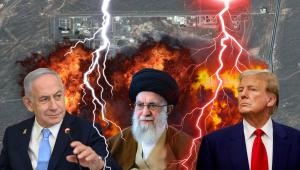
The fallout of Trump’s Iran strike
22 June 2025
Many experts have argued that Iran’s greatest mistake was not to acquire nuclear weapons
22 June 2025
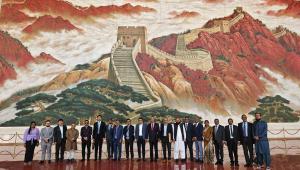
What South Asia can learn from China’s development journey
13 June 2025
People across South Asia are increasingly realising how far they are being left behind in a world that is rapidly moving forward.
13 June 2025

Jaishankar’s remarks on Bangladesh: A deeper understanding is necessary
27 February 2025
India's External Affairs Minister S Jaishankar recently made some strong remarks about Bangladesh at the Delhi University Literature Festival.
27 February 2025

July uprising / A turning point or a missed opportunity?
16 December 2024
A reflection on Bangladesh's post-Awami League crisis and the need for unity and reform.
16 December 2024
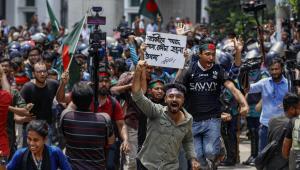
Opinion / Principles, party, power or politics?
14 August 2024
The student movement’s ability to inspire people to stand up to a vicious oppressor was truly remarkable.
14 August 2024
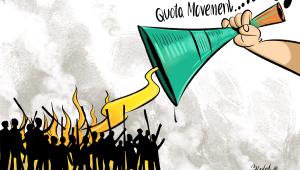
The irresponsible remarks of our responsible persons
25 July 2024
History and ordinary people in general will remember very well what happened over the last week or so.
25 July 2024
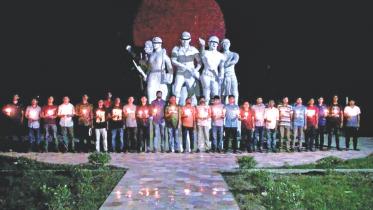
The rot that caused Abrar’s death
Since the killing of Abrar Fahad, a number of issues have been raised by people rightly outraged by his gruesome murder at the hands of some Chhatra League members, as well as revelations about how supporters of the ruling party’s student wing have been regularly terrorising ordinary students, with full exemption. Among them is the role of political activities on university campuses.
15 October 2019

‘The culture of impunity bedevilling public universities must be dealt with firmly’
What are your thoughts on the UGC probe committee’s recommendation to withdraw the Vice Chancellor of Bangabandhu Sheikh Mujibur Rahman Science and Technology University in Gopalganj, following which he resigned on September 30?
5 October 2019
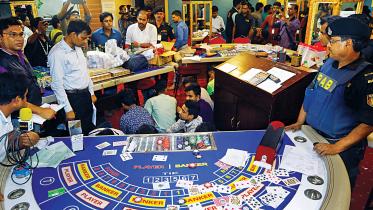
The prime minister’s crusade against corruption
It is no secret that people in general share a common perception that corruption in the country has gone off the rails to the point of becoming nearly unbearable. While high corruption, mainly facilitated by some members of the ruling party of the day, has been a
24 September 2019

Can democracies around the world be resuscitated?
The United Nations General Assembly agreed to observe September 15 as the International Day of Democracy in 2007.
14 September 2019
Hallmark’s return to the headline
It's been a while since the Hallmark Group has been mentioned in the news. Except for when it has been used as an example of severe corruption and criminality, to illustrate the grave consequences that arise when certain principles and rules are ignored.
11 September 2019

Flip-flopping on regulatory decisions: Who does it benefit?
In a reversal of its stance, the Bangladesh Bank (BB) on August 27 decided to allow Beximco Ltd to reschedule its loan of Tk 430.05 crore, thus in principle approving the rescheduling of restructured loans.
31 August 2019
Official version of our human rights and what the reality is
Having acceded to the United Nations Convention against Torture and other Cruel, Inhuman or Degrading Treatment or Punishment (UNCAT) on October 1998, Bangladesh was obligated to submit its initial State Report under Article 19 of the UNCAT to the UN’s Committee against Torture (CAT) by November 4, 1999. But it took Bangladesh 20 years to comply—and only after the CAT sent a letter to the Bangladesh government on December 10, 2018, reminding it of its overdue initial report and about the possibility for the Committee to proceed with a review in its continued absence.
27 August 2019
Jobs are the reason ‘it’s the economy, stupid!’
Bangladesh’s economy has made massive strides since 1971. After independence, the initial challenges that the economy faced were enormous. And while Bangladesh managed to overcome most of them, many new challenges emerged in the years that followed.
7 August 2019
What it means to live in a surveillance society
If you said pre-2013...that the most private moments of your lives were being watched and recorded...people would call you a conspiracy theorist.” – Edward Snowden
31 July 2019

How black money can and cannot be reduced
Moving against the current of expert opinion, the government, in the budget for FY2019-20, opened up a five-year scheme to convert black money into white.
23 July 2019
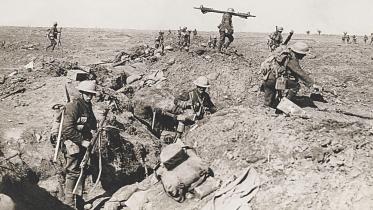
Treaty of Versailles 100 years on
The First World War was contemporaneously described as “the war to end all wars”.
14 July 2019

Budget proposal not aligned with AL’s election manifesto
The Tk 5,23,190 crore budget proposed by the government, which is the biggest in our country’s history, was somewhat of a letdown. Governments sometimes struggle to fully make use of their budgetary plans in electoral democracies because the party in power may
21 June 2019

An important answer to look for in the budget
One of the best instruments the government can use to serve those it works for—presumably the citizens—is the national budget. Unfortunately, if one was to ask ordinary citizens, independent analysts and experts to rate how successfully the government implemented
10 June 2019
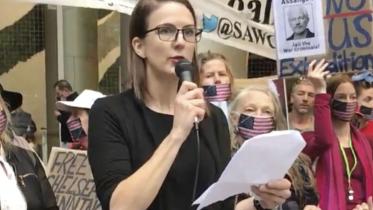
How psychological vulnerabilities are exploited to control us
Dr Lissa Johnson is a clinical psychologist and columnist for the Australian news website New Matilda, with a background in media studies and sociology, and a PhD in the psychology of manipulating reality-perception. In an exclusive (electronic) interview with Eresh Omar Jamal of The Daily Star, Dr Johnson talks about a recent investigative series she wrote on the US government’s hunt for Julian Assange, how propaganda works, and the psychology that divides people and allows them to commit atrocities against “outgroup” members.
26 May 2019

Only the people can save Assange and Manning
Stefania Maurizi is an investigative journalist working for the Italian daily La Repubblica. She has worked on all WikiLeaks releases of secret documents and partnered with Glenn Greenwald to expose the Snowden Files about Italy. She has authored two books—Dossier WikiLeaks: Segreti Italiani and Una Bomba, Dieci Storie. In an exclusive (electronic) interview with Eresh Omar Jamal of The Daily Star, Maurizi talks about the arrests of WikiLeaks founder Julian Assange and whistleblower Chelsea Manning, who together revealed to the world, the reality of the Iraq and Afghan wars.
24 May 2019
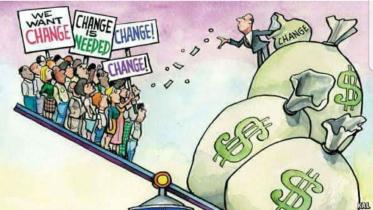
Poverty, policy and economic ruin? The true folly of neoliberalism
No matter which approach is used, every method of measurement shows inequality has risen in Bangladesh (at least) over the last 10 years. If we take the latest Household Income and Expenditure Survey of the Bangladesh Bureau of Statistics, we see that the country’s Gini coefficient—a measure of inequality—went up (indicating disparity has grown) from 0.458 in 2010 to 0.482 in 2016. From a different angle, a report released by Oxfam towards the close of last year ranked Bangladesh 148th in the world—out of 157 countries—for reducing inequality.
21 May 2019

Rise of the executive and the decline of civil liberties
In the last decade at least, we have seen two things happening side-by-side globally. One is the rise of the executive branch of government—the significance of its role in the workings of government and society at large. The other is the decline of civil liberties—some of which, such as the right to privacy and free speech, people are now “willingly” compromising on, or no longer view as inalienable even.
15 May 2019

Martyrdom of Assange or death blow for journalism?
Aside from being nominated multiple times for the Nobel Peace Prize, including in 2019 by Nobel Peace Prize Laureate Mairead Maguir, Julian Assange has won countless awards for journalism
2 May 2019

The biggest barrier to our industrialisation
While inaugurating the first national industrial fair in the city, the prime minister, at the end of last month, said she wanted to discuss how to reduce the interest rate of bank loans which she thought had become the biggest barrier to the country’s industrialisation.
28 April 2019
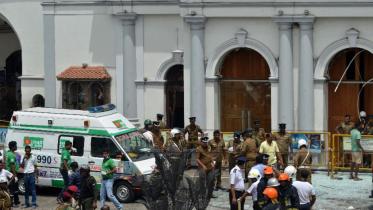
After Sri Lanka’s terror attack: Questions we now must ask
The devastating series of suicide attacks in Sri Lanka on Easter Sunday that claimed at least 250 lives was noticeably well organised.
26 April 2019