


Learning with full concentration bears fruit: Pt. Kushal Das
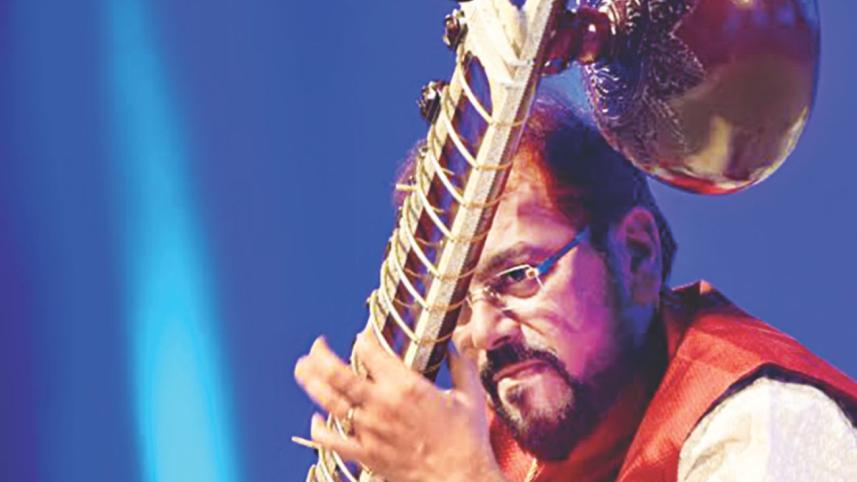
Sitar maestro Pandit Kushal Das was in Dhaka to conduct a Sitar-Sarod Workshop, jointly organised by Bengal Foundation and Bangladesh Shilpakala Academy. In the course of the workshop, this correspondent spoke to him on various facets of music and the Bangladeshi classical music scene. Excerpts:
“There are many talented artistes in Bangladesh. Their inclination to learn the instrument is extremely appreciable. Many world renowned classical music artistes were born in Bangladesh. When I learnt that a 50,000-60,000 strong audience listens to classical music five nights in a row at the Bengal Classical music festival, I assumed that there must be a large number of classical music artistes in Bangladesh; but while conducting the workshop I learnt that there is a shortage of proper gurus here. Now the teachers' team that Bengal Foundation has promoted, I firmly believe, will play a significant role in creating musicians in the country.”

“The role of the Guru-Shishya Parampara in classical music is very important. My experience suggests that if someone gives me three to four hours a day and continues the learning and practice with perseverance for three or four years she/he will be able to play the sitar on stage. One thing is important: the learner must practice with full concentration following the lessons I provide.”
“Performing classical music following proper melody requires two things: one is to listen to the music of precise melody and another is to practice accordingly under the tutelage of a guru. An honest effort and dedication bear fruit. The best time to practice is between 2am to 4am as it is called Brohmo Muhurta (the moment of creation). There prevails no sound pollution at that time. It's a sandhiprakash time that beckons light from darkness. Another such a time is evening when light turns into darkness. The silence that exists in the time is rare. If an instrument is not properly tuned, melody will not be tamed with it and practice will generate little results.”
“The rigid roles and restrictions of a Gharana have become relaxed nowadays; thanks to the advent of multifaceted media and use of technology in music. The schooling of Gharana is significant to an average artiste; but a master can blend melodies fine-tuning them in a soothing order.”
 For all latest news, follow The Daily Star's Google News channel.
Comments