Price of passage

Global commerce glides across oceans on steel hulls and satellite navigation. Yet the unseen engine behind that movement is insurance.
It covers ships, cargo, ports, terminals and offshore infrastructure against the hazards of the sea and the violence of geopolitics. Without it, modern shipping simply does not function.

In practical terms, commercial vessels do not set sail without insurance cover. Port authorities, charterers, banks and regulators insist on it as a prerequisite.
War, terrorism and piracy are explicitly excluded from standard shipping policies, which is why specialised war-risk insurance exists as a parallel layer of protection.
Such cover allows ship owners to claim compensation if vessels or cargo are damaged by armed conflict or terrorism. Policies may be annual, or issued for a single voyage through dangerous waters.
In peaceful times the arrangement is routine. In wartime it becomes decisive.
And now, as the United States and Israel’s war with Iran spills into the Persian Gulf, the insurance market is in hot water.
The crisis centres on the Strait of Hormuz, the narrow maritime chokepoint between Iran and Oman.
Roughly one-fifth of the world’s oil passes through this corridor, making it one of the most critical arteries of the global economy.
The vulnerability of the strait has long been recognised. During the Iran-Iraq war, ships were routinely targeted in the Gulf, threatening global oil supply. That history now appears to be repeating itself.
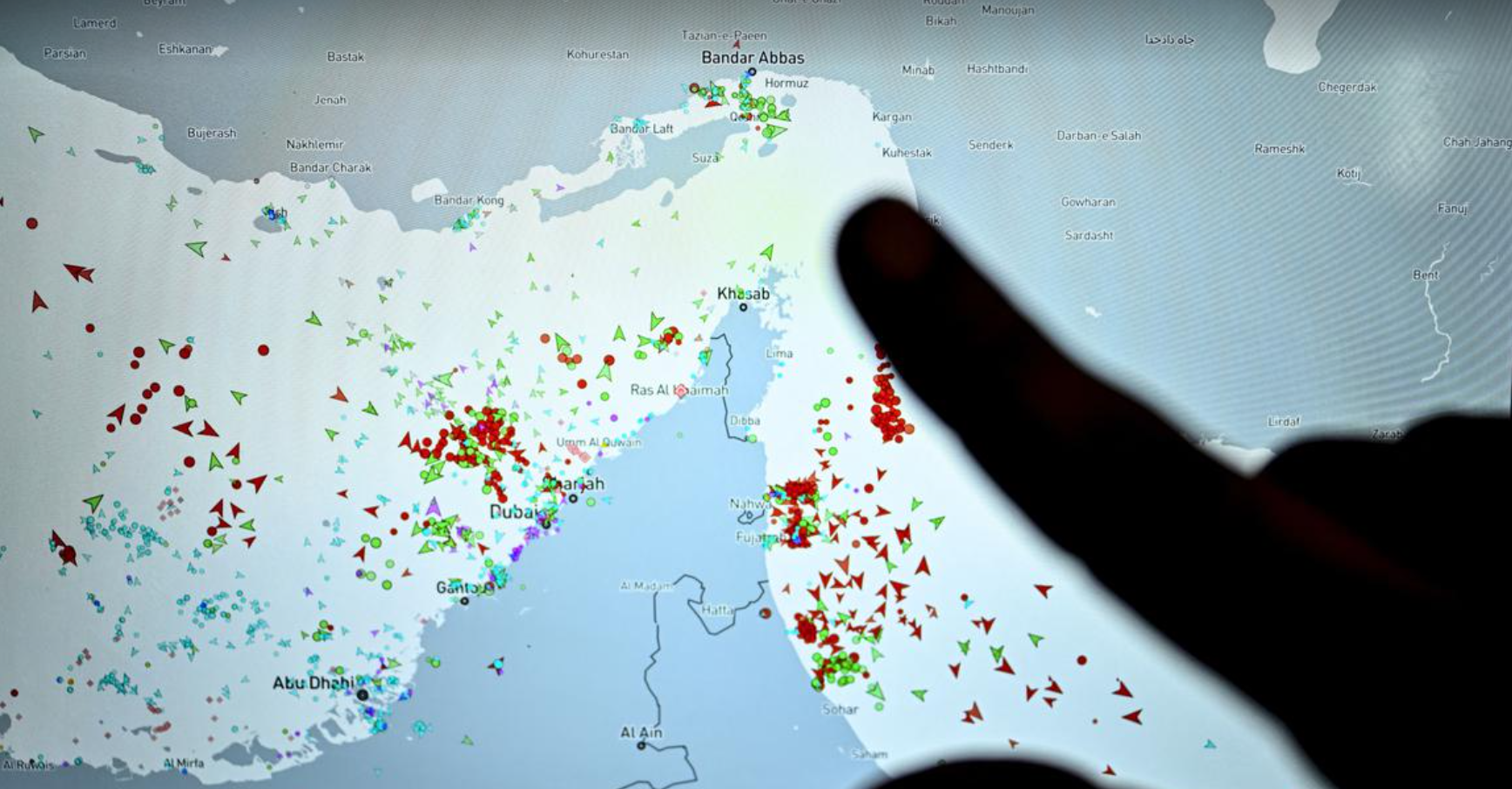
Iran’s Islamic Revolutionary Guard Corps (IRGC) has declared the strait closed, warning that vessels attempting to pass could be attacked. Several tankers have reportedly been damaged and dozens of vessels stranded in surrounding waters.
Shipping through the channel has slowed to a crawl, with many ships choosing to wait in the Gulf rather than risk the passage.
The result is a maritime standstill that threatens energy supply chains across the world.
So far as shipping is concerned, it appears danger alone does not halt trade. Absence of insurance does.
Major maritime insurers have now cancelled war-risk coverage for parts of the Persian Gulf, effectively designating the area a “listed zone” of extreme danger. Among those issuing cancellation notices are large protection-and-indemnity insurers such as Gard, Skuld, NorthStandard, the London P&I Club and the American Club.

According to Reuters, the withdrawal of cover took effect after short notice periods ranging from 48 hours to seven days. Without insurance, vessels cannot legally or financially enter the region. Banks will not finance voyages, ports will refuse entry, and charterers will not contract ships. In other words, insurers possess what might be called a quiet veto over global shipping. Insiders told AFP cancellations were happening rapidly as insurers reassessed their exposure.
Where insurance has not disappeared altogether, it has become dramatically more expensive. Premiums have surged from roughly 0.2 percent of a vessel’s value to around 1 percent in days, according to industry sources cited by Reuters.
For a tanker valued at $100 million, that means the cost of insurance for a single voyage can jump from about $200,000 to roughly $1 million.
 For all latest news, follow The Daily Star's Google News channel.
 Marcus Baker, global head of marine at insurance broker Marsh, told The Guardian that insurance rates could increase 50 to 100 percent or more as the conflict escalates. In some cases, the increase is even sharper.
Analysts cited by Reuters say premiums could climb to between 1 and 1.5 percent of vessel value, depending on the risk profile and the ship’s location relative to the Hormuz chokepoint.
For large tankers worth hundreds of millions of dollars, that means insurance costs reaching several million dollars per voyage. In shipping economics, such increases are seismic.
Beyond damaged ships lies an even greater danger. The sinking of a large oil tanker in the Persian Gulf could unleash a catastrophic environmental spill.
Marine insurance does include pollution coverage. But insurers struggle to price the full scale of potential environmental damage and business disruption from a massive spill.
In such circumstances the risk becomes what insurers call “unquantifiable”. And unquantifiable risks are precisely the kind insurers prefer not to cover.
The surge in premiums is already changing behaviour across the global shipping industry.
Major container carriers and tanker operators have begun pulling vessels away from the Gulf. Companies including MSC, CMA CGM and COSCO have reportedly ordered ships in the region to seek safer waters.
Shipping data show large clusters of tankers idling off the coasts of major Gulf producers such as Saudi Arabia, Iraq and Qatar.
According to data cited by Al Jazeera, dozens of vessels are waiting in open water rather than attempt the crossing.
The ripple effects extend far beyond the Gulf.
Jeremy Nixon, chief executive of container carrier Ocean Network Express, warned that roughly 10 percent of global container ships could become caught in the broader disruption.
Cargo could begin piling up at ports and trans-shipment hubs across Asia and Europe if the situation persists.
The disruption has already jolted global energy markets.
For Bangladesh, deeply embedded in global maritime supply chains, the Hormuz crisis carries immediate consequences. Energy supply is the most urgent concern.
Around 90 percent of Bangladesh’s imported oil passes through the Strait of Hormuz. Almost all of its liquefied natural gas imports originate in Qatar and travel through the same waters.

The anxiety has already surfaced. Panic buying prompted the government to impose daily rationing of petrol and diesel to curb hoarding. With most of its fuel being imported, Bangladesh remains acutely sensitive to global shocks. Gas supply has also tightened. QatarEnergy reportedly declared force majeure on LNG exports following attacks in the Gulf, cutting Bangladesh’s long-term gas deliveries.
The country was forced into the volatile spot market, where emergency LNG cargoes for mid-March were reportedly purchased at $28 and $23 per mmBtu, compared with roughly $10 at the beginning of the month.
Those higher costs are cascading through the economy. Several fertiliser plants have been shut to conserve gas, while policymakers warn that prolonged disruption could strain the national energy import bill.
The movement of the world’s trade depends not only on geopolitics, but also on actuarial calculation. Underwriters in London, Zurich and Singapore now find themselves weighing risks that determine whether tankers sail or stay anchored.
And in a globalised economy, that hesitation can echo from the Persian Gulf to the factories of Bangladesh.

Explainer / Can Tk 9 lakh settlement end the Baridhara crash death case?

Star Interactive / Inside the Architecture of Secret Detention


Exports falter, remittances rise: What does this tell us?

Analysis / The fall of India’s Left has been a slow, steady erosion

Why do development videos fail to find audience?
Analysis / Shadow over future nuclear energy ambition

Analysis / Bluff, bargain and backtrack: The Trumpian art of the deal