


‘Just a question of time’: Trump revives Cuba confrontation after Iran attack

At a White House event yesterday, US President Donald Trump told a gathering that after concluding the ongoing conflict with Iran the US would turn its attention to neigbour Cuba, saying it was “just a question of time” before focus shifted back to the island nation.
He praised Secretary of State Marco Rubio for what the administration calls a tighter sanctions regime on Cuba’s economy, an effort to “tighten the screws” on Havana’s leadership that the Washington hopes will bring about political change.

That linkage between actions in the Middle East and rhetoric in the Caribbean sits uneasily in contemporary geopolitics.
Given that the US has already launched significant strikes in Iran and declared goals of undermining its regime, Trump’s remarks on Cuba carry a weight far beyond mere coastal posturing.
US and Cuba have been entangled in antagonism since the mid-20th century, a clash defined by ideology as much as geography.
Therefore, beneath the surface of these remarks lies a far longer, intricate tale of hostility, intrigue and geopolitical theatre that stretches back over six decades.
At perpetual odds
The animosity between Washington and Havana is neither recent or trivial.
It is rooted in the seismic shift that occurred in 1959 when Fidel Castro’s revolutionary forces overthrew the US backed dictatorship of Fulgencio Batista.
Rather than welcoming the new government, the US bristled as Castro nationalised property owned by American companies and deepened ties with the Soviet Union.
In response, the Kennedy administration expanded an economic embargo and severed diplomatic relations.
One of the most infamous early confrontations came in April 1961 when the US Central Intelligence Agency backed an invasion force of Cuban exiles at the Bay of Pigs.
The assault in the Bay of Pigs was designed to spark an uprising and topple Castro’s government, but it collapsed within days, leaving more than a thousand of the attackers captured and further humiliating American foreign policy.
That debacle was followed by a series of covert efforts, including Operation Mongoose, which sought to destabilise Cuba through sabotage, propaganda and intelligence operations.
Many of these efforts entailed assassination attempts on Cuban leaders and sabotage of infrastructure -- a shadow war that deepened mistrust.
Castro himself survived a staggering series of assassination attempts -- historians estimate over 600 -- many plotted by the CIA and intriguingly the American Mafia, whose interests in Havana’s casinos had evaporated under the revolution.
Poisoned cigars, exploding seashells, and other macabre contrivances were all part of a catalogue of covert operations, illustrating the lengths to which the US was willing to go to impose its will on the island.
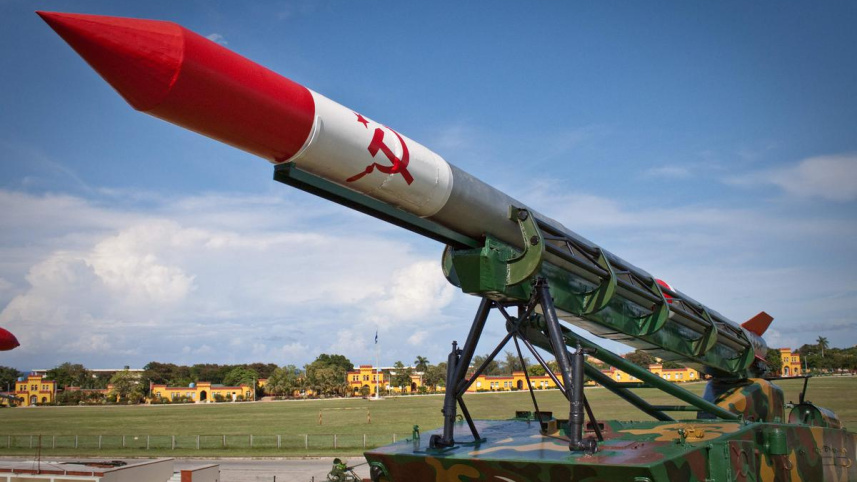
The Cold War crescendo arrived in October 1962 with the Cuban Missile Crisis.
Soviet nuclear missiles placed on Cuban soil in response to American missiles in Turkey set off a thirteen day confrontation that brought Washington and Moscow to the brink of nuclear war.
 For all latest news, follow The Daily Star's Google News channel.
 Ultimately Soviet leader Nikita Khrushchev agreed to withdraw the missiles after a phone conversation with President John F Kennedy in exchange for a US pledge not to invade Cuba and a secret understanding about American missiles elsewhere.
Sanctions, thaw and retrenchment
In the decades that followed, the central instrument of US policy toward Cuba became economic isolation.
Sanctions and political posturing have long been Washington’s instruments.
Economically, Cuba has endured decades of deprivation and isolation, yet its government has proved remarkably resilient, partly through strategic alliances and partly through the endurance of its political apparatus.
The embargo grew ever more comprehensive, tightened by successive laws such as the Helms Burton Act in 1996 that enshrined sanctions until Cuba moved toward democracy and respect for human rights.
There were brief periods of détente, most notably the “Cuban thaw” between 2014 and 2017 when the Obama administration engaged Havana in diplomatic normalisation, culminating in an American presidential visit to Cuba.
But those steps were reversed under subsequent administrations, and the basic posture of hostility resumed.
Why Cuba still matters to US
For US, Cuba has long symbolised more than a geopolitically proximate island.
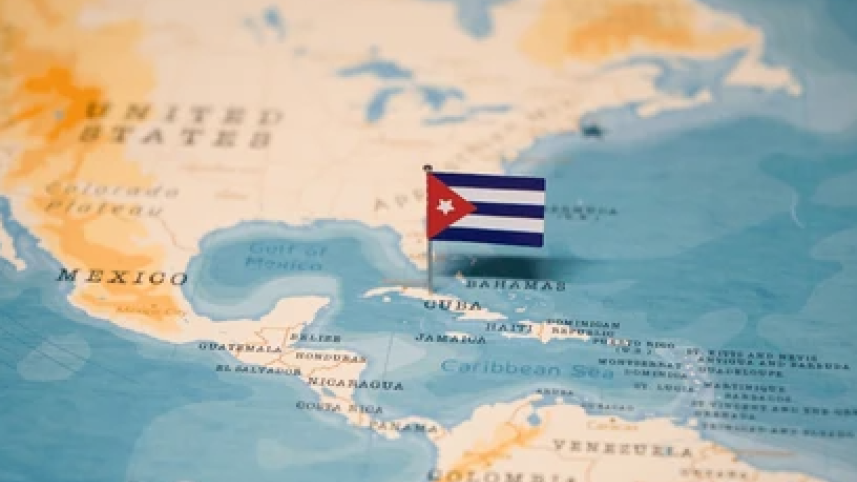
Its revolutionary government stood as a communist foothold just 90 miles from Florida, a source of ideological competition during the Cold War and a thorn in the side of successive US administrations.
Beyond symbolism, Cuba’s strategic location in the Caribbean, its role in regional alliances, and its historical links with Latin American leftist movements have all factored into why the island remains central to US foreign policy debates.
For Havana, resisting Washington’s pressure has become part of the narrative of sovereignty and national pride.
Successive Cuban governments have framed economic hardship caused by sanctions as evidence of resilience against external aggression.
Donald Trump’s suggestion that Cuba is “just a question of time” after Iran underscores an enduring belief among some US policymakers that pressure -- whether economic, diplomatic or military, can precipitate a change in government.
This reignites fears of direct intervention or coercive measures reminiscent of the Cold War.
In Cuba, where energy supplies have already been squeezed by US imposed blockades on oil imports, such language is likely to deepen anxieties and harden resistance.
The parallel with Trump’s actions toward Iran -- including military strikes and an express aim of regime change, makes the Cuban case more than rhetorical flourish.
It fits within a broader pattern of aggressive foreign policy that, for many observers, marks a significant departure from the non interventionist posture Trump promoted earlier in his political career.
Anything US does has a global impact
Should the United States follow through on coercive moves against Cuba, the impact would be wide ranging.
Latin America might see renewed geopolitical fault lines, with governments wary of US intervention recalibrating alliances.
Russia, China and other powers that engage with Havana could view such actions as a destabilising precedent in a hemisphere where the US has traditionally resisted external interference from other great powers.
For Cuba’s people, the human cost of tightened sanctions or potential intervention would compound already acute economic challenges.
Decades of embargo have stifled growth, limited access to goods and constrained opportunity; further escalation could deepen hardship and risk humanitarian fallout.
In sum, Trump’s remarks are more than a passing political flourish.
Diplomatically, the mere threat of US aggression can strain relations with regional actors and global powers, echoing the complexities of a Cold War still alive in memory if not in policy.
The US-Cuba dynamic carries the ghosts of past failures and the weight of regional significance.
Any move by Washington to act on Havana, whether immediate or deferred, would reverberate far beyond the region -- a testament to the island’s unique place in American strategic imagination.