


Is curiosity still present in the learning process?
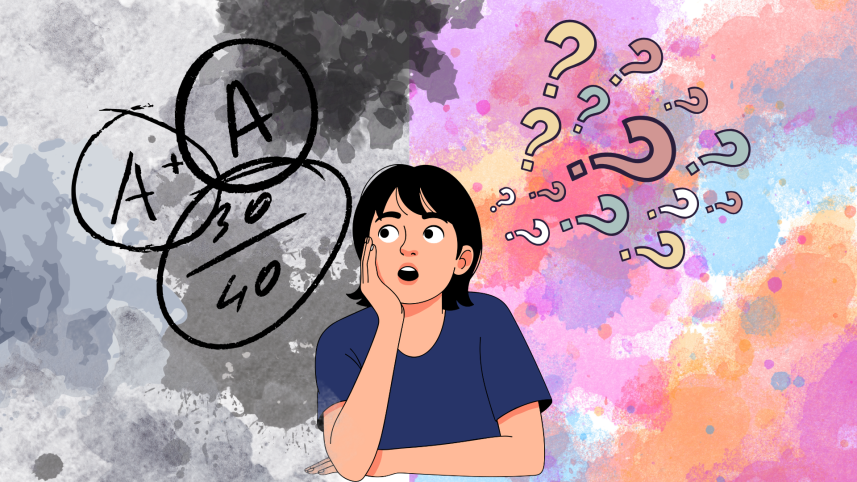
Wonder, musings, and thought have all seemingly become unattainable privileges for a new generation of students. Despite curiosity being the genesis of all knowledge that our species boasts to have, students have found themselves in a precarious position – one where they don’t have the space to spend time in contemplation. As they are burdened with demanding schedules, young minds are being tailored to think and answer only in the most efficient ways in standardised tests. This, perhaps, poses a frightening predicament: students no longer go to school to discover and explore; they go to school to learn only what is taught to them.
“Math is easier when I stop asking why” is a thought that crosses my mind fairly often. The frequency increases when trying to parse through my homework. Tutorials for getting better at math on YouTube reaffirm this. Titles to videos explicitly urge the viewer to “stop trying to understand”. They elaborate that trying to figure out the nitty-gritty of a topic for hours can be detrimental to our overall progress, especially when students are required to cover multiple topics for their exams.

What follows is a comments section that is filled with hundreds of people who have come to the same conclusion. This is an almost grotesque contradiction for students to retreat to, as math was discovered by great thinkers who spent hours and hours lost in thought. Most of us, however, do not have that luxury.
It isn't just math, though. Almost all disciplines are being subjected to this same treatment, as tangible results in the form of good grades take precedence over what and how much students really learn. As such, curiosity – the kind that helps students develop an intuitive understanding of topics – takes a back seat in the classroom. There simply isn’t enough time or space to indulge it. Teachers, too, are barred by rigid schedules that do not allow them to help students explore questions. Instead, they are required to redirect them back to their “regularly scheduled content”.
While it might be only-child prodigies in popular media that are constantly getting told off for asking too many questions, I can’t help but feel that almost all of us have been trained out of expressing our interest in ways that are not utilitarian.
Moreover, there is now a largely commercial aspect present in education. Schools, and especially coaching centres, are incentivised to leverage the achievements of their students to bring new pupils in. This new crop of students, in turn, can also hope to achieve similar feats as their seniors. The implication of this growing practice is that success can be reproduced by simply adhering to a strict set of rules. The emphasis is diverted away from the personal habits that high-achieving students rely on, which may well be rooted in curiosity. Instead, stellar performances are packaged as a commodity that can be attained under the guidance of a specific instructor.
As such, practising large volumes of past papers is prioritised over actually exploring the content. Similarly, information is presented in summarised notes of the main points. These merely highlight the ‘tricks’ to solving questions, reducing the content down to the academic equivalent of YouTube shorts. Against this backdrop, textbooks are often considered an unnecessary nuisance with overly complex wording.
While it is undeniably necessary to solve practice papers, peruse through summarised notes, and be efficient with how we study, what I am concerned about are the things we forego when we only adhere to these quick measures. They are known to work, but if these strategies are the only ones students rely on, then they are depriving themselves of the opportunity to teach themselves how to learn.
The process of learning is personal. What works for one pupil could simply not work for another. But if said student isn’t given the space to understand what clicks for them, they will concede to the belief that they are simply inadequate. They will half-heartedly progress to the next stage, without having completely figured out a vital part of themselves. What this development signifies, above all else, is a failure of one of education’s key roles: self-exploration.
The quick measures regurgitate one thing: work smarter, not harder. This is a mantra that I have come to abhor. It is essentially telling us to skip past the intricate, awe-inspiring details of knowledge that make the toil of education worth it. Surface-level learning that provides quick results is just enough.
While almost all schools will encourage their students to have hobbies, to spend time admiring the arts, and to be creative in general, no time is afforded to them to do so. Impeding students from engaging in contemplation will only give way to complacency. Instead of cultivating curiosity, we risk becoming disinterested and apathetic individuals who lack self-belief. And the first step to all that could well begin with education being condensed into an easily consumable product.
References:
1. The Guardian (January 28, 2020). Schools are Killing Curiosity.
2. Harvard Educational Review (2011). Children’s Need to Know: Curiosity in Schools.
3. The Young Darwinian (2017). Curiosity inspires, discovery reveals.
4. Alfie Khon (October 2, 2024). Less and Less Curious.
 For all latest news, follow The Daily Star's Google News channel.
Comments