


‘Roof knocking’
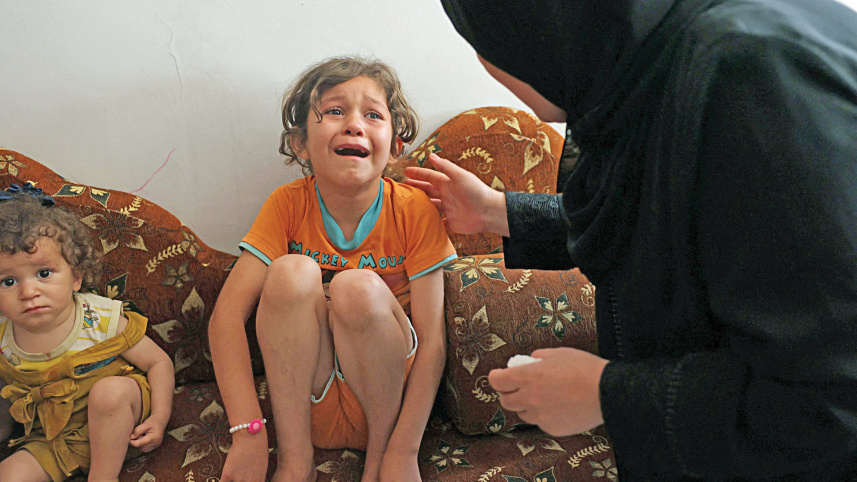
A text message, a phone call, or an initial strike on the roof. Israel says it gives Gaza civilians warnings to evacuate before bombardment, but activists say it is not nearly enough.
In the besieged coastal enclave of some two million inhabitants, under near-relentless bombardment from the Israeli military for the past 10 days, many are railing against flaws in the "roof knocking" technique.
 For all latest news, follow The Daily Star's Google News channel.
 The campaign on the territory run by Islamist group Hamas has killed at least 230 Palestinians, including 65 children, Gaza health authorities say, and displaced tens of thousands from their homes.
Many relatives say their family members are being bombed without warning, while others say their telephones have rung, but they weren't given enough time.
This was the case on Saturday for Jawad Mehdi, the owner of Jala Tower in Gaza City that was until Saturday home to the offices of two foreign media outlets.
Mehdi said an Israeli intelligence officer warned him he had one hour to ensure the building was evacuated. Journalists barely could scramble down the stairs, before a missile slammed into the 13-storey building, flattening it.
The Israeli military has been calling residents, sending them text messages, dropping flyers or firing low-yield bombs onto roofs since its war on Gaza in 2008-2009.
During that campaign, the Israeli military said it had made 165,000 phone calls to residents in Gaza instructing them to leave home immediately, often sending pre-recorded messages in Arabic.
The UN humanitarian agency in a 2009 report said that in some cases the strike occurred only five minutes after the phone call. But it is unclear how often the Israeli military has tried to give such prior notice in the latest Gaza conflict.
An Israeli air force officer, who spoke on condition of anonymity, said 1,000 strikes had hit the enclave, but a warning had not been issued in all cases.
Comments