


‘I’ve aged 30 years’
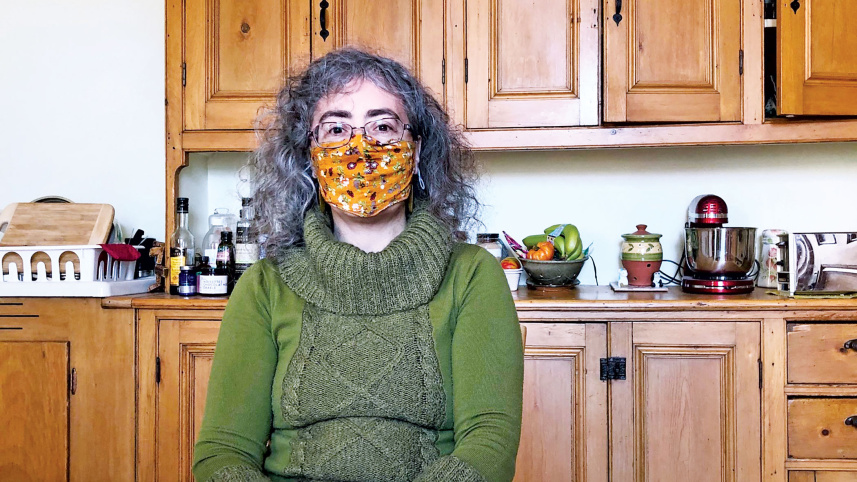
Difficulty breathing, concentrating and even walking: five months after being diagnosed with Covid-19, Violaine Cousineau continues to suffer severe symptoms that prevent her from resuming normal life.
"I feel like I've aged 30 years in a few months," the 47-year-old Canadian tells AFP. Sitting in her kitchen and wearing a mask, Cousineau gestures with her hands as she speaks, as if to accentuate her words as her voice has been reduced to a whisper.
 For all latest news, follow The Daily Star's Google News channel.
 "I don't recognize myself, my family doesn't recognize me either. I'm not the person I was," says the Montreal resident, noting that she walks with a cane to avoid falling.
A mother of two girls aged 12 and 15, she is one of hundreds of expected patients of a new clinic in Montreal specializing in long-term health impacts of Covid-19, or "long Covid."
She had no preexisting health problems and even enjoyed "super cardio" hiking on nearby mountains on weekends.
After contracting the illness in October, she spent a trying first week, including being bedridden for three days.
"I could never have thought for a fraction of a second that it would go further than that," she says. "Everyday life has been turned upside down," she says. "It's the ordeal of a lifetime."
A significant number of patients who contract the novel coronavirus mysteriously suffer debilitating symptoms long after others recover. The European branch of the World Health Organization says the seemingly chronic condition must be "of utmost importance" to health authorities around the world.
In Quebec, which has recorded more than 294,000 cases of the coronavirus, "it could be 10 to 30 percent of patients who have complications," says Emilia Liana Falcone, director of the new clinic set up by the Montreal Clinical Research Institute.
Opened in February, the clinic's doctors aim to understand the long-term complications of Covid and their duration in order to then determine the causes and develop treatments.
Falcone says there are patients still showing symptoms one year after getting infected. "Fatigue is definitely very common," says the infectious disease specialist, as is shortness of breath, muscle pain or sleep disorders.
Comments